Cracks in tested simple liquids traveled at approximately 500 to 1,500 meters per second, versus 0.07 in melted polystyrene.
Cracks in tested simple liquids traveled at approximately 500 to 1,500 meters per second, versus 0.07 in melted polystyrene.
More from this article
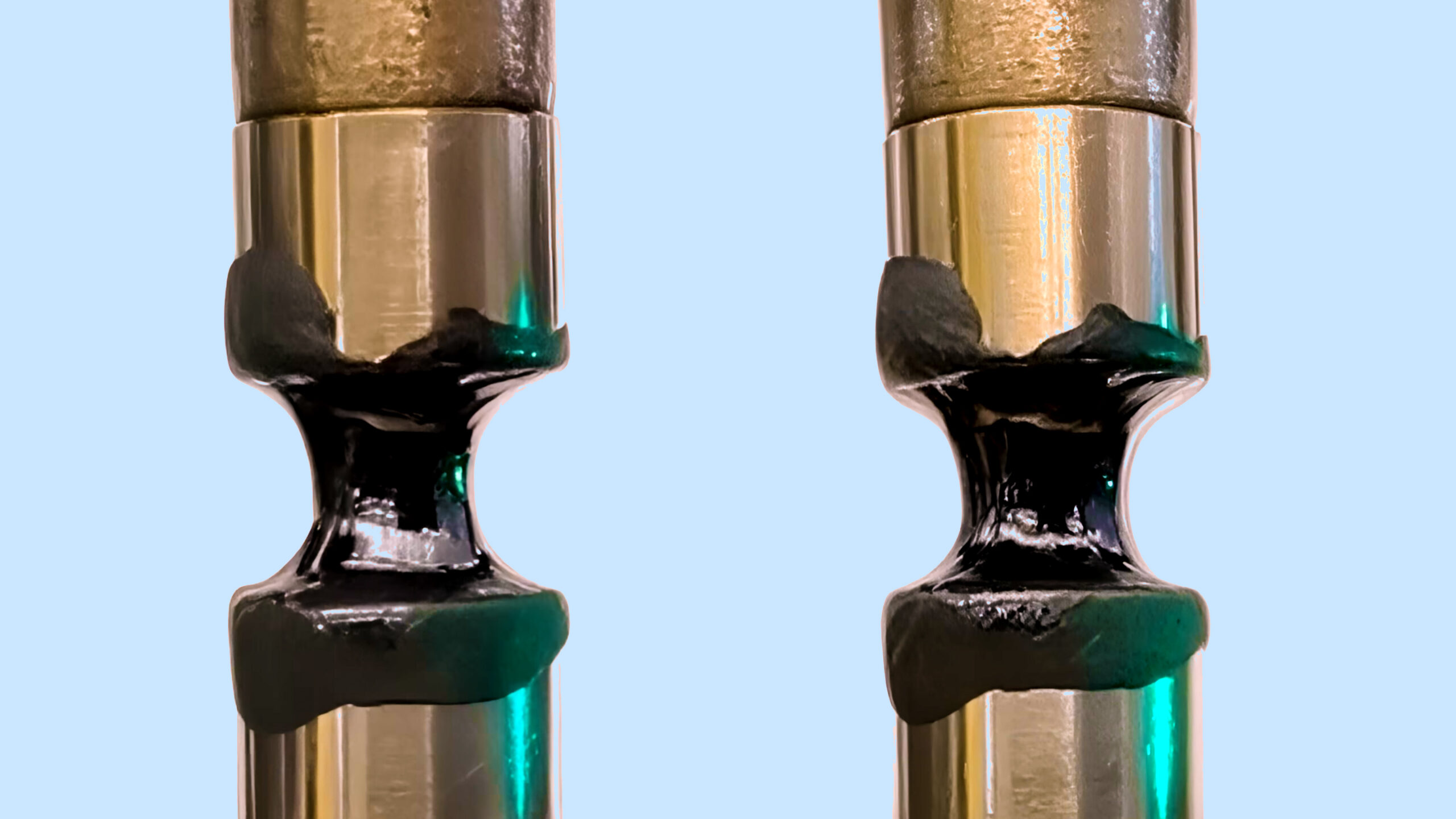
See all →The hydrocarbon blend fractured every time researchers measured it, producing a sharp pop.
Liquid fracture may not require elasticity, challenging a longstanding assumption drawn from…
A hydrocarbon blend, despite being a nonelastic simple fluid, can fracture under tensile stress…
When pressure drops, cavitation creates intermolecular voids that can rapidly merge into a…
With a faster apparatus, less-viscous liquids such as honey or water might also fracture.
A liquid’s apparent fracture threshold may reflect the testing machine’s speed limit, not the…
In complex fluids, long molecular chains absorb fracture energy and slow cracks. Simple fluids…
A liquid’s critical fracture stress scales with viscosity multiplied by strain rate, so faster…
Don't lose this one
A free account saves insights like this to your Boards, and Korva resurfaces them so you actually remember.