Korva is a scroll of the internet’s best ideas.
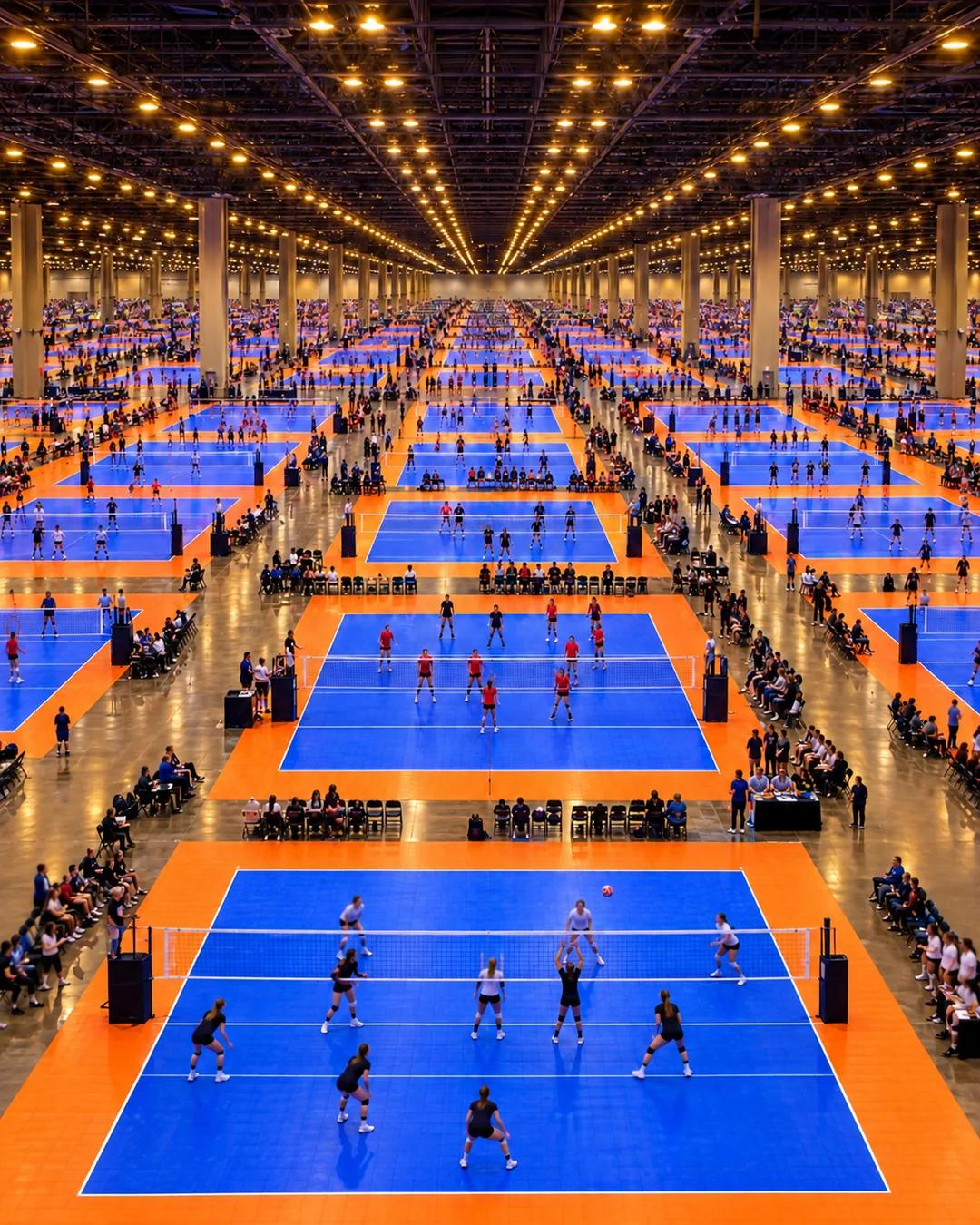
123 courts, 24,000 people

Building the courts
The transformation starts on Good Friday of Easter weekend, when crews fill the exhibit halls with row after row of courts for the Red Rock Rave. Every court runs nonstop from 7:30 a.m. to 9:30 p.m. with a rotating set of eight teams, so just under 1,000 teams pass through.
Each team brings about 10 players, two coaches, and at least as many parents and family members, which comes to roughly 24 people per team. The hall has no windows, the whistles, squeaking shoes, and screaming of U11 to U15 girls make it uncomfortably loud, and the concession lines are absurdly long.
Bids and stay-to-play
USA Volleyball sanctions the tournament as a national qualifier. In some divisions, winning or finishing second or third earns a bid to USAV Nationals in Indianapolis or Minneapolis. Of the 950 teams, only 31 bids are up for grabs in total, and each team paid $950 to enter.
The court map carries the logo of KC Sports Housing, because this is a stay-to-play event: teams book through the tournament's partner hotels, including Mandalay Bay and the Luxor, or they do not play. Only a few teams are local, and the rest come from places such as Colorado, Texas, and Hawaii.
How do stay-to-play rules work?
Tournament organizers negotiate blocks of rooms at partner hotels, usually at group rates. The hotel contract commonly carries an attrition clause that requires a minimum share of the reserved rooms to be filled. Requiring teams to book through the partner hotels is one way to meet that minimum. In some contracts the organizer also receives a rebate or commission on rooms booked.
Why does Las Vegas host so many tournaments?
Las Vegas has one of the largest concentrations of hotel rooms and convention space in the US. The Las Vegas Convention and Visitors Authority puts the city's hotel inventory at about 150,000 rooms. A city built for conventions can absorb tens of thousands of visitors in a single weekend, and its airport has direct flights from most major US cities.
How do a thousand teams share 123 courts?
Large volleyball tournaments run pool play first, where a few teams play each other in short matches, then move top finishers into brackets. Each court hosts a rotating set of teams through the day, so one court can handle many matches. A regulation volleyball court is 18 meters long and 9 meters wide, with a free zone around it, which is why only the largest convention halls can fit dozens of them side by side.
More from Wendover Productions