Korva is a scroll of the internet’s best ideas.
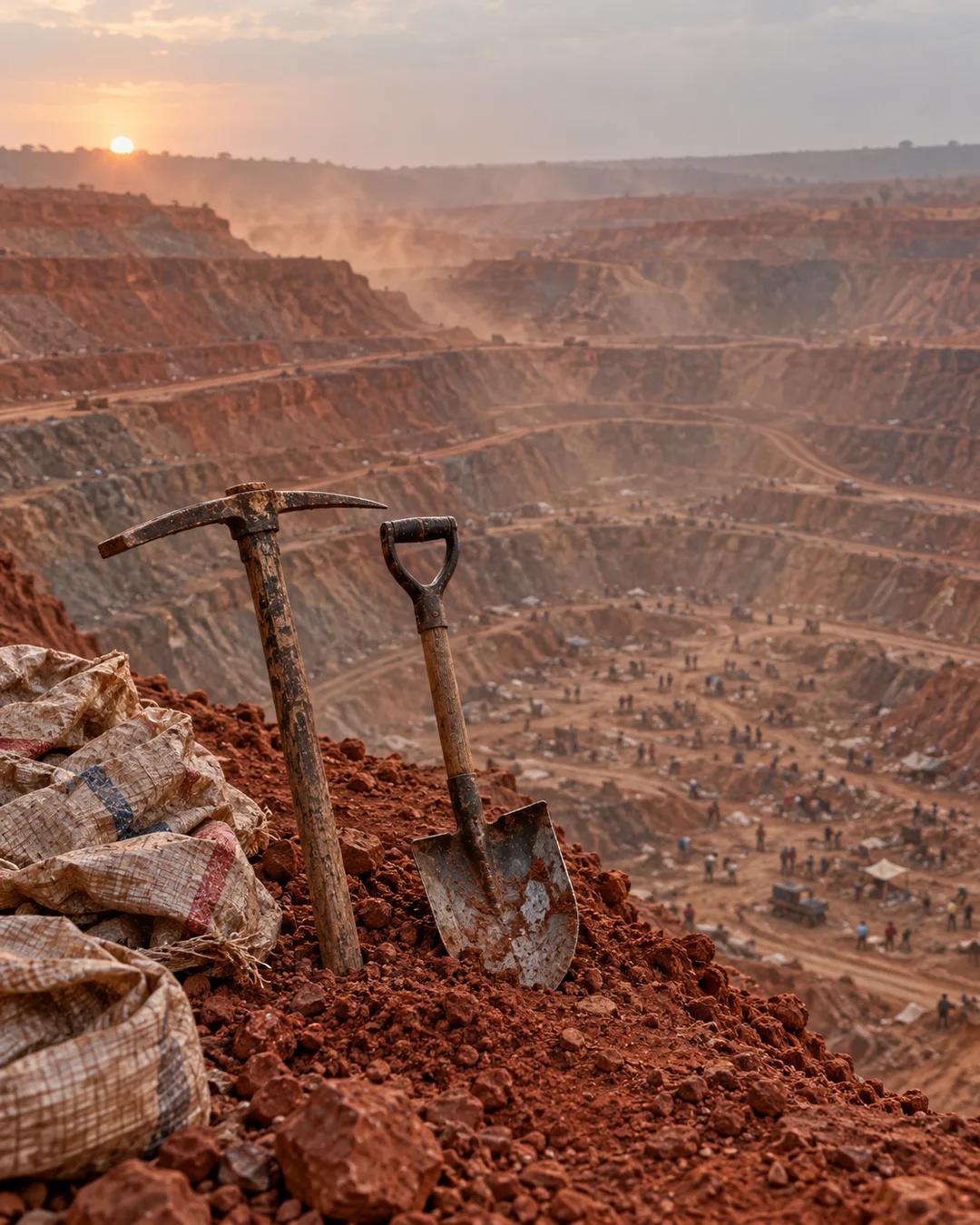
300,000 people dig cobalt daily

The estimate
The estimate comes from a report called Blood Batteries, published through the University of Nottingham, whose researchers sampled sites across the mining area and built prevalence estimates. The count shifts a little between the dry and wet seasons.
About 37 percent of those 300,000, more than one in three, work in conditions that amount to absolute slavery. Almost 10 percent are children, roughly 30,000 on any given day, out of school and working in toxic mines with their hands.
Artisanal mining
The mining industry calls this artisanal mining. It means whole families digging in toxic grit and children climbing out of pits with 40- to 50-kilogram sacks of cobalt on their necks. Cobalt is toxic to touch and to breathe, and children develop respiratory distress and cancers while women face birth defects and congenital disease.
The cobalt moves through militias and traders into the formal supply chain, where industrial mining companies refine it before it ends up in phones, cars, and tablets.
Why is cobalt dangerous to touch and breathe?
Inhaled cobalt dust can cause hard metal lung disease, a scarring condition first described among tungsten carbide workers. Cobalt on the skin is a common cause of allergic dermatitis. The International Agency for Research on Cancer has classified cobalt metal as possibly carcinogenic to humans. Fine dust from digging and crushing ore stays suspended in the air, which is how it reaches the lungs.
Why does Congo supply so much cobalt?
Southeastern Congo sits on the Central African Copperbelt, where sediments rich in copper and cobalt formed over hundreds of millions of years. Cobalt is mostly a byproduct of copper and nickel mining, so it is found where those metals are. The United States Geological Survey has estimated that Congo accounted for most of the world's mined cobalt in the early 2020s. No other country has a comparable concentration of the ore.
How does cobalt get from pits to phones?
Diggers sell ore to traders at depots near the mines, and the traders resell it to processing plants. Those plants convert the ore into cobalt hydroxide, which is shipped abroad for refining into cobalt sulfate or metal. Battery makers buy the refined product for the cathodes of lithium-ion cells. In the early 2020s the International Energy Agency put China's share of refined cobalt at around three-quarters.
More from The Joe Rogan Experience