Korva is a scroll of the internet’s best ideas.
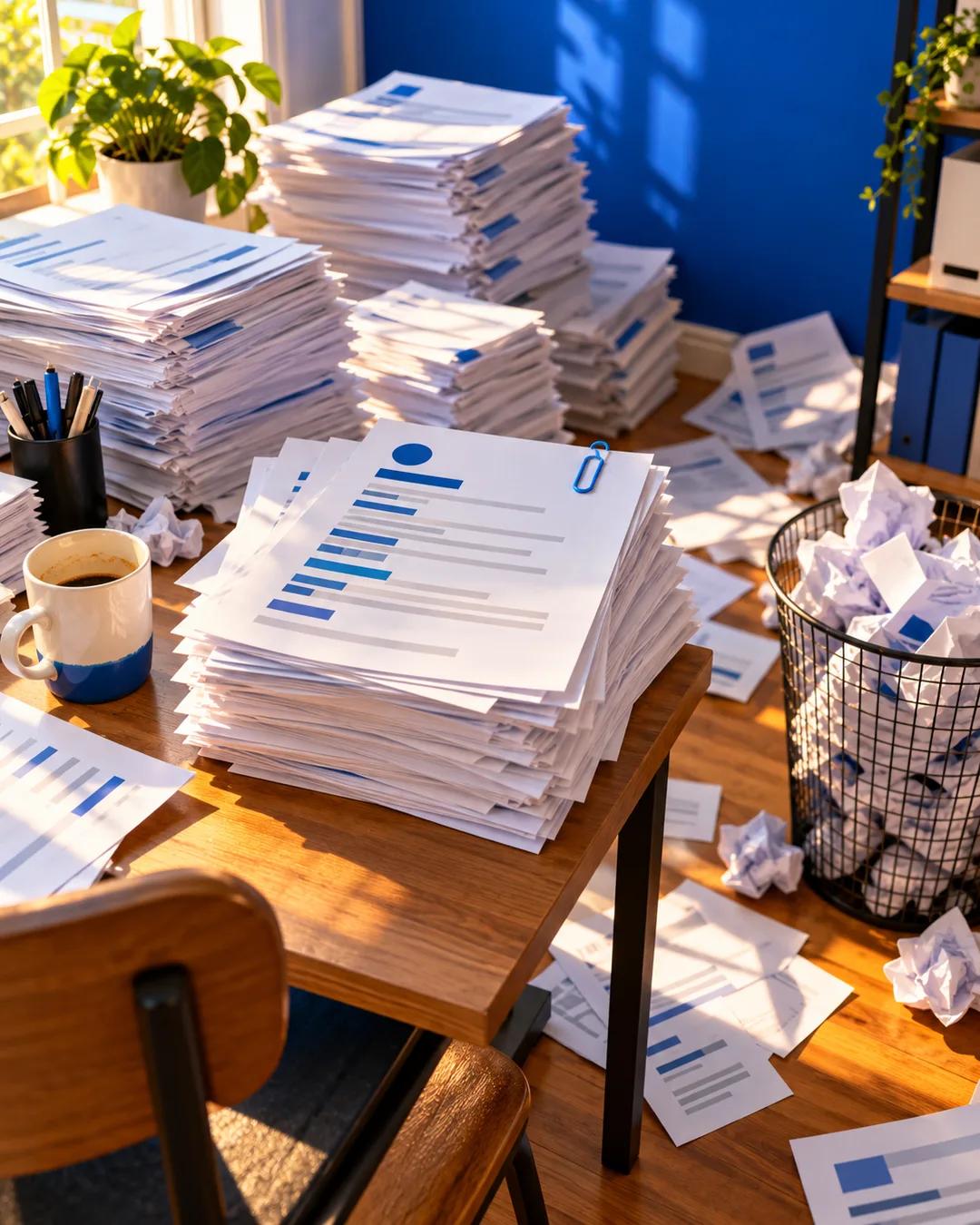
400 applicants in 12 hours

A flooded posting
The client was a technology company, and the role required only three years of experience, so she knew it would be attractive. A few days later there were more than 1,200 applicants. Months afterward, she was apparently still sorting through the pile.
The surge in applications
Her inbox is part of a larger surge. Job applications on LinkedIn have climbed to 11,000 per minute, up nearly 50% from the prior year, and AI appears to be a key driver. With a simple prompt, ChatGPT will insert every keyword from a job description into a resume. Some candidates pay for AI agents that find jobs and apply on their behalf, without any further input.
Recruiters find it harder to tell who is genuinely qualified or interested, and many of the resumes look suspiciously similar.
Why does a remote role draw so many applicants?
A fully remote job removes geography as a filter. The pool of qualified candidates is no longer limited to the people within commuting distance of an office. It becomes everyone in a country or time zone who has the skills. LinkedIn's one-click application tools also reduce the effort of applying, so a posting can collect hundreds of applicants overnight.
How do companies sort through that many resumes?
Most mid-size and large employers use applicant tracking systems, with names such as Workday, Greenhouse, and Lever. These systems parse each resume into structured fields and let recruiters search or filter by keyword, job title, and years of experience. Keyword matching is why applicants copy the exact wording of a job description into their resumes. It is also why a flood of keyword-optimized resumes pushes many of them to look alike.
Why do AI-written resumes read so much alike?
Large language models generate text by choosing the most probable next words given the prompt. When thousands of people give the same job description to the same tool, the most probable phrasing comes back again and again. The output tends toward the same verbs, the same structure, and the same polished tone. Reviewers see near-duplicates because the tool is producing its statistical average each time.
More from Curiosity Chronicle