Korva is a scroll of the internet’s best ideas.
68% more lights after nuclear tests

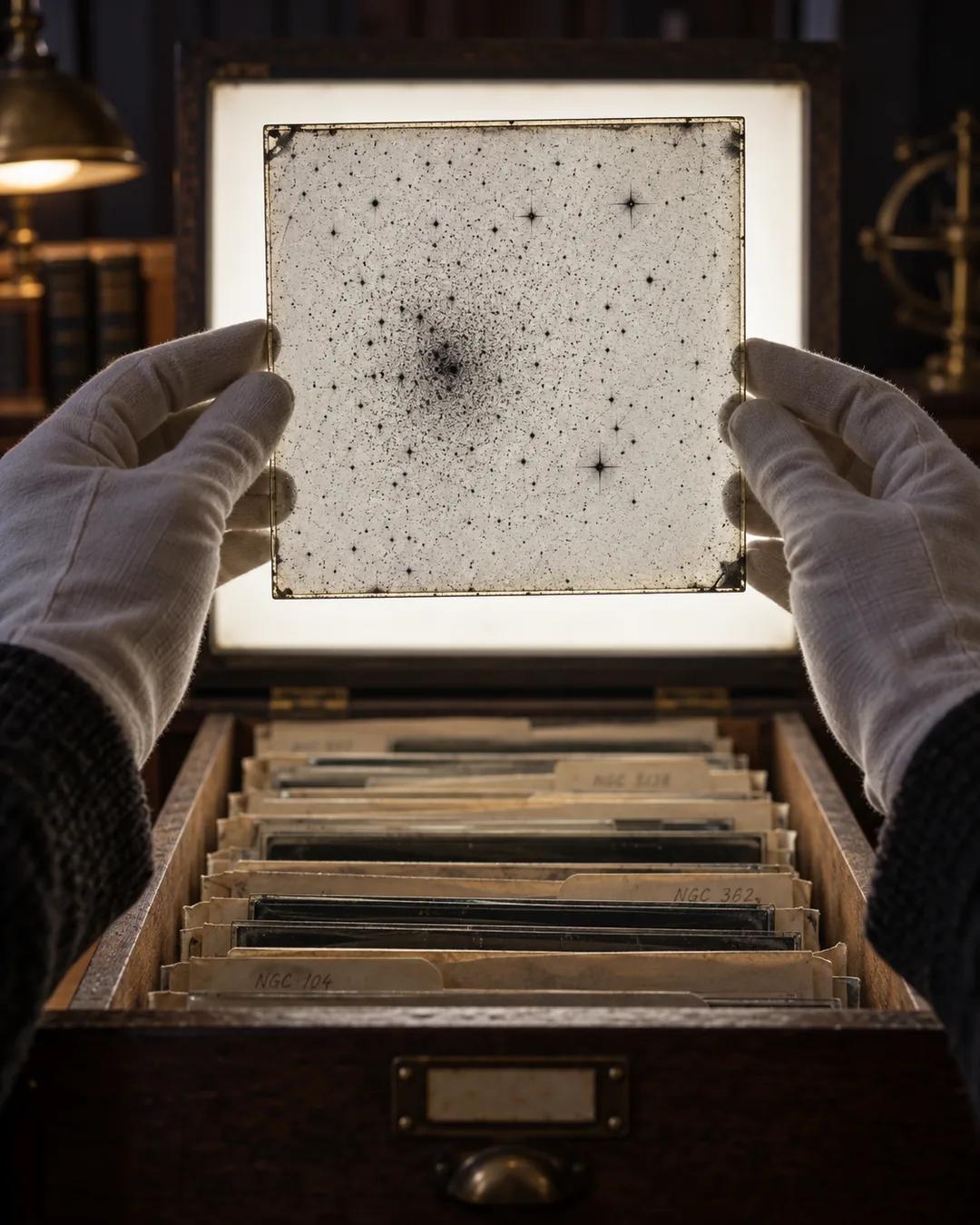
An observatory holds old plates of images it took of the sky before Sputnik, when no satellites orbited Earth. Some of the plates show reflective, apparently metallic points moving outside the atmosphere. They were not static, and they were not stars.
The work is Beatrice's, on the Vasco plates, with her co-authors. Beyond the 68% figure, it found cluster concentrations over sensitive nuclear facilities and testing sites, with a chronological correlation to the tests.
The pattern runs through the nuclear testing era, including high-altitude detonations like Operation Starfish Prime: a test, then the lights. Activity seems to have heightened once nuclear testing started. The phenomenon itself is much older and has interacted with people since antiquity, as Jacques Vallée documents in Passport to Magonia.
Why do pre-Sputnik plates matter?
Sputnik 1 launched on October 4, 1957, and before then no artificial satellite orbited Earth. A point of light that moves on a plate exposed earlier cannot be a satellite. Observatories exposed glass photographic plates for decades, and the Palomar Observatory Sky Survey in the 1950s produced thousands of them. Astronomers have since compared those plates with modern sky surveys to look for sources that appear and vanish.
What did Starfish Prime do to the sky?
Starfish Prime was a 1.4-megaton American nuclear test detonated at about 400 kilometers altitude over the Pacific on July 9, 1962. It created an artificial radiation belt that damaged several satellites in low Earth orbit, including Telstar 1 over the following months. Its electromagnetic pulse knocked out street lights and telephone service in Hawaii, about 1,400 kilometers away. Auroras from the burst were visible across the Pacific.
What else makes dots on old plates?
Photographic emulsion can carry dust, scratches, and chemical flaws that look like small bright or dark points. Cosmic rays and radioactive decay in the glass itself can also expose a grain. Astronomers separate real transients from these defects by checking whether a point appears on more than one plate taken in sequence. Variable stars, asteroids, and flaring stars also produce sources that appear on one plate and not another.
More from The Joe Rogan Experience