Korva is a scroll of the internet’s best ideas.
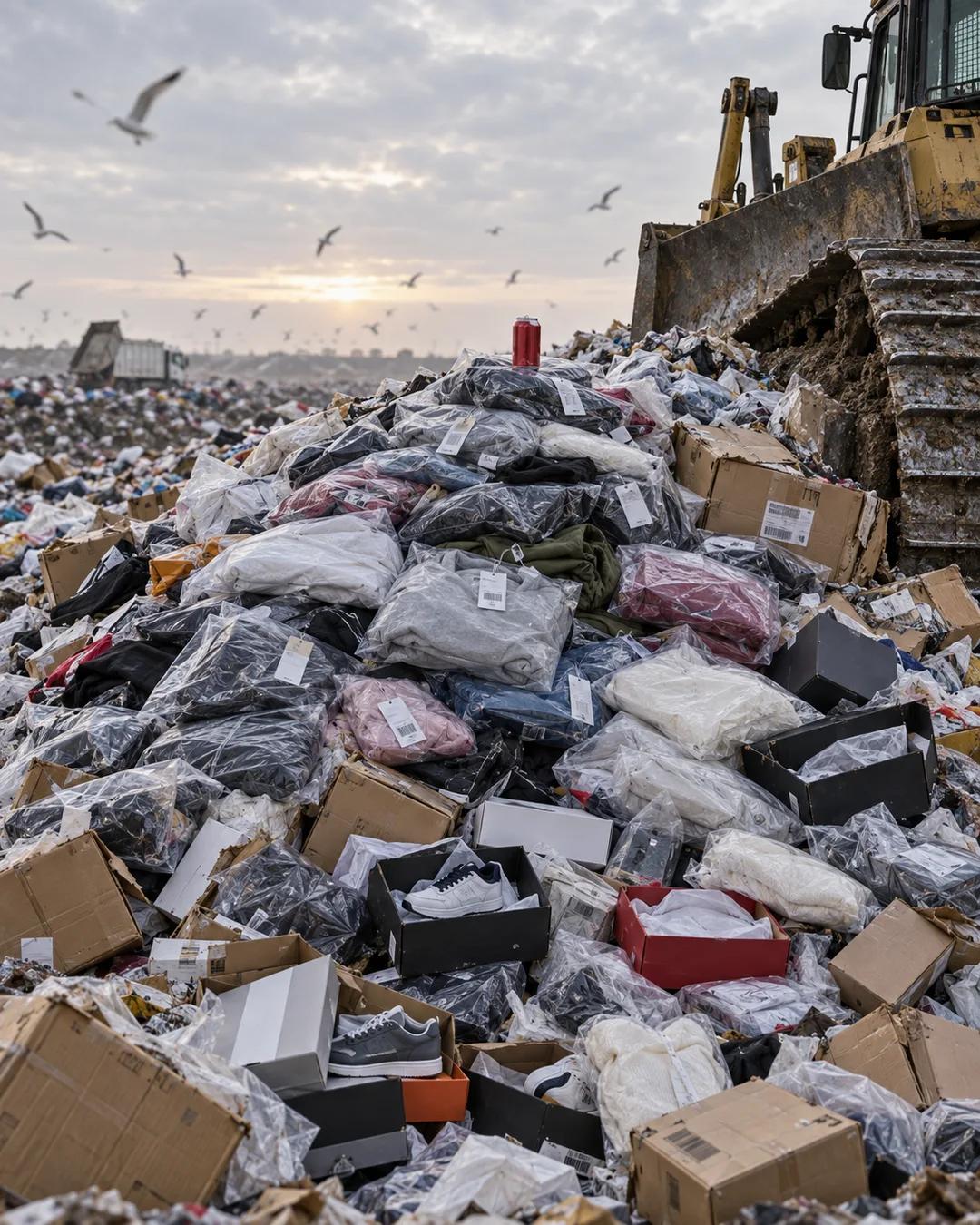
$890 billion of new goods trashed

What Brands Really Sell
What a company is selling at that price is loyalty and reputation. Open it up and its operations are mediocre, and it creates a lot of waste in the system. That waste could be taken out and reallocated in a better way.
The Landfill Numbers
The scale shows in the United States, where $890 billion of unsold, new product goes into landfill. A clothing store stocks one of each size, even when a size is out of the range of customers. The production economy and the consumption economy are completely separated: goods are made in China, travel about 40 days by boat to the US, and sit at the end of a long supply chain.
An Easy Fix
Excess inventory gets bought and then thrown away. Chetan Bhagat thinks this is easy to solve, and the sticking point is that technology is not used to solve these kinds of problems.
Why do people pay more for a brand name?
In a 2004 study in Neuron, Samuel McClure, Read Montague, and colleagues scanned people's brains while they drank Coke and Pepsi. In blind sips, preferences split roughly evenly between the two. When the Coke brand was shown, more people favored Coke and brain areas linked to memory became more active.
How do long supply chains create excess stock?
In a 1997 paper in Sloan Management Review, Hau Lee, V. Padmanabhan, and Seungjin Whang described the bullwhip effect, in which small swings in customer demand grow larger at each step back toward the factory. Each link in the chain orders extra to protect itself, and the orders compound. A shipping time of weeks forces orders to be placed long before sales are known.
Why destroy unsold goods instead of discounting?
Retailers worry that deep discounts erode a brand's pricing and image. Storing stock or processing returns can cost more than the goods are worth, especially for low-value items. Because of this, some unsold goods are destroyed or sent to landfill. France passed an anti-waste law in 2020 that banned destroying unsold non-food products, with the rule taking effect in 2022.
More from Tomorrow, Today