Korva is a scroll of the internet’s best ideas.
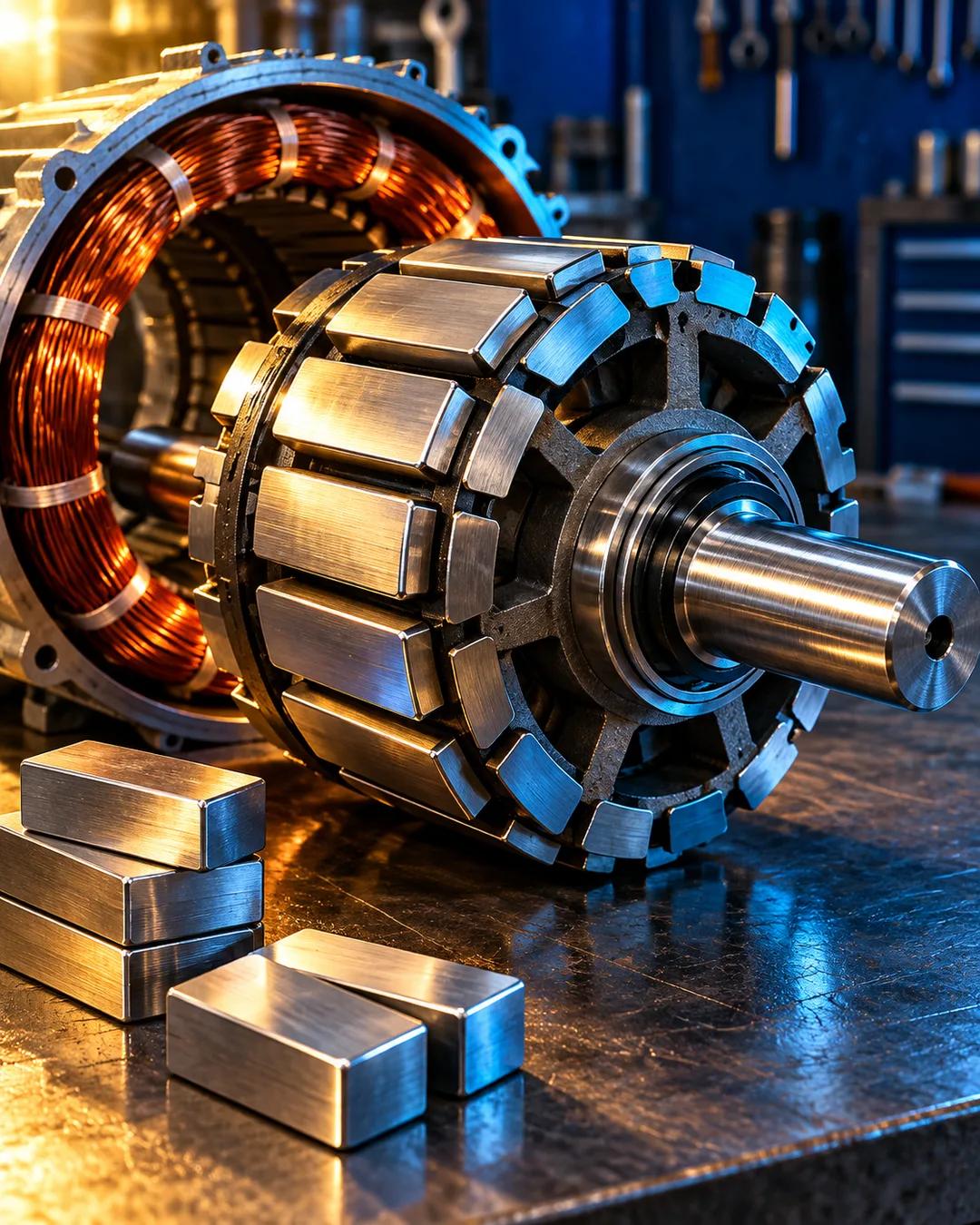
94% of magnets come from China

A built-in dependency
Supply chains were built to span the world, with each country specializing in a piece. That created deep dependencies, and magnets are the sharpest example of one that has to change.
Owning the supply chain
Sovereignty is the answer: owning a supply chain and building more of it at home. A broad shift in that direction is under way across manufacturing, defense, supply chains, and metals and mining.
Rebuilding American factories
Rebuilding American manufacturing runs into a shortage of labor and very high labor costs, so it can't copy the way other countries do it. The version that works has physical AI automation and intelligence built into the factory from the start. Founders willing to build manufacturing facilities at scale are where venture capital should go next.
Why do motors and robots need strong magnets?
Electric motors turn electricity into motion by pushing a magnetic field against a rotor, and a stronger permanent magnet gives more torque from a smaller, lighter motor. The strongest commercial permanent magnets are made of neodymium, iron, and boron. Electric vehicles, wind turbines, and robot joints all rely on them. Researchers at General Motors and Sumitomo Special Metals independently announced the neodymium-iron-boron magnet in 1983 and 1984.
How did China come to dominate rare earths?
Rare earth ores often contain radioactive thorium, and refining them leaves toxic waste, which made the work costly for Western producers under tightening environmental rules. The Mountain Pass mine in California was the world's leading rare earth source for decades before it stopped most operations in 2002. Chinese state support filled the gap. In 1992, Chinese leader Deng Xiaoping said the Middle East has oil and China has rare earths.
Why is separating rare earths so hard?
The rare earth elements sit close together in the periodic table and behave almost identically in chemical reactions. Refiners separate them by passing dissolved ore through solvent extraction stages, each of which enriches one element only slightly. A full separation can require hundreds of repeated stages. Lanthanides such as neodymium and dysprosium have nearly the same ion size, which is why they travel together in ore.
More from Lightspeed Venture Partners