Korva is a scroll of the internet’s best ideas.

A $10 shovel triples output

The shovel
Take a man hired to dig holes. With bare hands, he needs a full day per hole and earns $10. He spends that on a shovel. His wealth rose by the price of the shovel, and with it he digs three holes in the time one used to take, which triples his personal GDP.
Net worth outruns GDP
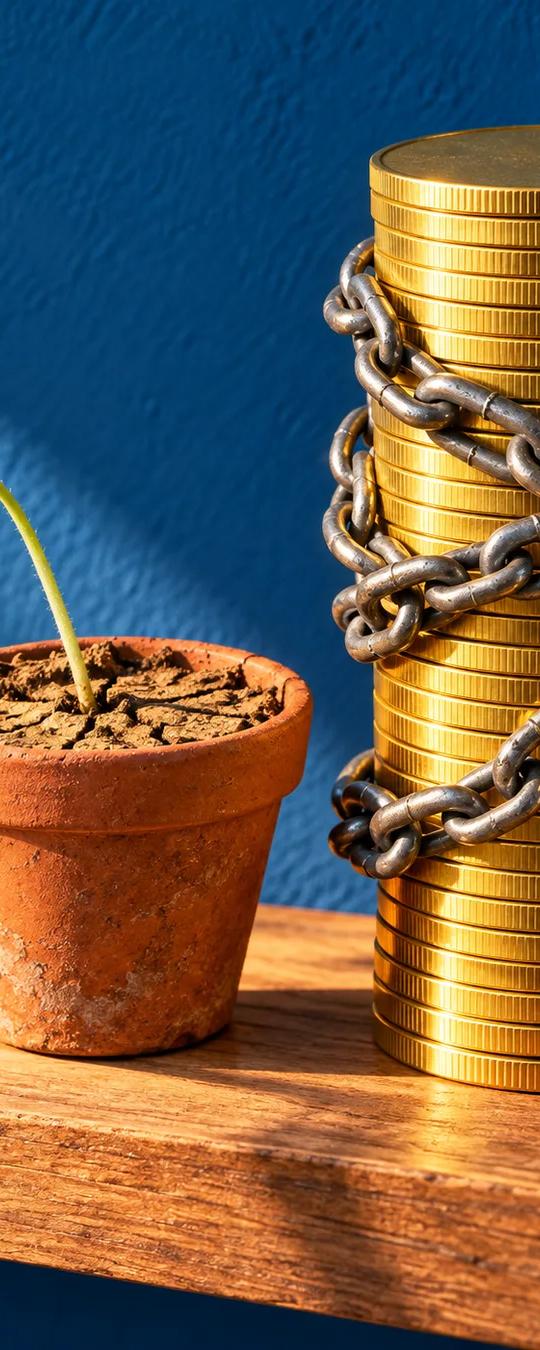
The same logic applies to the world economy. If wealth grew through investment in productive assets, GDP would keep pace with it or run ahead. The opposite is happening. Net worth has increased at a far greater pace than GDP over the last two decades, and the vast majority of growth on the global balance sheet is in non-productive assets.
The AI investment cycle
The AI boom has set off a massive investment cycle, particularly in the US. Over the last 15 years, research and development and capital spending at the largest tech companies has increased by 19 times with no signs of slowing.
Why does more capital per worker raise output?
In the growth model economist Robert Solow published in 1956, output per worker rises as each worker has more capital to work with, such as tools, machines, and buildings. The gains shrink as capital piles up, because the tenth shovel adds less than the first. Long-run growth therefore depends on better technology, not only on more equipment. Solow received the Nobel Prize in economics in 1987 for his work on growth theory.
Why does productivity lag behind investment?
New equipment often needs the workplace to be reorganized around it before output rises. Economist Paul David argued in a 1990 paper that factories took decades after electric motors arrived to redesign their layouts and capture large gains. In 1987 Robert Solow remarked that computers appeared everywhere except in the productivity statistics. US productivity growth then picked up markedly in the late 1990s.
More from Economics Explained