Korva is a scroll of the internet’s best ideas.
A 40x return drew 70 rivals

Parts pushing each other
Software, memory, floppy disk drives, and modems reinforced one another, with each advance putting pressure on the technologies next to it. Whenever one part held back the rest, investors rushed to fund that sector. When more PC memory allowed more complicated software, the need for external storage grew, and venture capitalist Dave Marquardt invested in Seagate in 1980.
The disk drive rush
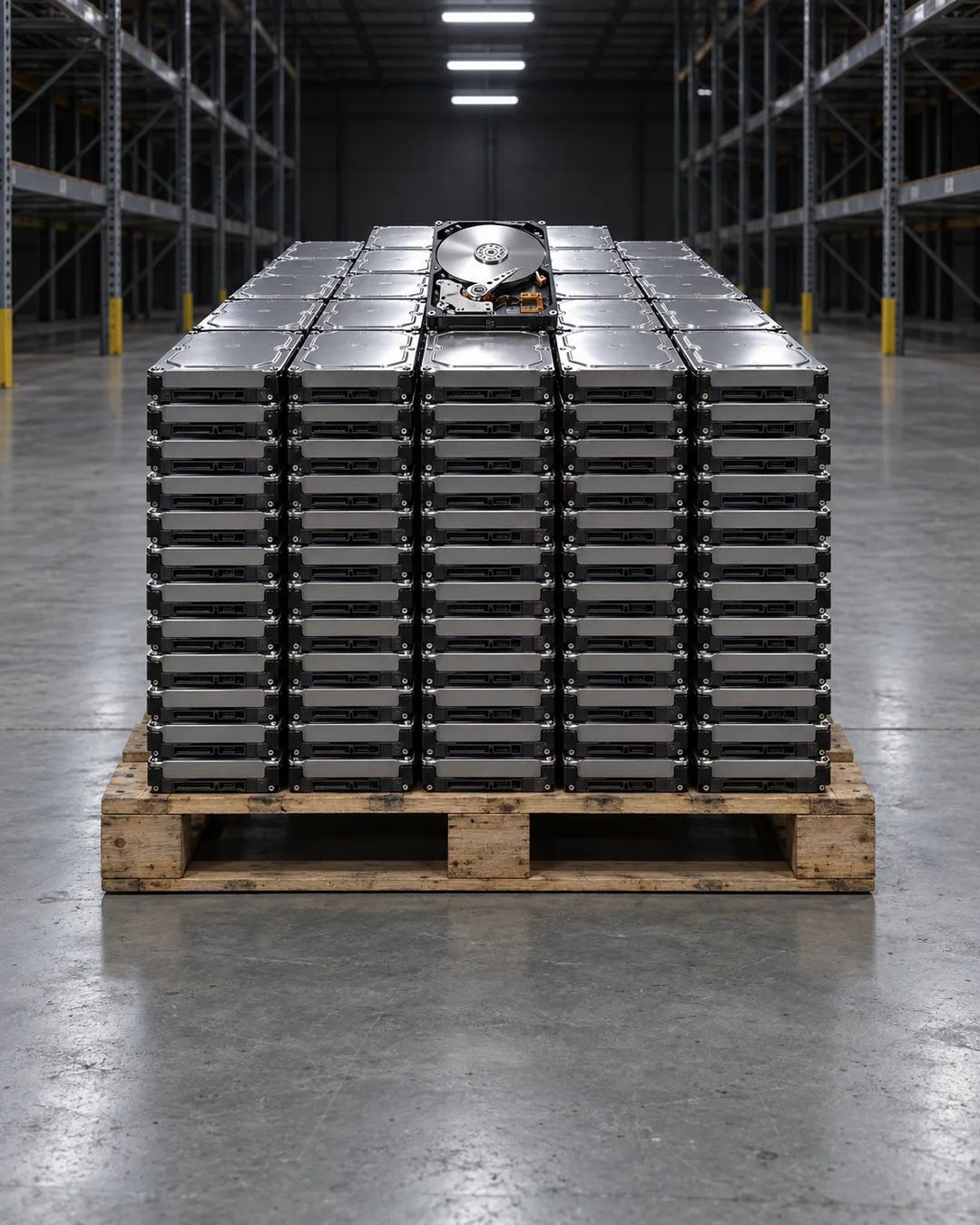
Seagate gave Marquardt a forty times return when it went public in 1981. Other investors noticed, and some $270 million was plowed into the industry over the next three years. By 1983, more than 70 companies were competing in the disk drive sector alone, and valuations collapsed.
Money everywhere
Money also poured into fiber optic networks and chip making, so capacity was never a bottleneck. Compaq, Dell, Microsoft, Electronic Arts, Adobe, Sun, and the Business Land computer stores all appeared in the same stretch. Investors who backed the winners did well, but there was still more money than ideas.
Why did floppy disks stop being enough?
Floppy disks of the era held somewhere between 160 kilobytes and about a megabyte, and reading them was slow. Hard drives held several megabytes and found data in milliseconds. The IBM PC XT, introduced in 1983, shipped with a 10 megabyte hard disk as standard.
How do hard drives store data?
A hard drive spins one or more platters coated with a magnetic material. A read-write head floats on a thin cushion of air just above the surface. It writes data by magnetizing tiny regions in one of two directions and reads it by sensing those directions.
Why was the disk drive field so crowded?
Disk drives could be built from parts bought from outside suppliers, so a small team with an engineering background could start a company. Many engineers in Silicon Valley had worked on drives at IBM's San Jose operations. Seagate's ST-506 of 1980 held 5 megabytes and became a model that many rivals copied.
More from Jerry Neumann