Korva is a scroll of the internet’s best ideas.

A bed that scans you nightly

The nightly scan
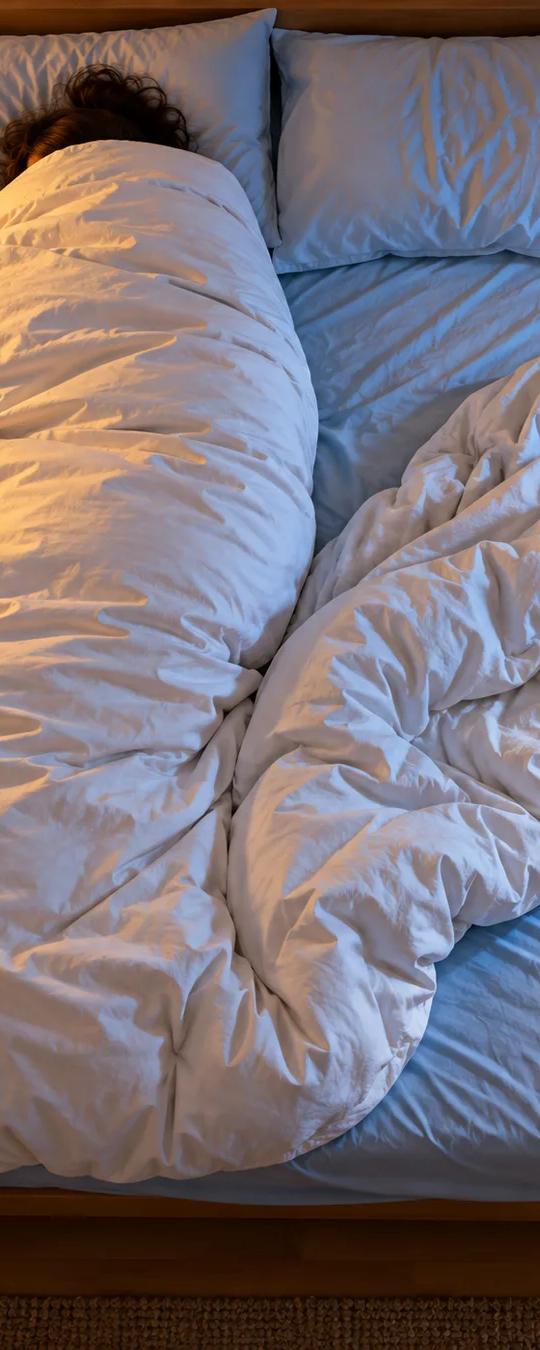
The idea is to scan for early signs of conditions like cancer while someone sleeps, something like an MRI every night. The stakes show in one number: pancreatic cancer detected early carries about an 80% chance of survival, and detected late carries about an 80% chance of death.
Why a bed beats a wearable
A bed has advantages a wearable doesn't. It gets used nearly every night, so the data builds over a long period and retention is high. It has eight hours with the person lying still at rest, the best moment to measure biometrics. It has room to hold more sensors than a wearable, it is connected to Wi-Fi to stream data to the cloud, and it is plugged into the wall, so there are no battery problems.
AI on top of the data
It wouldn't use MRI technology, but as a concept it becomes a health platform, with AI applied on top of the data. The models are already starting to triangulate across data points and spot the chance of a health condition nobody thought to look for. Sleep and heart rate alone might even be enough to predict diabetes.
Why is pancreatic cancer found so late?
The pancreas sits deep behind the stomach, so tumors there cannot be felt or easily seen from outside. Early tumors often cause few symptoms, and the ones they do cause, such as back pain or weight loss, resemble many other conditions. According to the American Cancer Society, roughly half of cases are diagnosed after the cancer has already spread.
Why is heart rate best measured during sleep?
Movement, caffeine, stress, and digestion all push heart rate around during the day. Sleep removes most of those influences, so changes in the signal reflect the body's own regulation. Heart rate variability is the variation in milliseconds between successive heartbeats. It rises with the activity of the parasympathetic nervous system, which is strongest at rest.
How could sleep data relate to diabetes?
In a 1999 study in The Lancet, Eve Van Cauter and colleagues at the University of Chicago limited healthy young men to four hours of sleep for six nights. Their ability to clear glucose from the blood fell sharply during that period. Poor sleep has since been linked in many studies to reduced insulin sensitivity. That connection is why sleep patterns are studied as an early signal of metabolic problems.
More from Joys of Compounding