Korva is a scroll of the internet’s best ideas.
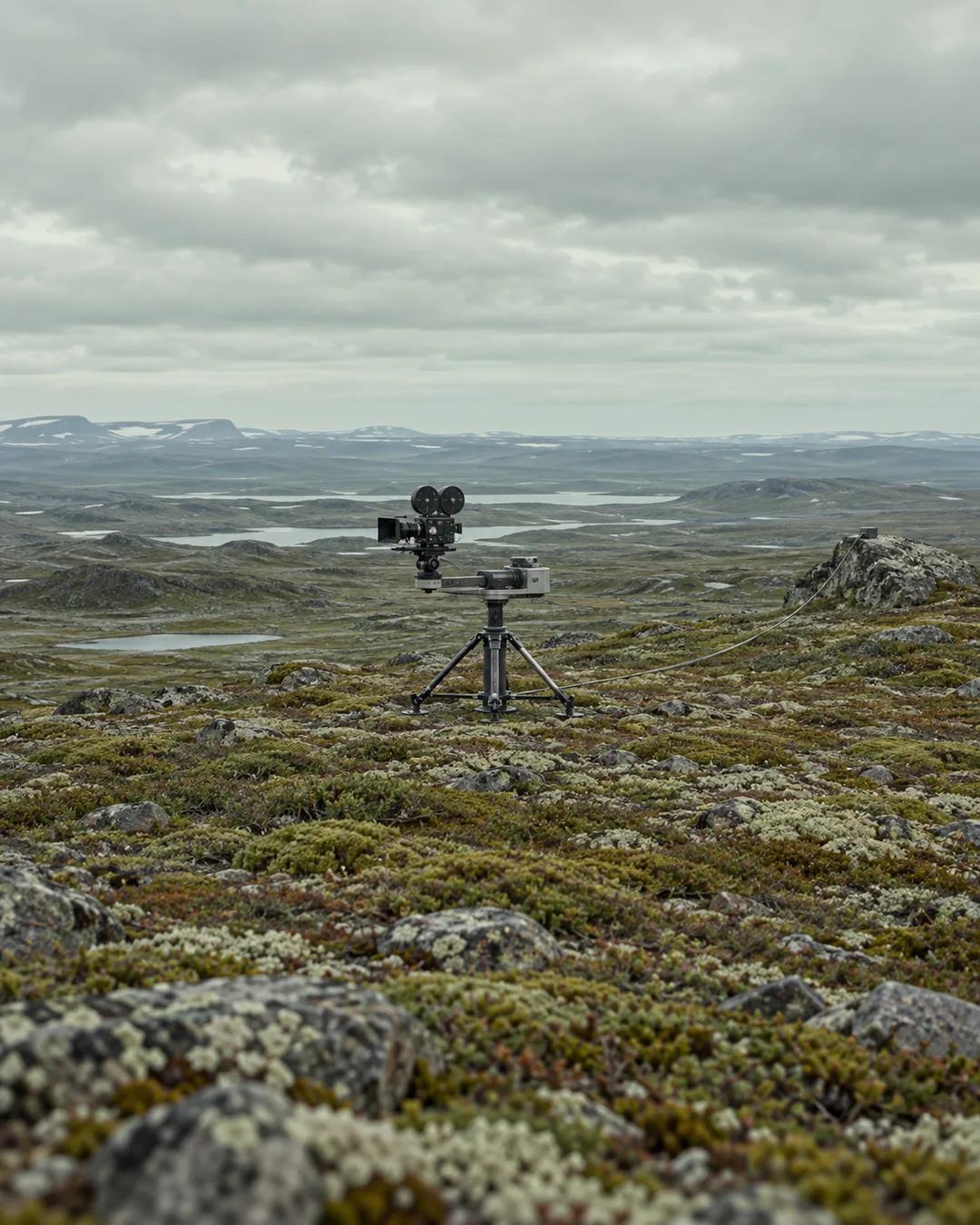
A camera crawls across the tundra

A Camera On The Tundra
Snow ducked behind a rock, and a very early radio-controlled camera on an axis that can turn in several directions began to move across the tundra. By the end of the three and a half hours, it is rotating and revolving and taking apart the space around it, much like the Stargate sequence of 2001.
Long Films, Long Looks
The film only works at a reasonable screen size, and it asks for the full three and a half hours from a viewer who isn't distracted. Some of Andy Warhol's longer films are different: a viewer can leave, have a beer, and come back to watch the rest.
2001 As Art Film
2001 makes similar demands on a viewer and on the screening room. A classroom screen, however good the digital projection, is not big enough for students to feel the film. Its stately, art-film patience ties it less to the science fiction that followed than to the avant-garde and art films of its own time.
How did Snow's camera machine work?
Snow commissioned the machine from engineer Pierre Abeloos, and it was built to rotate around several axes at once. Its movements followed preset patterns that Snow programmed in advance, so the camera swung, tilted, and spun with no operator beside it. Snow shot the film in 1970 on a remote mountaintop in northern Quebec, using 16 millimeter film.
Why was Warhol's Empire so long?
Empire is a single stationary shot of the Empire State Building, filmed over one night in July 1964. Warhol shot at 24 frames per second but had it projected at 16, which slowed the footage and stretched it to eight hours and five minutes. Sleep, from 1963, shows a man sleeping for about five hours and twenty minutes.
Why does a bigger screen change the experience?
A 65 millimeter negative, printed on 70 millimeter film, has more than three times the picture area of standard 35 millimeter film. Projected on a large curved screen, it fills much of the viewer's peripheral vision, so the image surrounds the viewer instead of sitting in front of them. A small classroom screen shrinks the image to a fraction of that field. Human vision spans roughly 200 degrees horizontally.