Korva is a scroll of the internet’s best ideas.
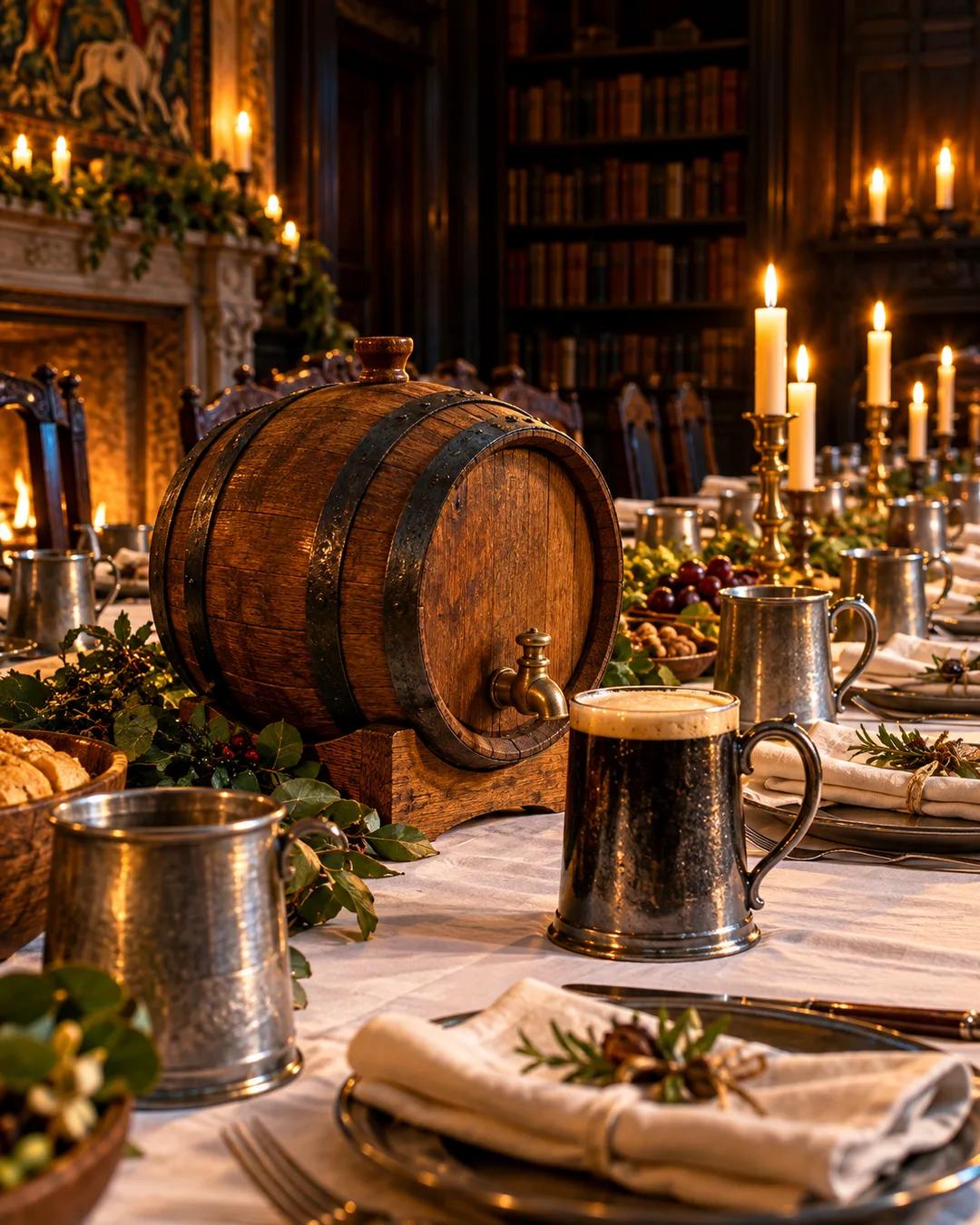
A cask of porter at Franklin's

Franklin's house
Franklin had been back from France since 1785 and had added a three-story wing to his Philadelphia home. The entire second floor was his library, holding 4,276 books, and he had invented a mechanical arm to reach the highest shelves. His newly remodeled dining room could seat up to 24.
Washington and Franklin
At the table sat 55-year-old George Washington and 81-year-old Franklin, the two greatest icons of the Revolution. Both likely pressed the importance of union to the survival of American independence. Washington had watched a Congress that could raise an army but not fund one nearly cost the war, and Franklin knew how cutthroat international diplomacy was and how much the 13 states needed each other, as his Join, or Die cartoon of 1754 had argued.
The porter letter
Two days later Franklin wrote a thank-you to Thomas Jordan, who had sent the cask of porter, reporting that the company agreed unanimously it was the best they had ever tasted. The letter described the drink and nothing of the conversation. Over the next week the group moved on to City Tavern and Indian Queen Tavern, and by then they were set on replacing the Articles of Confederation, not revising them.
What made porter a popular drink?
Porter is a dark, hopped ale that took shape in London in the early 1700s. It got its name from the street and river porters who drank it. It was one of the first beers brewed in large batches, and it traveled well on ships. That made it a common import in colonial American ports.
What was the Join, or Die cartoon?
Franklin published it in the Pennsylvania Gazette on May 9, 1754. It showed a snake cut into eight pieces, each labeled with a colony or region. He drew it as the French and Indian War began, arguing that the colonies needed to act together. It later became a symbol again during the buildup to the Revolution.
Why did the convention open late?
The convention was scheduled to start on May 14, 1787. Delegates traveled on bad roads over long distances, and many arrived days or weeks late. The rules required a quorum of seven states before business could begin. That threshold was not reached until May 25.
More from History That Doesn't Suck