Korva is a scroll of the internet’s best ideas.
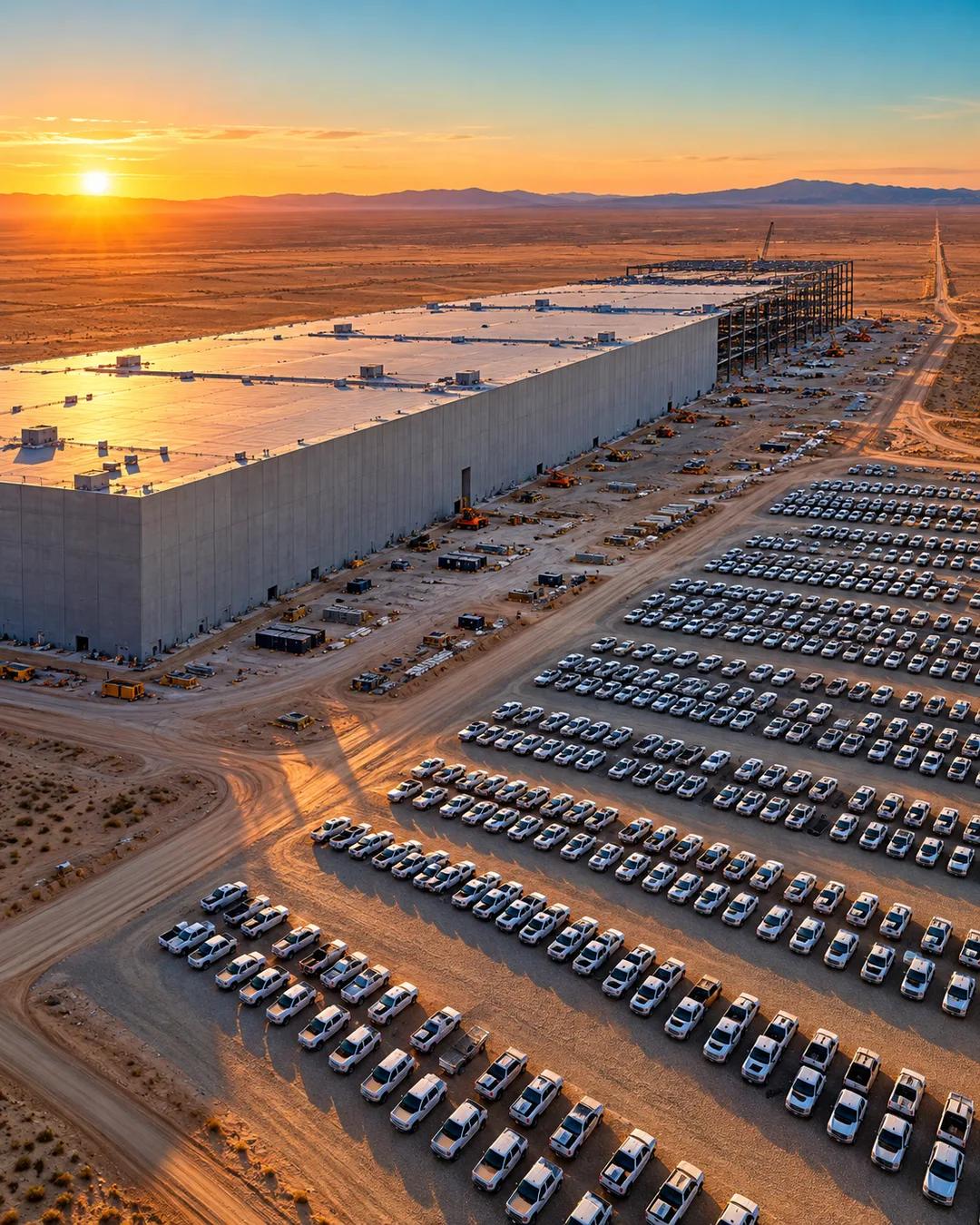
A data center takes 10,000 workers

The scale
A project of that size would once have been among the most expensive infrastructure humanity had ever done, and a lot of them have now been built. Standing in front of a gigawatt data center feels very different from seeing a photo or a video of one.
Where they can go
Unlike a power plant, a data center can go almost anywhere, including out in a desert around no one, so it does not have to sit in anybody's backyard.
Water and power
Cooling used to mean evaporating tremendous amounts of water. Closed-loop systems changed that, and a modern data center now uses only about as much water as an office building does for its kitchen and bathrooms.
On power, the shift is from sources that burn fossil fuels to systems powered by solar or nuclear.
How does closed-loop cooling save water?
Older cooling towers shed heat by evaporating water, which works well because vaporizing a kilogram of water absorbs about 2,260 kilojoules of heat. A closed loop instead circulates coolant through sealed pipes and moves the heat to the outside air through radiators or chillers. Because nothing evaporates, the same fluid is reused again and again. Many newer designs place liquid cold plates directly on the highest-power chips.
Why can data centers sit so far from cities?
A power plant has to sit near transmission lines and the people it serves, but a data center's product is data, which travels as light through fiber-optic cable. Light in fiber covers roughly 200,000 kilometers per second, so a round trip across a continent takes only tens of milliseconds. Training a large model also involves no user waiting on a reply. A remote site with cheap land and power therefore loses little.
Why pair data centers with nuclear and solar?
Data centers draw power around the clock, which suits sources that run steadily. According to the US Energy Information Administration, US nuclear plants run above 90 percent of their capacity over a year, the highest of any source. Solar panels produce only in daylight, and utility-scale solar in the US averages roughly a quarter of its capacity over a year.
More from Invest Like the Best with Patrick O'Shaughnessy