Korva is a scroll of the internet’s best ideas.
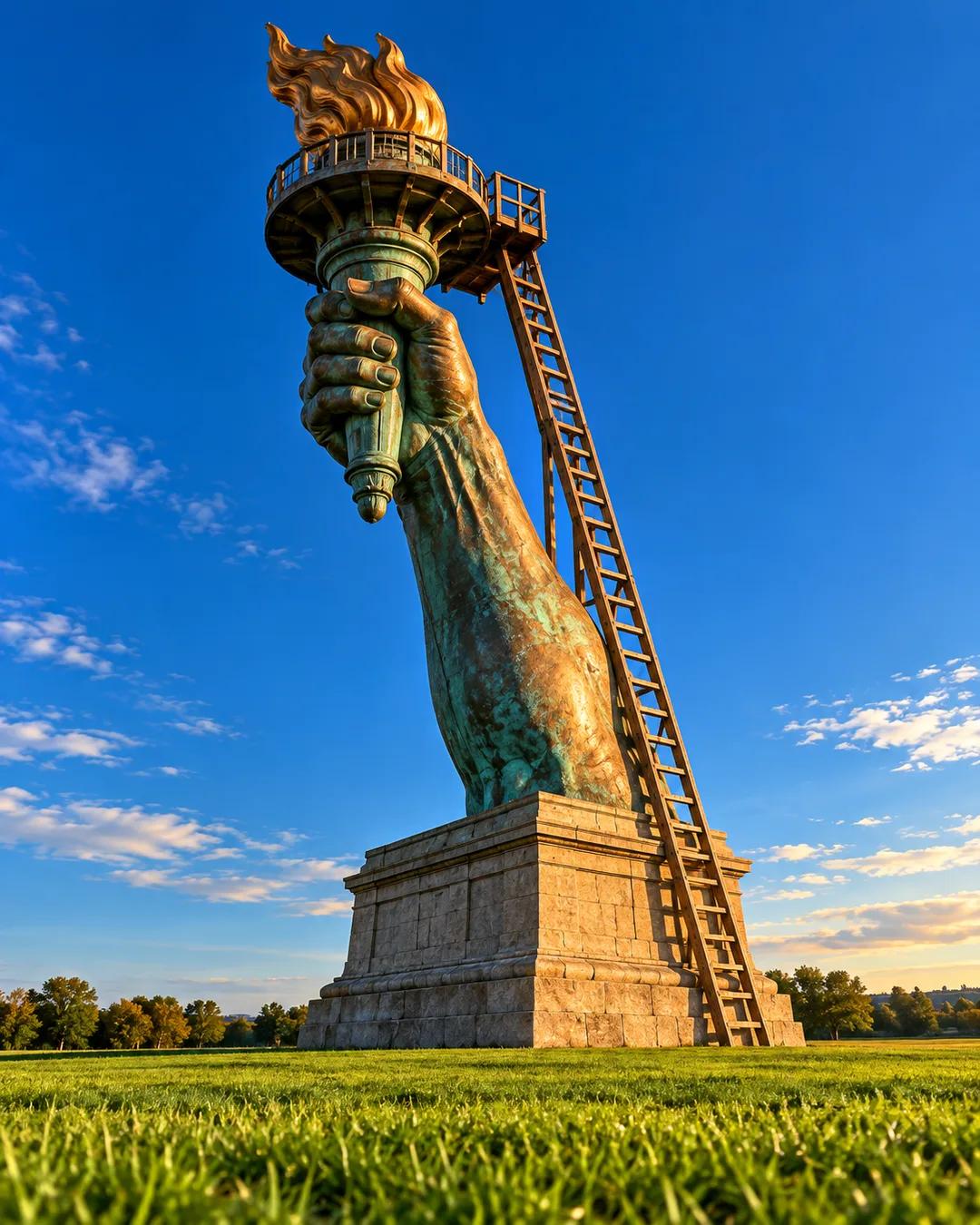
A ladder up Liberty's torch arm
What was on show
The fair held 30,000 exhibits in more than 200 buildings, with arts and science displays from across the globe. Heinz Ketchup was introduced to the public. The big hit was Machinery Hall, where a giant power engine ran among the typewriters and sewing machines, and President Grant personally pulled the lever that brought the hall's other exhibits to life.
Innovation was accelerating so fast that the telephone, ketchup, and a giant engine sat side by side, and for most attendees the technology must have seemed like magic.
The mood of the nation
The country was only 11 years from the end of the Civil War, and the mood was a big commercial hullabaloo. What Americans with an appetite for celebration celebrated most was economic and industrial might and geographic expansion.
How did Liberty's arm end up in Philadelphia?
The torch-bearing arm was finished in France ahead of the rest of the statue and shipped to Philadelphia to help raise money. Visitors reportedly paid 50 cents to climb a ladder to the balcony around the torch. After the fair it went to Madison Square in New York, where it stood until 1882. The finished statue was dedicated in New York Harbor in 1886.
How did Bell show off the telephone at the fair?
Bell received his telephone patent in March 1876, and the Centennial Exhibition was one of its first big public tests. On June 25, 1876, he demonstrated it for a panel of judges that included Brazil's Emperor Dom Pedro II and the physicist William Thomson, later Lord Kelvin. Dom Pedro is reported to have exclaimed, "My God, it talks!"
How did one engine power Machinery Hall?
The Corliss steam engine stood about 40 feet tall and produced roughly 1,400 horsepower. Its output turned a system of long overhead shafts and belts that ran through the hall and drove the machines on display, from looms to printing presses. Engineer George Corliss designed it with a valve system that held its speed steady as the load changed. After the fair, it was sold to the Pullman company in Chicago.
More from 99% Invisible