Korva is a scroll of the internet’s best ideas.
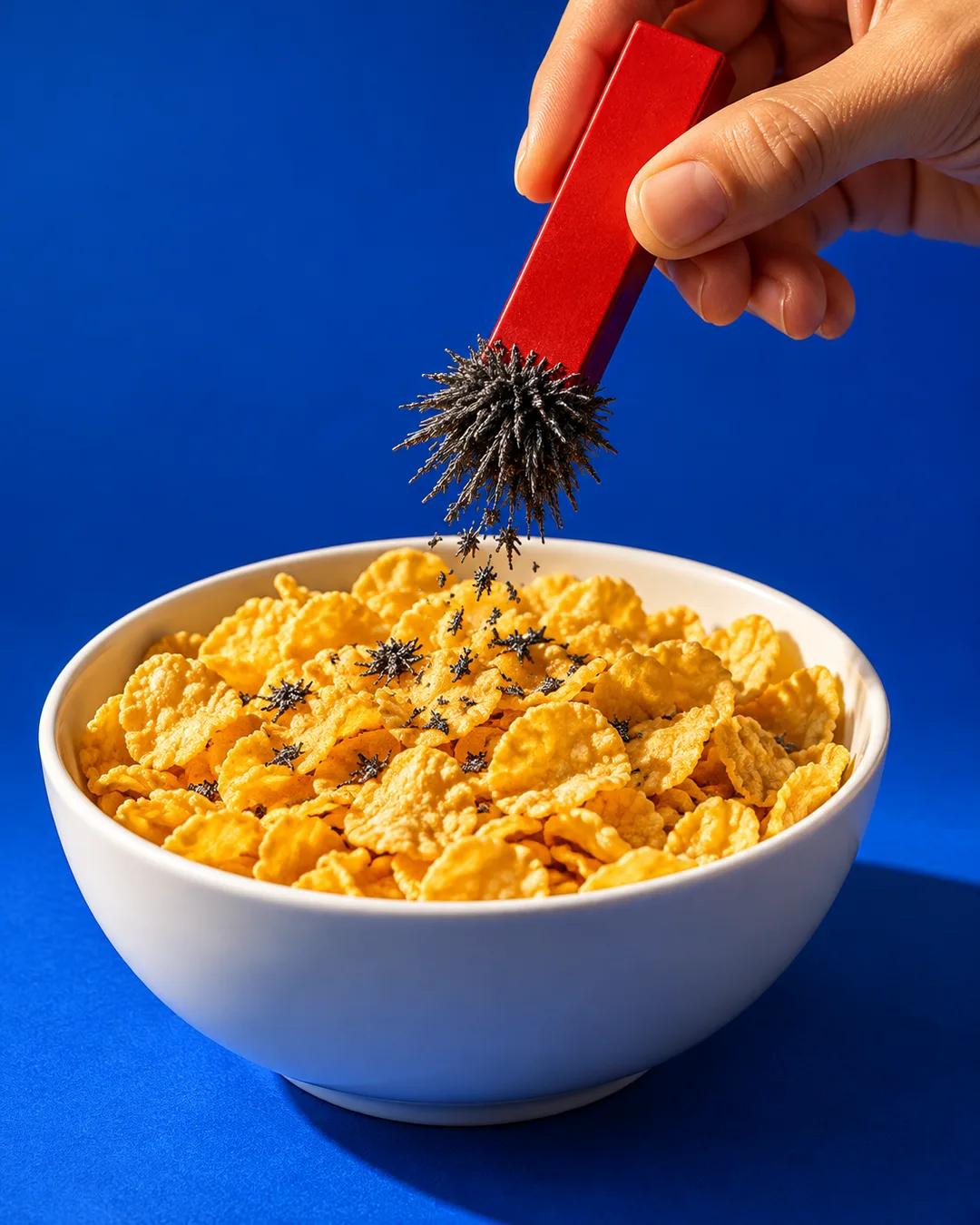
A magnet pulls iron from cornflakes

The magnet trick
The iron is so cheap that it is added only to tick a box on the packet saying the cereal has iron. It doesn't get into the body or do anything once it is eaten.
Cereal marketing
Cereal packets often advertise added vitamins, and the vitamins are frequently in a very poor form. The same goes for the cereal's healthy look: sugary cereals gave way to muesli and porridge, and they still carry plenty of additives and sugar.
Reading the label
Anything with a lot of added nutrients or labeled low in something is a sign that the quality of the product is being obscured. Decades of marketing have convinced even doctors to trust that appearance of health.
How does a magnet pull iron from cereal?
Many fortified cereals contain reduced iron, a fine powder of metallic elemental iron. Because it is metallic, it is attracted to magnets. A common classroom demonstration crushes the cereal in water and drags a strong magnet through the slurry to collect gray specks. Reduced iron is cheap and stays stable in storage without changing the cereal's flavor or color.
Why do cereals get fortified with vitamins?
Fortification began in the United States in the early 1940s, when flour and bread were enriched with iron and B vitamins to fight deficiency diseases such as pellagra and beriberi. Cereal makers added vitamins soon afterward. By the 1950s, fortified ready-to-eat cereals were common, and the added nutrients had become a selling point printed on the box.
How did cornflakes become a health food?
John Harvey Kellogg, a physician at the Battle Creek Sanitarium in Michigan, promoted plain grain foods for health in the 1890s. He and his brother Will Keith Kellogg developed flaked cereals there. Will later added sugar and founded the company that began selling corn flakes in 1906.
More from The Diary Of A CEO with Steven Bartlett