Korva is a scroll of the internet’s best ideas.
The setup
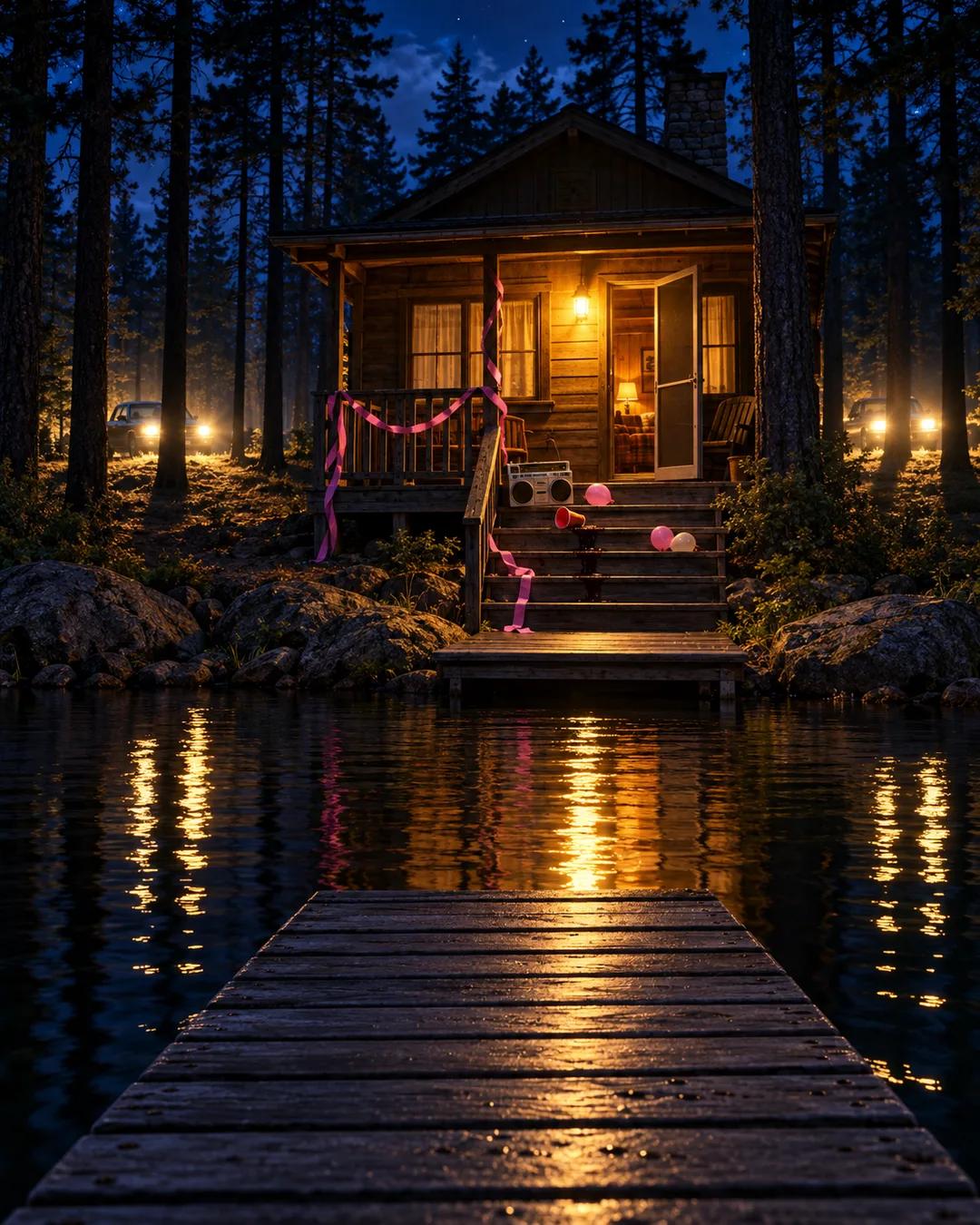
Penny Lane Is Dead is the feature debut of Australian writer-director Mia Kate Russell. Penny, Tony, and Amy, played by Bailey Spaulding, Tali Faraday, and Alexandra Jensen, have just graduated high school and are spending a girls' night at Penny's family's cabin. Then Penny's cousin Kat, played by Sophia Wright Mendelsohn, shows up and sets off a prank the others know nothing about.
The home invasion
Words are exchanged and a fight breaks out. Kat calls her boyfriend, Angus, a career criminal and ex-convict played by Ben O'Toole, to come and get her. He arrives with two associates and inflicts violence on the friends, and the night turns into a home invasion. It also becomes a revenge film in which the people responsible get their comeuppance, and it has a final girl. It includes an assault that is heard but not shown on screen.
Tone and release
The film aims for a horror dark comedy and leans hard into Ozploitation grit. It is action-packed and very gory, with excellent makeup effects, and Kat and Angus are both unhinged. Reviews have been mixed, with some viewers very bothered by the brutality, and some jokes at the Fantasia screening got no laugh. Alexandra Jensen was also in Talk to Me. After its international premiere at Fantasia on July 20, it arrives on Shudder on August 28.
Why did Australian genre films get their own name?
Ozploitation refers to the wave of low-budget Australian exploitation films made from the 1970s into the 1980s. The term was popularized by Mark Hartley's 2008 documentary Not Quite Hollywood. Mad Max, released in 1979, is one of its best-known titles. A tax concession scheme introduced in 1981, known as 10BA, gave investors generous deductions for backing local films.
Where did the final girl come from?
Film scholar Carol J. Clover coined the term "final girl" in her 1992 book Men, Women, and Chainsaws. She used it for the last character left alive in a slasher film, the one who faces the killer and survives. Laurie Strode in Halloween, from 1978, is among the best-known examples. Clover's book drew on her study of slashers made in the 1970s and 1980s.
Where did the revenge-horror formula begin?
Wes Craven's The Last House on the Left, released in 1972, is often cited as an early template for the home invasion revenge film. Craven based it loosely on Ingmar Bergman's 1960 film The Virgin Spring. Bergman's film in turn drew on a medieval Swedish ballad. In both, the people responsible for a crime end up at the victim's family's door.