Korva is a scroll of the internet’s best ideas.
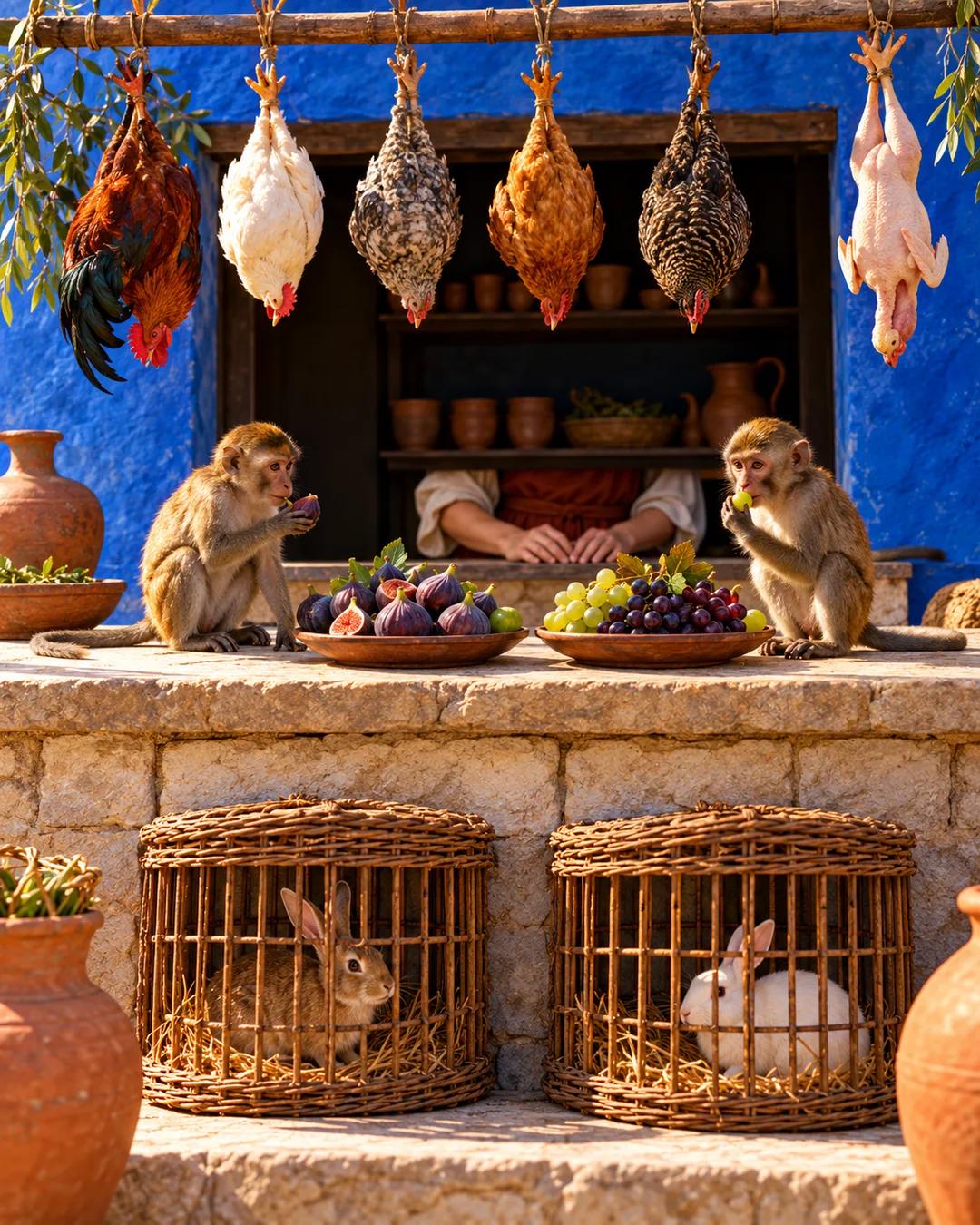
A Roman bar sold caged rabbits

The woman behind the counter has two plates of fruit in front of her, with a number of fowl on display for sale above her head. Whether the monkeys beside her were pets or for sale isn't clear.
Ostia was a port city, and the scene is full of buying and selling. Bars like this were where people went to eat on a daily basis. Anyone staying in an inn or renting a space above a shop lacked the full kitchen of a domus, so a counter like this was where they got their daily meal.
Why did Ostia have so many shops and bars?
Ostia sat at the mouth of the Tiber and served as the harbor town for the city of Rome. Grain, wine, oil, and other goods came ashore there before moving upriver. Sailors, dockworkers, merchants, and travelers filled the town and needed places to eat and sleep. Excavated Ostia still shows streets lined with shop fronts and counters.
How did upstairs tenants cook their meals?
Roman apartment blocks, called insulae, were tall and crowded, and open hearths on upper floors were a serious fire danger. Tenants often relied on small portable braziers or bought their food ready made. Bars and food counters on the ground floor filled that gap. Roman writers complained about fires in the city's apartment blocks.
Why did Romans keep monkeys as pets?
Monkeys were brought into the Roman world as exotic animals from North Africa and beyond. Barbary macaques, the species that lives in North Africa today, are the monkeys most often identified in Roman remains. Monkeys appear in Roman paintings and mosaics, and some excavated animal burials include them.
More from Ancient Rome Live