Korva is a scroll of the internet’s best ideas.
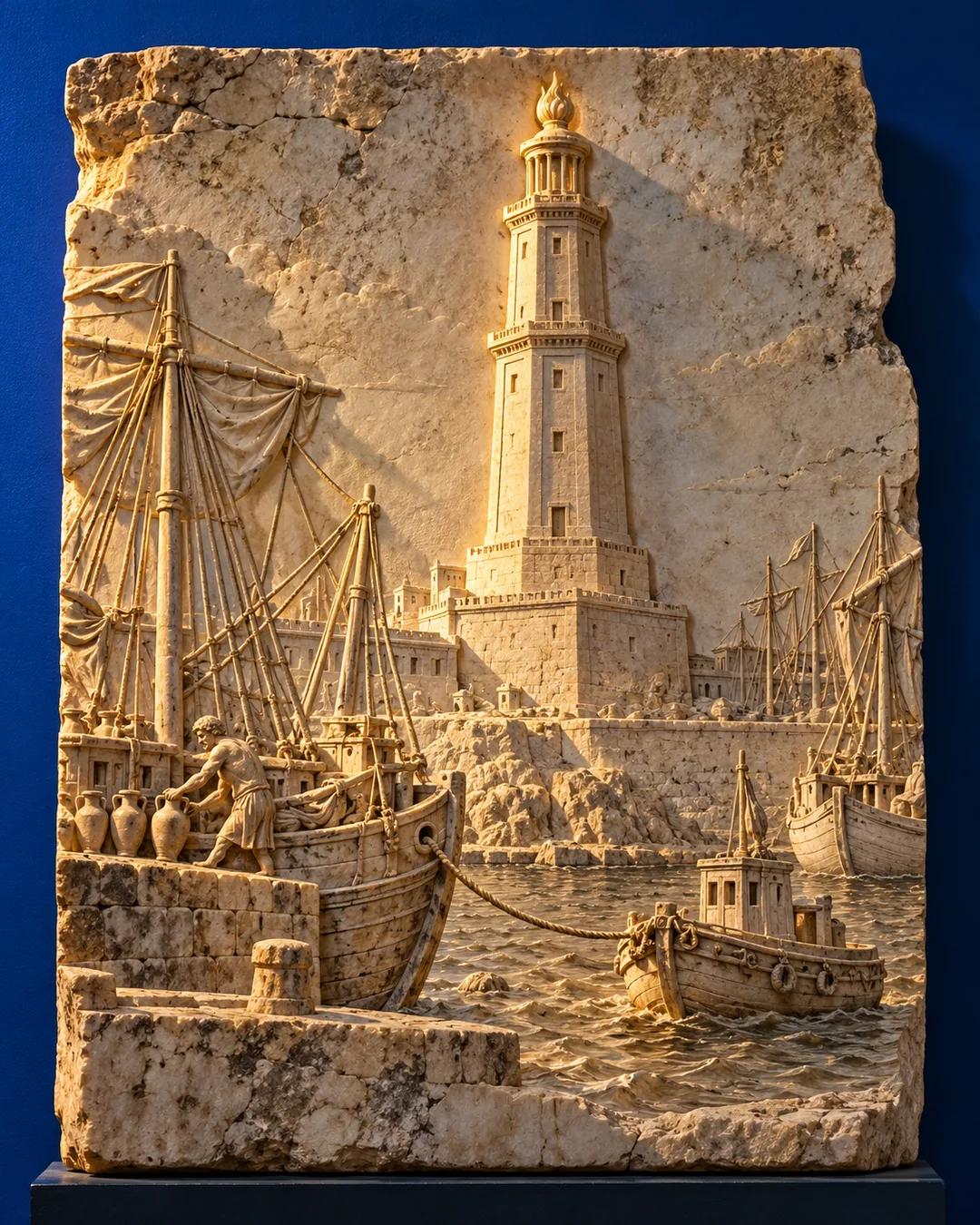
A Roman harbor's burning lighthouse

The scene is busy and industrial. Ships are arriving at the harbor, and the carving captures the incredibly complex rigging and the sails.
One detail is an offering from the master of a ship, thanking the gods for safe travel. A small tugboat is attached to a larger ship, and an attendant is offloading an amphora. The relief was recently on display in the Capitoline Museums.
Why did Rome build Portus near Ostia?
Ostia lay at the mouth of the Tiber, but it had no sheltered harbor, and silt from the river clogged the approaches. Emperor Claudius began Portus a short distance north of Ostia, and Trajan later added a large hexagonal basin. Grain ships from Egypt and North Africa unloaded there, and goods then moved to Rome by river barge.
How did the Portus lighthouse get built?
The Roman biographer Suetonius reports that Claudius modeled the lighthouse on the Pharos of Alexandria. According to him, the foundation was laid on a huge ship that had carried an obelisk from Egypt, which was sunk in place. A fire burned at the top at night so ships could find the harbor entrance. Reliefs and coins from Portus show the tower with its tiers and its flame.
Why did big ships need tugboats?
Roman merchant ships carried large square sails that were hard to steer in a crowded harbor or a narrow entrance. Rowed boats could tow them in against the wind or when the wind dropped. Harbor reliefs show small rowing boats attached to large sailing ships by a line. Towing was a routine job in Roman ports.
Why did captains thank the gods for safe voyages?
Sea travel in the ancient Mediterranean was dangerous, and storms and shipwrecks were common. Sailors made vows to gods before a voyage and paid them with an offering if it ended well. Surviving altars and plaques from harbors record such offerings. Gods linked to the sea and to safe journeys, such as Neptune, drew many of them.