Korva is a scroll of the internet’s best ideas.
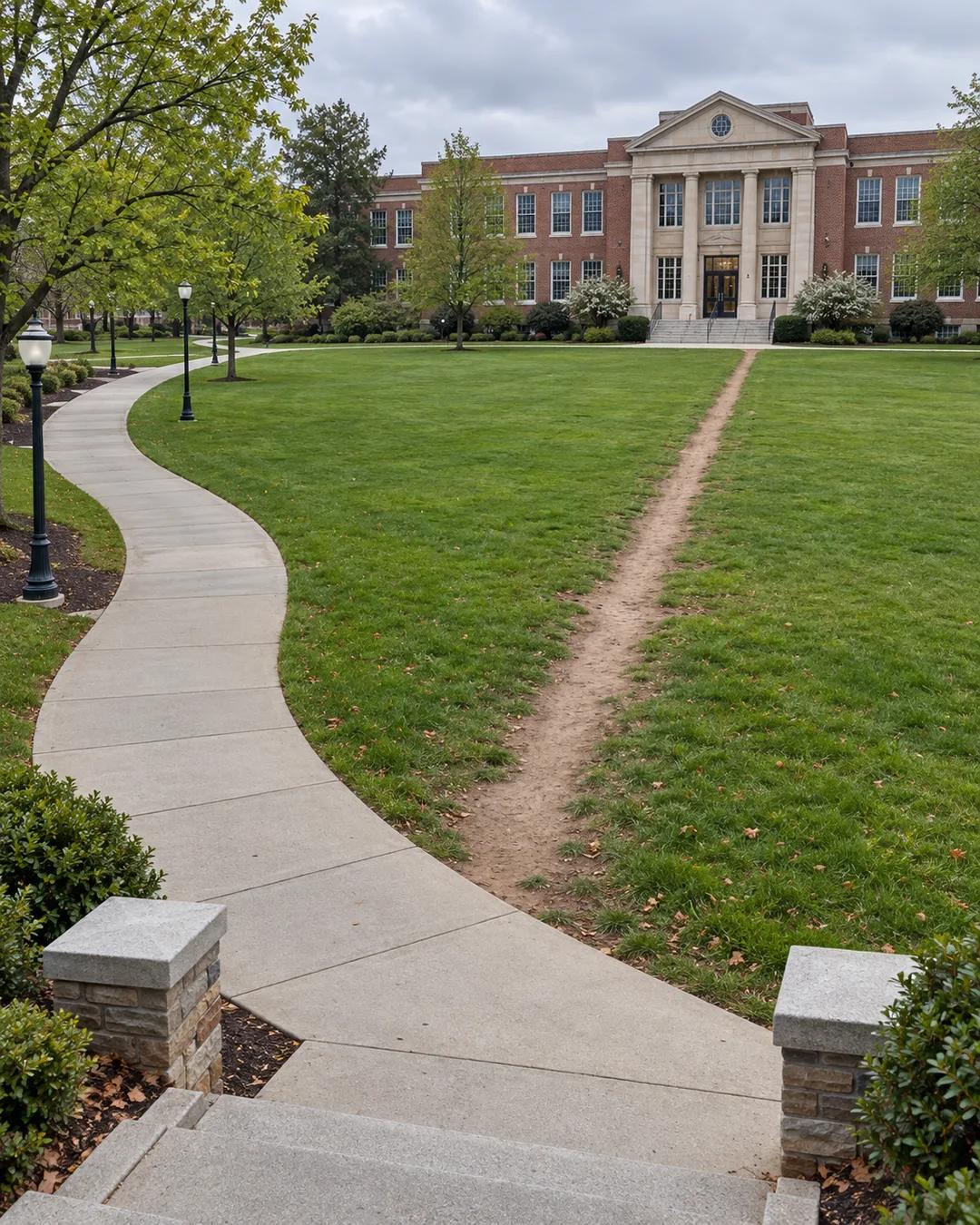
A safe chatbot won't stop shortcuts

Why shortcuts win
Giving students a Socratic chatbot does not stop them from using the normal ChatGPT and getting the answer anyway. Humans naturally want to do things that are easy. School is already seen by many students as mostly meaningless and too hard, and a tool that offers a shortcut through all of the annoying work nobody wants to do will get used.
The numbers
The numbers in Estonia fit. At the end of last school year, about 65% of the students with access to the school's Socratic version of ChatGPT had activated their accounts, but only a minority use it regularly.
Expanding access
This year, Estonia is opening the AI assistant to 12th graders and vocational school students too.
Why does convenience beat good intentions?
Linguist George Kingsley Zipf argued in his 1949 book Human Behavior and the Principle of Least Effort that people tend to choose the path that takes the least work. Defaults show the same pull. In a 2003 study in Science, Eric Johnson and Daniel Goldstein found that countries where people had to opt in to organ donation had effective consent rates as low as 4 percent, while countries where people had to opt out had rates above 85 percent.
Why do students lose motivation for schoolwork?
Psychologists Edward Deci and Richard Ryan developed self-determination theory, which holds that motivation depends on three needs: autonomy, competence, and relatedness. Tasks that feel imposed, with no visible purpose, tend to produce what they call controlled motivation, where people act to avoid penalties rather than out of interest. Reviews of classroom research by Deci, Ryan, and colleagues have linked autonomy-supportive teaching to greater engagement and persistence.
How do new technologies spread through a population?
Sociologist Everett Rogers described the pattern in his 1962 book Diffusion of Innovations. He divided adopters into innovators at about 2.5 percent, early adopters at 13.5 percent, the early majority at 34 percent, the late majority at 34 percent, and laggards at 16 percent. Rogers drew on studies of how farmers adopted hybrid seed corn in Iowa.