Korva is a scroll of the internet’s best ideas.
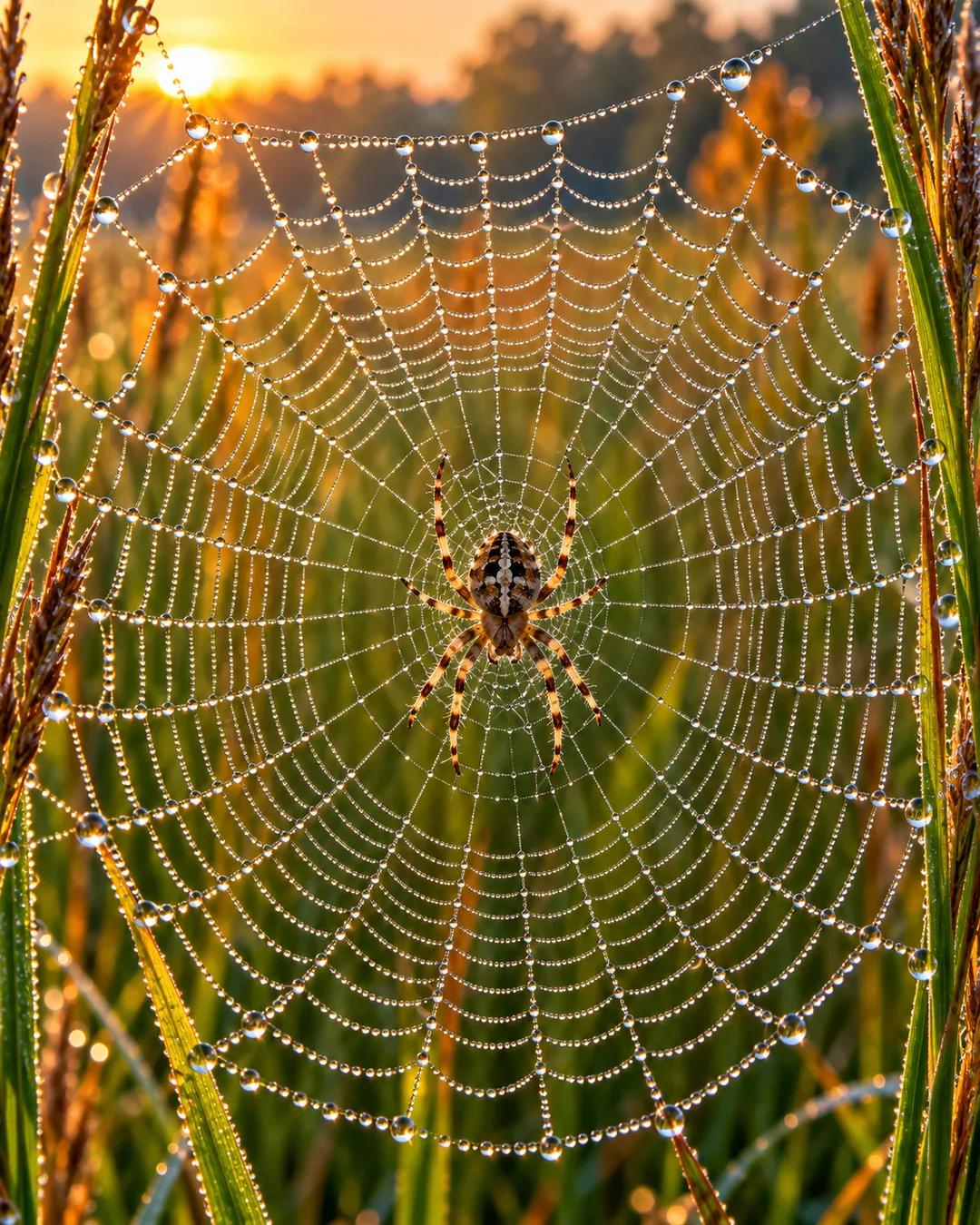
A web uses seven kinds of silk
One silk anchors the web to a surface. Another forms the stretchy spiral, and a sticky silk catches prey. Once something is trapped, the spider switches to yet another silk to wrap it up. All of these threads are thinner than a hair. The spokes of the wagon wheel and the outer framework are dragline silk, called major ampullate silk, and when a bug hits the web it does most of the work of stopping it.
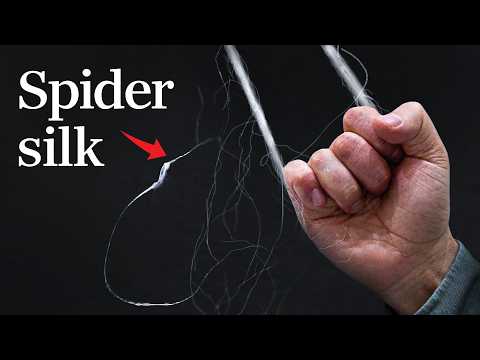
To get a sample, a garden spider was knocked unconscious with CO2 and taped down, and the dragline silk was pulled out by hand. It weighs so little that it can barely be felt. The strand then went onto a rotating mechanism custom made for milking spiders, and the spider was unharmed.
How does sticky silk hold on without tearing?
The capture spiral is coated in tiny droplets of a watery glue. Studies led by Fritz Vollrath at Oxford showed that extra thread is spooled up inside each droplet and pays out when a struggling insect pulls, like a winch letting out line. That lets the spiral stretch much farther before it breaks or releases the prey. Each droplet works as a tiny reel.
Why don't spiders stick to their own webs?
Spiders mostly walk on the radial spokes and the frame, which are dry and not sticky. Their legs also carry fine hairs and a thin oily coating that reduce how much glue can touch them. Orb weavers have three claws on each foot that grip single threads and hold the foot above the surface.