Korva is a scroll of the internet’s best ideas.
A woman ruled the Mongol Empire
Choosing Ögedei
Genghis Khan could not appoint a successor, only nominate one, and his sons chose Ögedei because he was the most generous and the life of every party. He once pulled the judge Shigihutuk out of a cart where he was sleeping and dragged him back into the drinking. Genghis Khan had also picked capable wives for each of his sons. Töregene was not even Ögedei's first wife, and she was more or less running things in his last years.
Töregene Rules
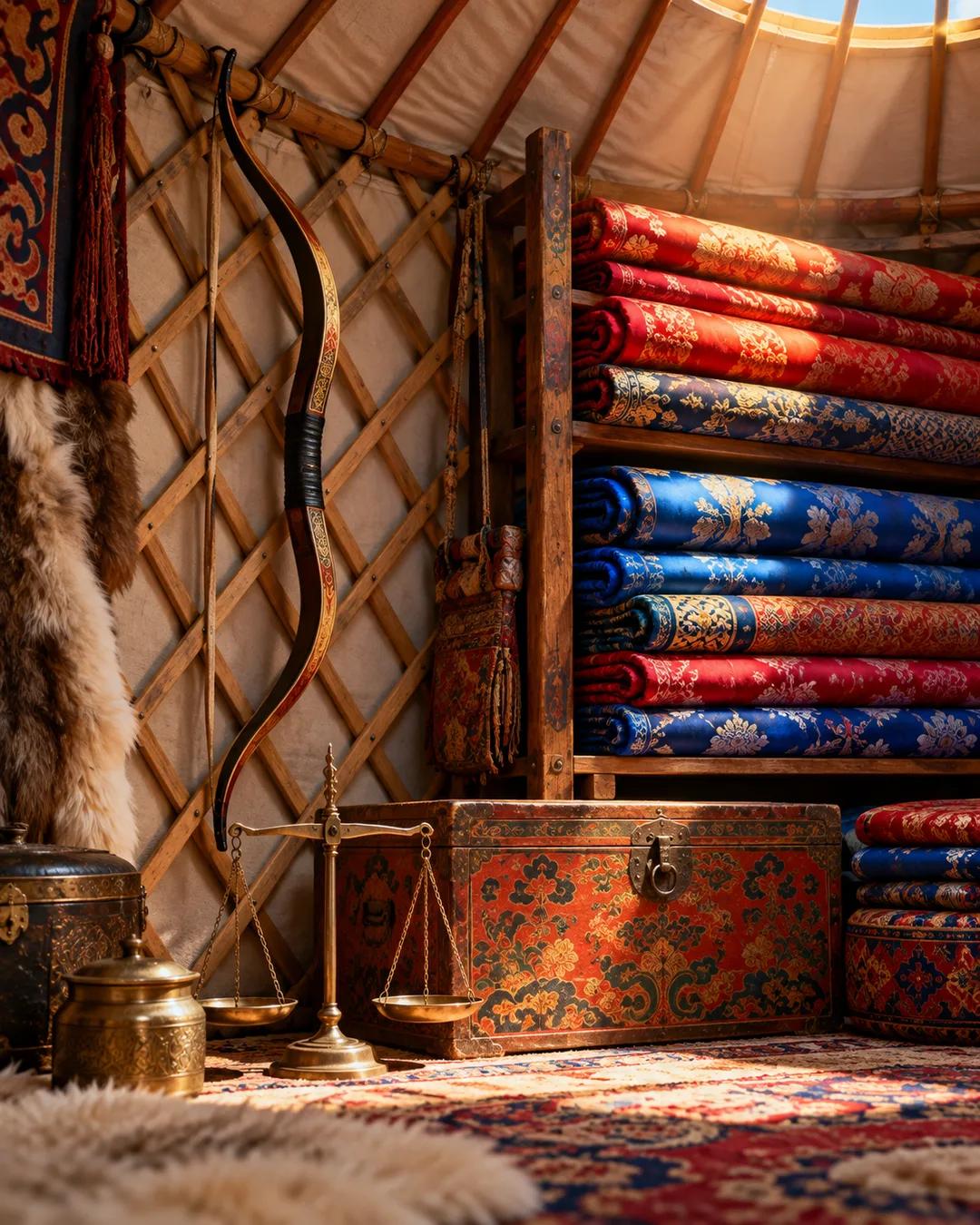
After Ögedei died she ruled in her own name and stopped all military campaigns. The women around her ran private trading corporations called ortoq, and she saw that peace was better for trade. Her chief minister, Fatima, was a woman from the Middle East.
Güyük and After
Her weak point was her son Güyük, whom she arranged to have made great khan while she was still alive. He purged her court, killing many of her supporters, a lot of them Muslims, then set out against the Golden Horde and died after eighteen months. His wife Oghul Qamish, greedy and far less capable than Töregene, took over, until Kublai Khan's mother, Sorghaghtani, joined with the Golden Horde to overthrow her and put her own son Möngke Khan on the throne.
How did ortoq partnerships work?
An ortoq was a merchant partnership funded by a Mongol noble. The noble lent silver to the merchant, who traveled and traded and then repaid the loan with a share of the profit. Many ortoq merchants were Uyghur or Muslim, and princesses as well as princes invested. Mongol rulers backed them with protection on the roads.
Why did Sorghaghtani Beki matter so much?
Sorghaghtani was a Christian of the Kereyid people and the wife of Genghis Khan's youngest son, Tolui. She had her sons educated and kept strong ties to the court's officials. Four of her sons became rulers: Möngke as Great Khan, Kublai as Great Khan and emperor of China, Hulagu as founder of the Ilkhanate in Persia, and Ariq Böke as a rival claimant.
More from Lex Fridman Podcast