Korva is a scroll of the internet’s best ideas.
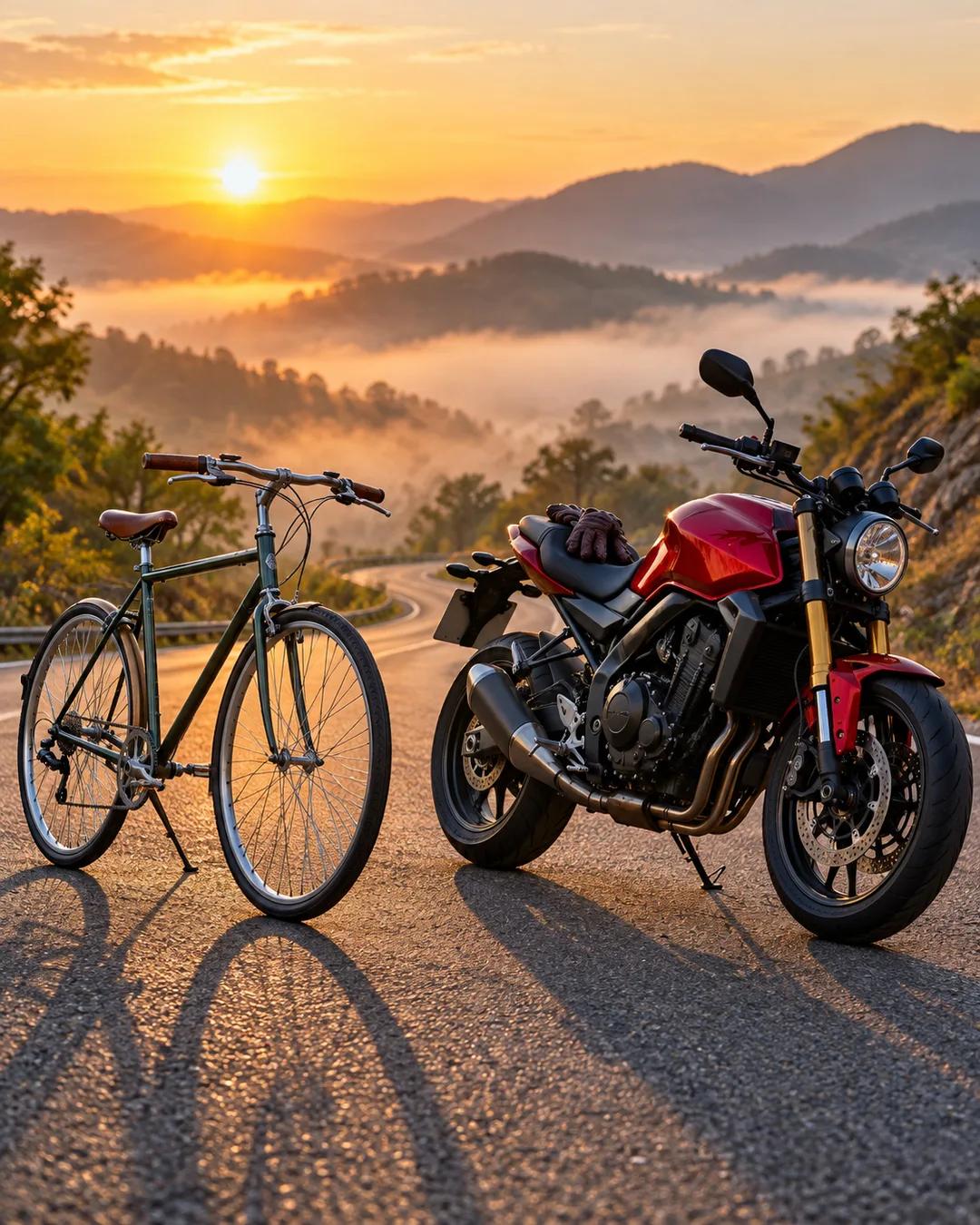
AI is a motorcycle for the mind

Jobs and the bicycle
Steve Jobs described the computer this way in a 1990 interview. He had read a study measuring the efficiency of locomotion across species. The condor used the least energy to move a kilometer, and humans came in about a third of the way down the list, an unimpressive showing. Then someone at Scientific American tested a human on a bicycle, and the cyclist blew the condor off the top of the charts. A computer, to Jobs, was the equivalent of a bicycle for our minds.
Naval's motorcycle
Naval Ravikant extended the analogy: a bicycle lets you travel much faster than walking, but it takes the legs to turn the pedals in the first place. AI may be a motorcycle for the mind, yet it still needs someone to ride it, direct it, hit the accelerator, and hit the brake.
Two paths forward
Legs may atrophy with a motorcycle in the picture, and there may be areas where surface knowledge reigns supreme. But less energy spent on the legs leaves energy to redeploy elsewhere, to go faster, further, and deeper. One path is to outsource every part of life and become a surface-knowledge being, the confident chauffeur reciting the lecture, or something out of Wall-E. The other is to outsource some arenas in order to go deeper in others.
Where did the condor and bicycle chart come from?
The comparison appeared in a 1973 Scientific American article titled Bicycle Technology by the engineer S. S. Wilson. It plotted the energy different animals and machines spend to travel a given distance. The condor ranked first among animals, and a human on foot sat well down the list. A person on a bicycle used less energy per distance than any animal in the chart.
Why is a bicycle so efficient for a person?
Rolling on wheels avoids the energy a walker spends lifting and lowering the body with every step. A bicycle's gears let the rider's legs keep turning at a comfortable rate whatever the speed or slope. The rider's weight is carried by the frame and the seat, so the muscles do little besides pushing the pedals. Most of the rider's effort ends up moving the bicycle forward.
What does Wall-E show about total outsourcing?
The 2008 Pixar film Wall-E imagines future humans who ride hovering chairs and have nearly everything done for them by machines. They have grown soft and passive from generations of automated comfort. In the story, they only begin to reclaim their abilities when they are pushed to act for themselves. Director Andrew Stanton has said the film's portrait of human inertia was meant as a satirical exaggeration.