Korva is a scroll of the internet’s best ideas.
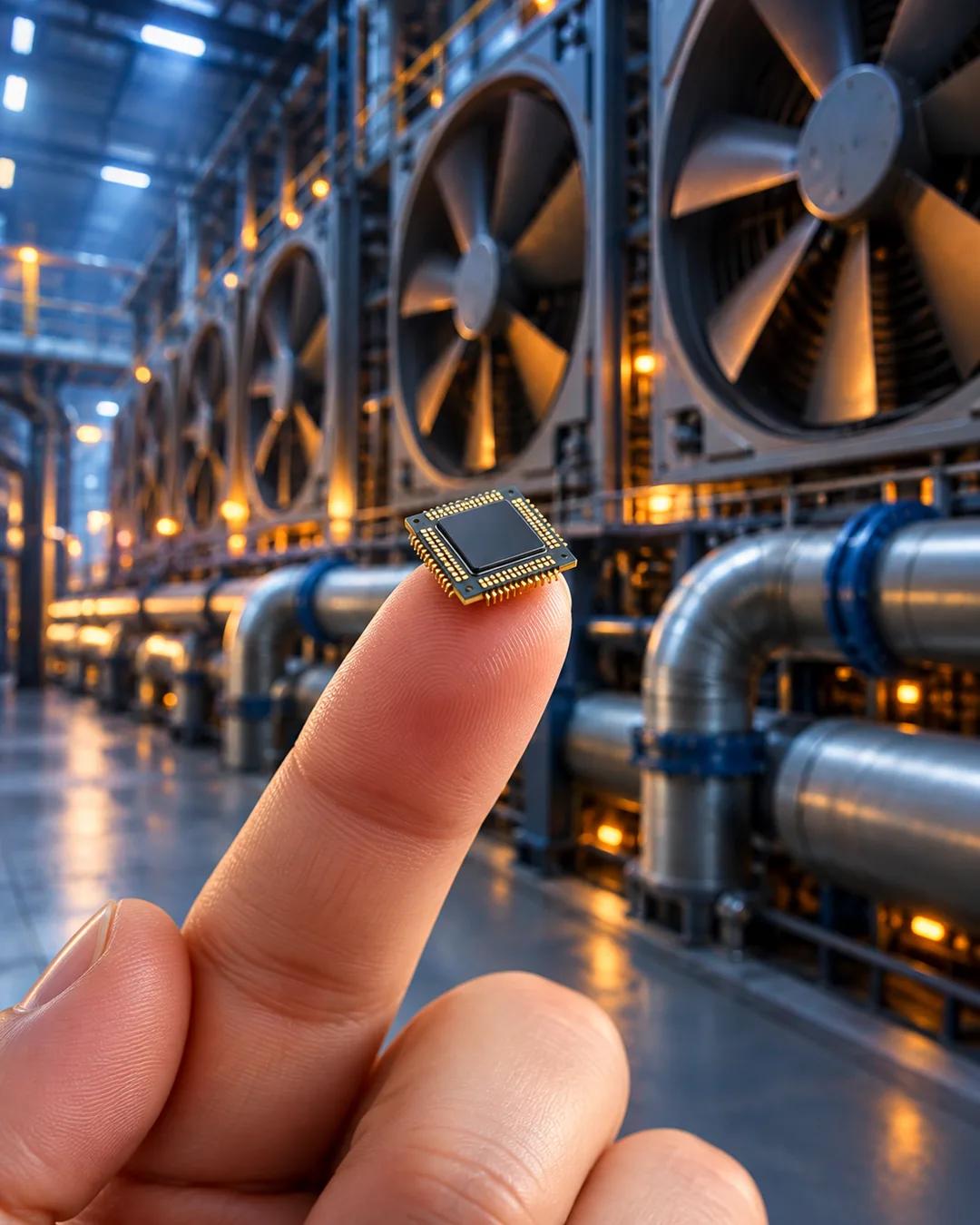

Everyone appears to be moving toward the same bottleneck: the foot on the carotid artery of AI is its inability to keep up with power demands. Worry that widespread usually points to the wrong place, and what matters may sit elsewhere.
Different technologies around quantum and advances in chips might not only increase compute and inference but massively decrease the amount of power required. If so, the innovation would come from reducing demand for power rather than improving the supply of it.
The power trade has already had a run. Constellation Energy, the largest owner of nuclear power plants, and even ordinary utilities have skyrocketed. Plenty of people may be hard at work on technologies that are not as energy thirsty, which leaves open whether it is already too late for that trade.
How much more efficient have chips become?
Stanford researcher Jonathan Koomey found that the number of computations per unit of energy doubled roughly every year and a half across decades of computing history. The pace slowed in the 2000s as chips ran into physical limits. Specialized chip designs for AI have since delivered new gains by cutting wasted data movement.
Could efficiency gains still raise total power use?
In 1865 the economist William Stanley Jevons observed that more efficient steam engines had increased Britain's coal consumption instead of reducing it. Cheaper use of a resource can encourage far more use of it. Economists now call this pattern the Jevons paradox.
How does the brain compare with a data center?
The human brain runs on about 20 watts, roughly the power of a dim light bulb. A large AI training cluster draws power measured in megawatts. That gap has pushed researchers toward brain-inspired designs such as neuromorphic chips.