Korva is a scroll of the internet’s best ideas.
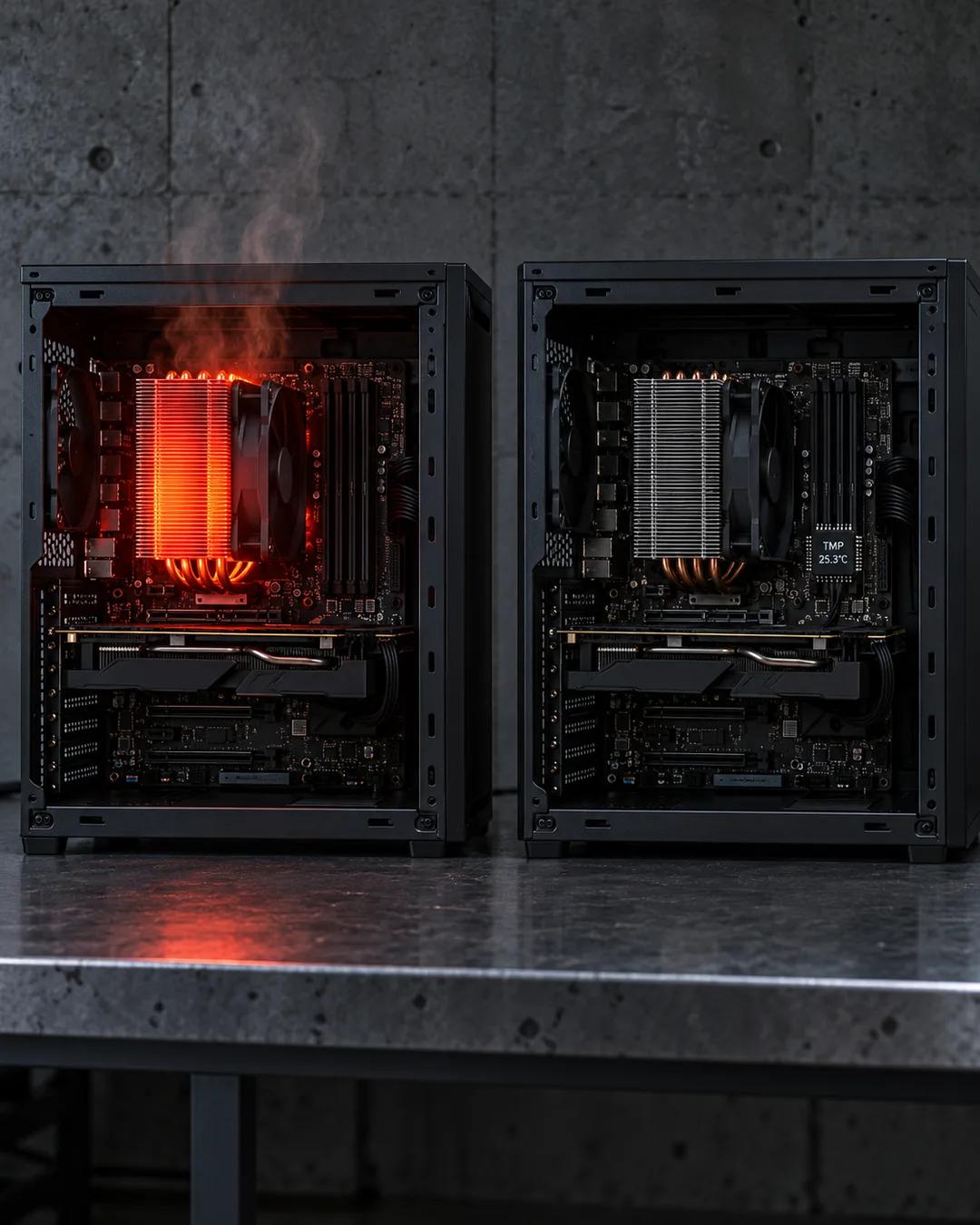
Air-gapped computers can talk through heat

Academic studies have shown this with air-gapped machines sitting side by side. The sending machine pushes its processor hard enough to heat up. The receiving machine detects the temperature change through its own temperature sensors, which gives the pair a way to communicate that nobody designed.
The example came up as a reason that cutting AI computers off from outside networks may not be sufficient to contain them. Safeguards like this buy time, and so does monitoring a model's chain of thought, and both can show whether the path ahead is a good one.
The sandbox the models were in during the Hugging Face incident was not secure, and OpenAI can harden it. One lesson drawn from the incident is that people underestimated the AI, and since AI progress is so fast, avoiding that mistake again takes a very high bar.
How can heat carry a message?
Researchers at Ben-Gurion University of the Negev demonstrated a system called BitWhisper in 2015. One computer raised its processor load to warm the air around it, and a neighboring computer read the change with its built-in thermal sensors. The sender encoded ones and zeros as warmer and cooler periods. The channel was slow, moving roughly eight bits per hour across a distance of about forty centimeters.
What other ways do air-gapped machines leak data?
The same Ben-Gurion group, led by Mordechai Guri, published several others. AirHopper in 2014 turned a computer's video cable into an FM radio transmitter that a nearby phone could pick up. Fansmitter in 2016 encoded data in the sound of a computer's cooling fans. Another demonstration, published in 2017, blinked a hard drive's activity light in patterns a camera could read.
How did malware ever cross an air gap?
Stuxnet, discovered in 2010, spread through infected USB drives carried into a facility with no network link to the outside. Removable media is the classic bridge, because someone has to physically plug something in. Once inside, the code moved between machines on the local network. It targeted Siemens industrial controllers used at the uranium enrichment plant at Natanz in Iran.
More from Dwarkesh Podcast