Korva is a scroll of the internet’s best ideas.
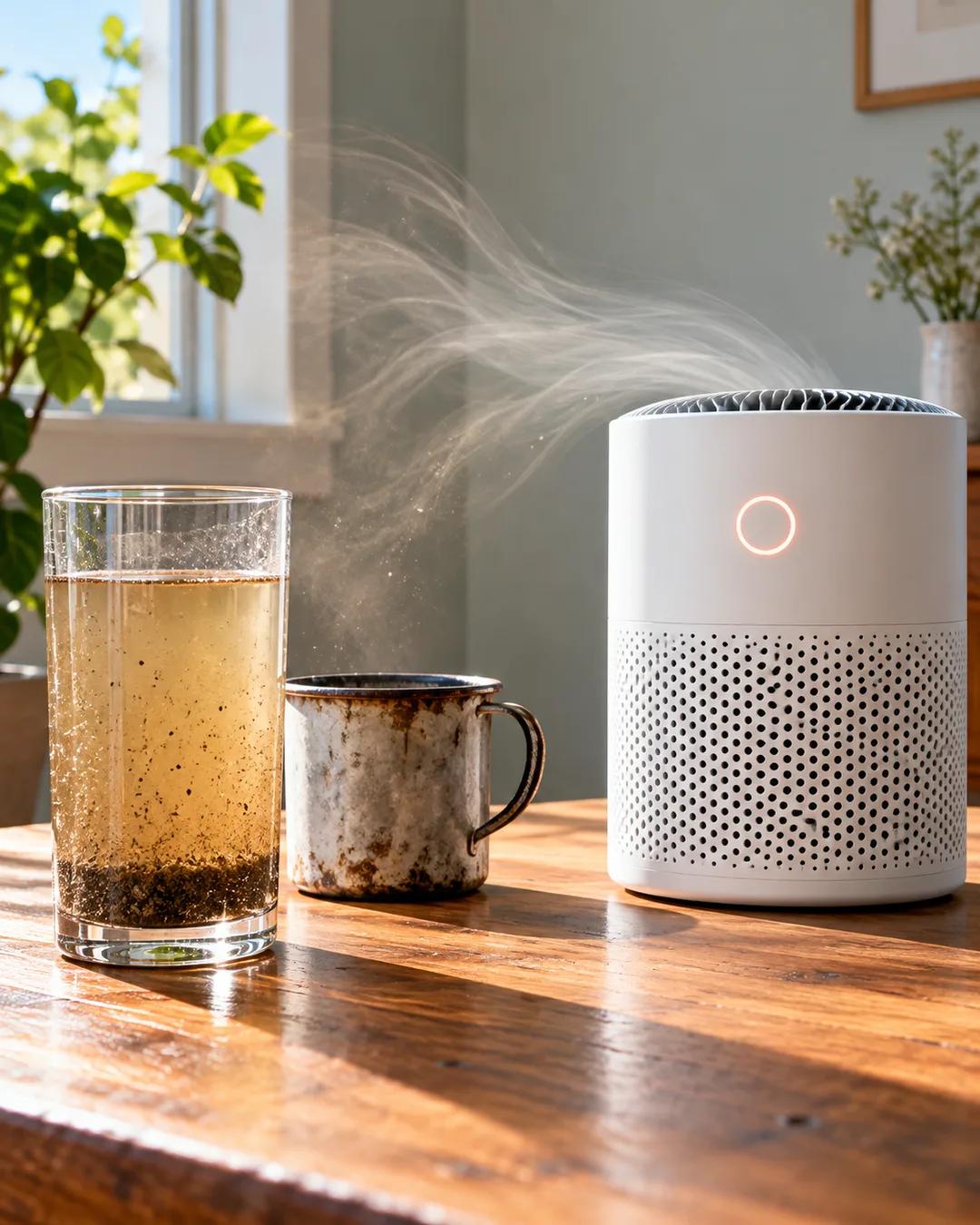
Airborne disease is today's bad water

An accepted risk
Water that carried life-threatening disease was simply how drinking water was, and nobody counted it as a failure of medicine. Airborne disease holds that spot now. People power through colds and treat them as an annoyance.
The cost in numbers
The numbers are larger than the annoyance suggests. An average healthy person spends 15 to 25 days sick with respiratory infections, and 5% of a life goes to fighting a cold. Across the world, respiratory infections cost 1 to 1.5% of annual productivity, about $600 billion a year.
The long-term numbers are heavier. A child who gets the common cold between birth and age three has almost 10 times the risk of developing asthma by age six. An adult has 6 times the risk of a heart attack in the 7 days after a flu infection, and a severe flu infection brings a higher risk of dementia and Alzheimer's.
Cleaning the air
The engineering that removed waterborne disease is expected to work on air as well: nasal sprays, pills, and air cleaners that do for air what water cleaners do for water.
How did anyone prove cholera came from water?
In 1854, London physician John Snow mapped cholera deaths during an outbreak in Soho and found them clustered around a public water pump on Broad Street. He interviewed residents and traced individual cases back to that pump, including some who lived farther away but preferred its water. Local officials removed the pump handle, though the outbreak was already declining by then. Snow's work is now taught as a founding example of epidemiology.
How did cities finally clean drinking water?
Filtration came first, and London's water companies were required by law to filter Thames water starting in 1852. Chlorination followed in the early 1900s, and Jersey City began chlorinating its public supply in 1908. Typhoid death rates in American cities fell sharply in the decades after chlorination spread.
How does far UVC kill germs but spare skin?
Far UVC light sits around 222 nanometers, a shorter wavelength than the 254 nanometer lamps long used for disinfection. Researchers at Columbia University led by David Brenner reported that this light is absorbed in the outer layer of dead skin cells and the tear film before it reaches living cells. Bacteria and viruses are far smaller than human cells, so the light can still reach and damage them. A 2018 study from Brenner's group found that it inactivated airborne influenza virus in a test chamber.
Why is flu linked to heart attacks?
A 2018 study in the New England Journal of Medicine, led by Jeffrey Kwong in Ontario, matched lab-confirmed flu cases with heart attack records. It found the heart attack rate was about six times higher in the week after a confirmed infection. Infection raises inflammation throughout the body, which can destabilize fatty plaques in the arteries. A ruptured plaque can trigger a clot that blocks blood flow to the heart.
More from Lightspeed Venture Partners