Korva is a scroll of the internet’s best ideas.
Alumni built iPod, iPhone, Android

Lessons From Failure
Tony Fadell had phoned General Magic every day, begging for a job, until they finally let him in. When the company fell apart, he was devastated, and he learned. At Apple he paid attention to the two things General Magic had neglected.
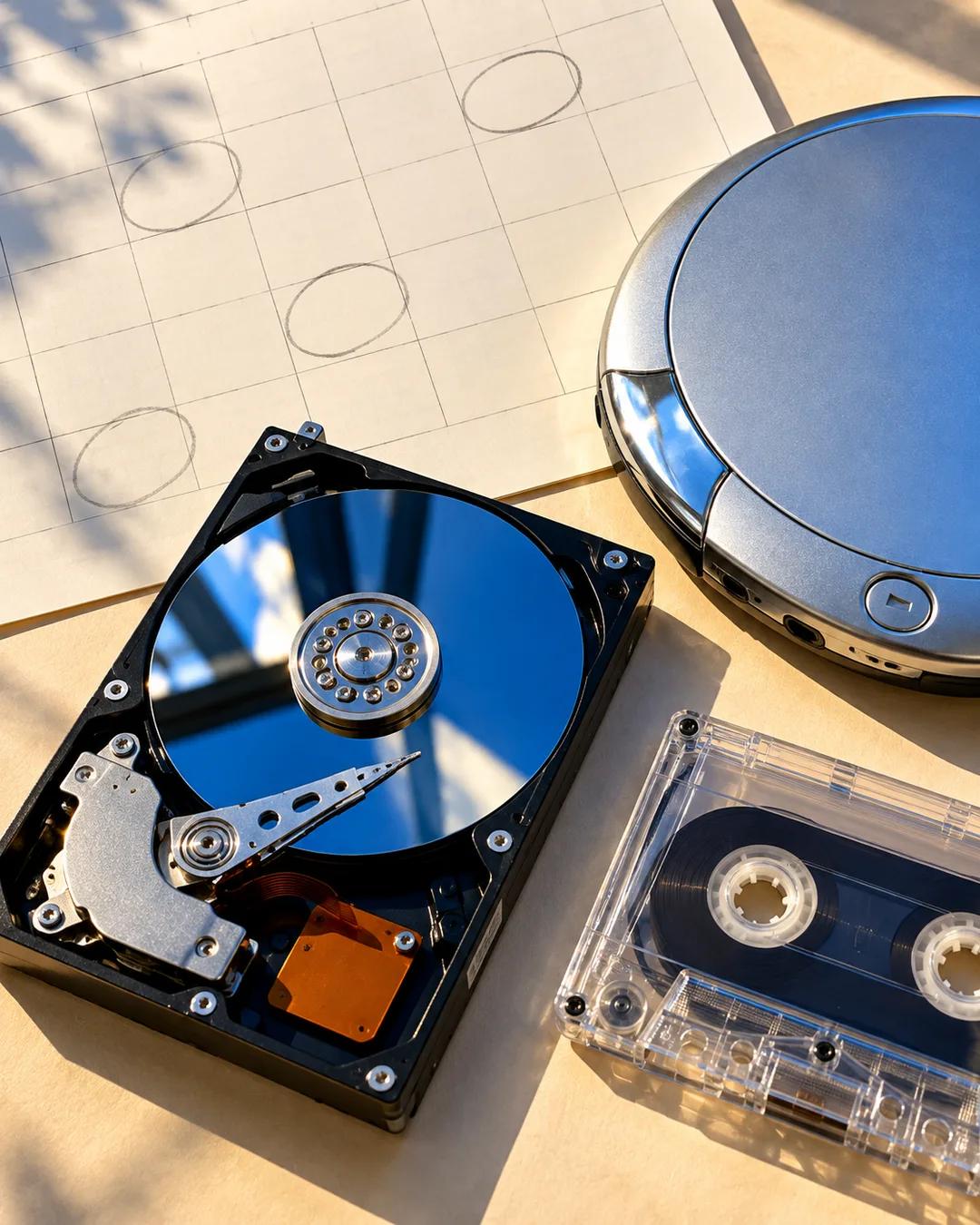
The first question had an answer in the MP3, a new way to compress digital music, and in ever-cheaper hard drives. Together they might make portable cassette and CD players obsolete. The second answer was a date: in January 2001, the plan was to ship something by Christmas. The iPod went to market just a few weeks before Christmas, a device that did one thing beautifully, and it was a huge success.
The Alumni
That restraint paved the way for Fadell's next project, the Pocket Crystal made real, the iPhone. His General Magic colleague Andy Rubin founded Android. Other General Magicians co-founded LinkedIn, took charge of search at Google, ran Apple projects such as AI, Safari, and the Apple Watch, and became Chief Technology Officer of the United States.
How did MP3 files get so small?
MP3 uses perceptual coding, which discards the parts of a recording that human ears are least likely to notice. A loud sound can mask a quieter one at a nearby frequency, so the quieter one can be dropped. The result is typically a file about one tenth the size of the CD audio it came from. The format was developed by researchers at Germany's Fraunhofer Institute and became part of an MPEG audio standard in the early 1990s.
Why could a tiny hard drive hold 1,000 songs?
The original iPod used a 1.8-inch hard drive, a size that drive makers had developed for small devices. It held 5 gigabytes, which Apple advertised as 1,000 songs. Flash-memory players of the day held a few dozen songs at most.
How did Android begin?
Andy Rubin founded Android Inc. in 2003 with a plan to build an operating system for digital cameras. The focus soon shifted to mobile phones. Google bought the company in 2005. The first Android phone, the HTC Dream, went on sale in 2008.
More from Cautionary Tales with Tim Harford