Korva is a scroll of the internet’s best ideas.
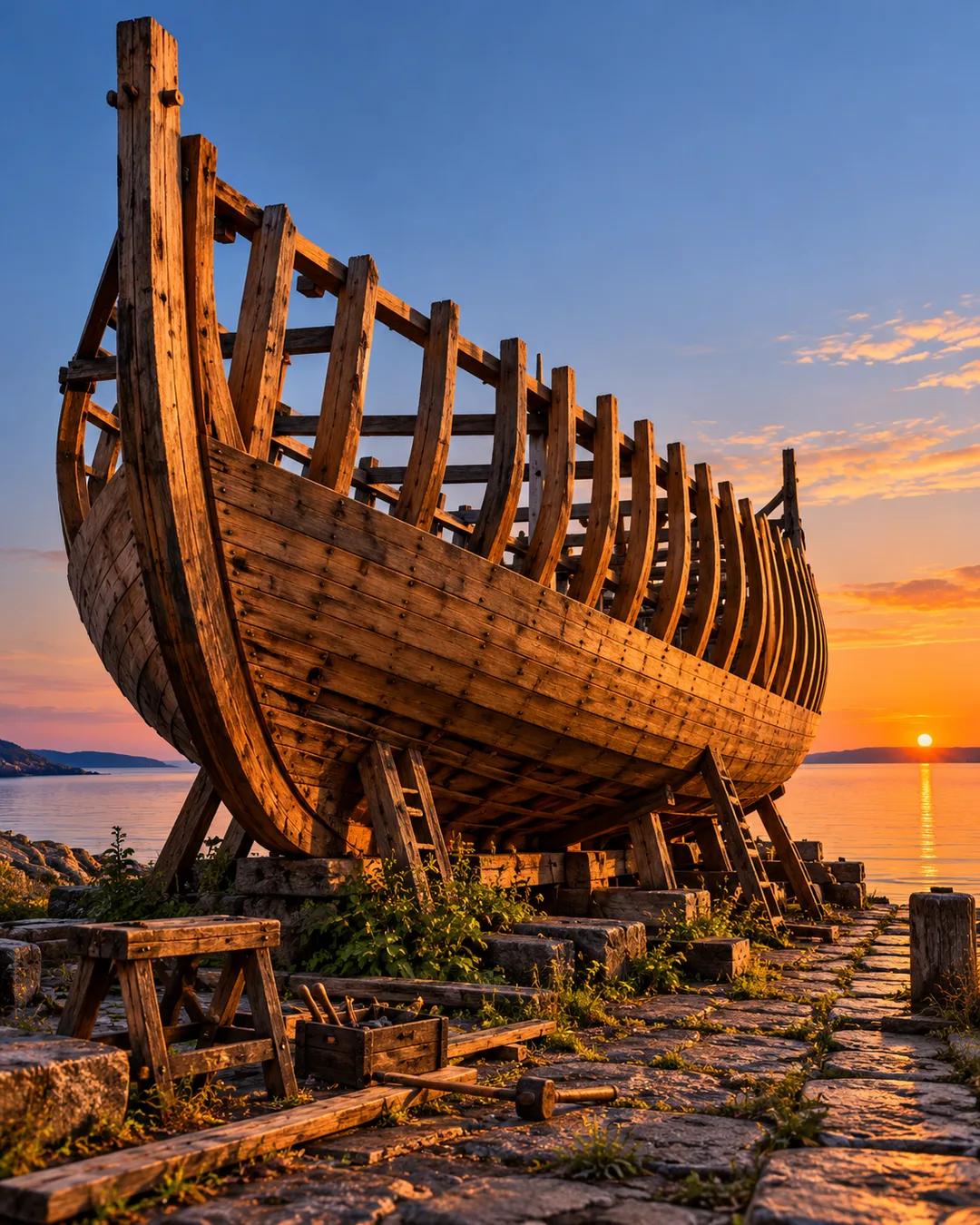

In the medieval period, Chinese civilization was much more advanced than European civilization. Somewhere along the line that order switched, and the West took the lead. Some historians pinpoint the turn to the decision of a single Chinese emperor to ban shipbuilding.
With that ban in place, the Europeans basically colonized the whole world. All the riches that flowed from that colonization flowed back to Europe, and that is how Europe took the lead.
How large were China's early ocean fleets?
Between 1405 and 1433, Admiral Zheng He led seven voyages under the Ming dynasty. They sailed across the Indian Ocean to ports in India, Arabia, and East Africa. Chinese records describe fleets of more than 100 ships and tens of thousands of crew. After the last voyage, the Ming court stopped sending such expeditions.
Why did Europeans race for sea routes?
Spices, silk, and other Asian goods reached Europe through chains of overland and Mediterranean middlemen, each adding to the price. Portugal pushed down the African coast in the 1400s hoping to reach Asian markets directly. In 1498, Vasco da Gama reached Calicut on India's coast by sailing around Africa. Columbus's crossing for Spain in 1492 came from the same search for a route to Asia.
How do historians explain Europe overtaking China?
Economic historians call the shift the Great Divergence, a phrase popularized by Kenneth Pomeranz in his 2000 book of that name. Pomeranz argued that accessible coal and resources from the Americas helped Europe industrialize. Other scholars point instead to institutions, competing states, or scientific culture. The explanations are still debated among economic historians.
More from All-In with Chamath, Jason, Sacks & Friedberg