Korva is a scroll of the internet’s best ideas.
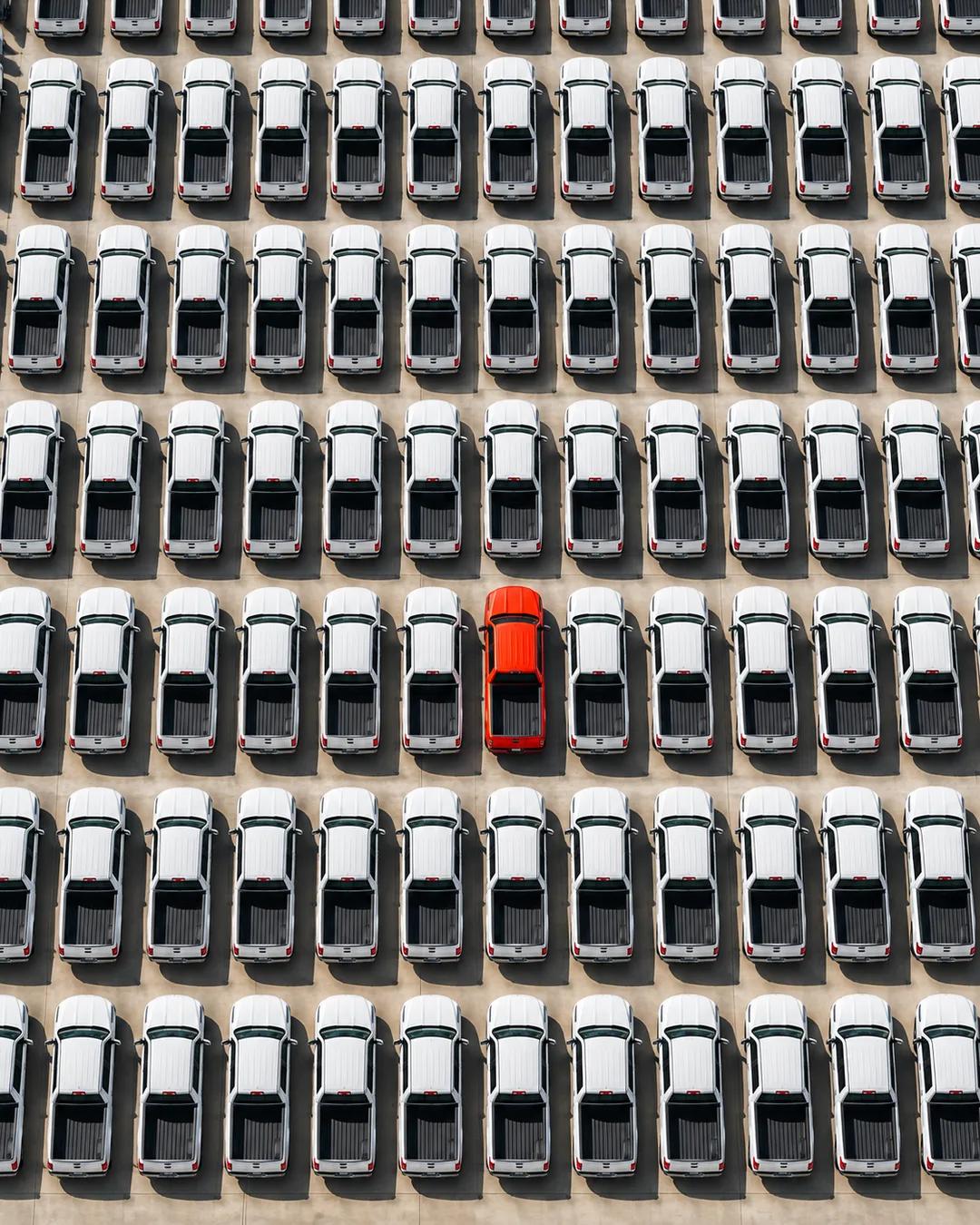
An F-150 sells every 53 seconds

Who really buys trucks
The F-150 used to be a simple, functional, reliable tool for farmers, contractors, and ranchers. Ford slowly realized there just aren't that many farmers, contractors, or ranchers, so it had been designing pickups for a tiny slice of the market. Only 25% of truck owners tow something more than once a year, 30% go off-road more than once a year, and 35% haul something once a year or never.
Ford's formula
Ford refined that data into a formula: bigger cabs, smaller beds, better features, and higher prices. F-150s now run from forty thousand to well over a hundred thousand dollars. The truck has been the best-selling vehicle of any kind for over forty years and is, after the iPhone, arguably the most successful consumer product in history.
Profit and loyalty
Ford makes an estimated 90% of its profit from the F-150 alone. The truck brings in $42 billion in revenue, more than Starbucks, Netflix, or Visa, against $55 billion for the iPhone. Truck drivers are among the most loyal consumers too: 80% buy another full-size truck, usually from the same brand.
Why do bigger cabs raise a truck's profit?
A pickup's frame, engine, and bed can be shared across many versions, so a bigger cab or a higher trim level mostly adds items like seats, trim, and screens. Those additions are priced far above what they cost to make. The top versions of a full-size truck come with leather seats and large touchscreens that a basic work truck lacks. By the early 2000s, four-door crew cabs had become widely available across the full-size truck market.
Why are truck buyers so brand loyal?
Towing capacity, payload, and bed dimensions differ by model, so an owner who finds a truck that fits a particular use tends to stay with it. Accessories such as bed liners, tonneau covers, and hitches are often made to fit a specific brand and generation of truck. Pickups also tend to hold their resale value well, which makes trading toward the same model less costly. Owners also become familiar with a brand's dealers and service network over the years.
How did pickups become family vehicles?
Through the 1960s, most pickups were two-door work trucks with a bench seat. Extended cabs with small rear seats arrived in the 1970s, and four-door crew cabs later moved from niche work vehicles into the mainstream. Ford introduced its four-door SuperCrew version of the F-150 in 2001. That change gave the pickup room for a family as well as a trailer.
More from PolyMatter