Korva is a scroll of the internet’s best ideas.
Anthropic launches Claude Science in beta

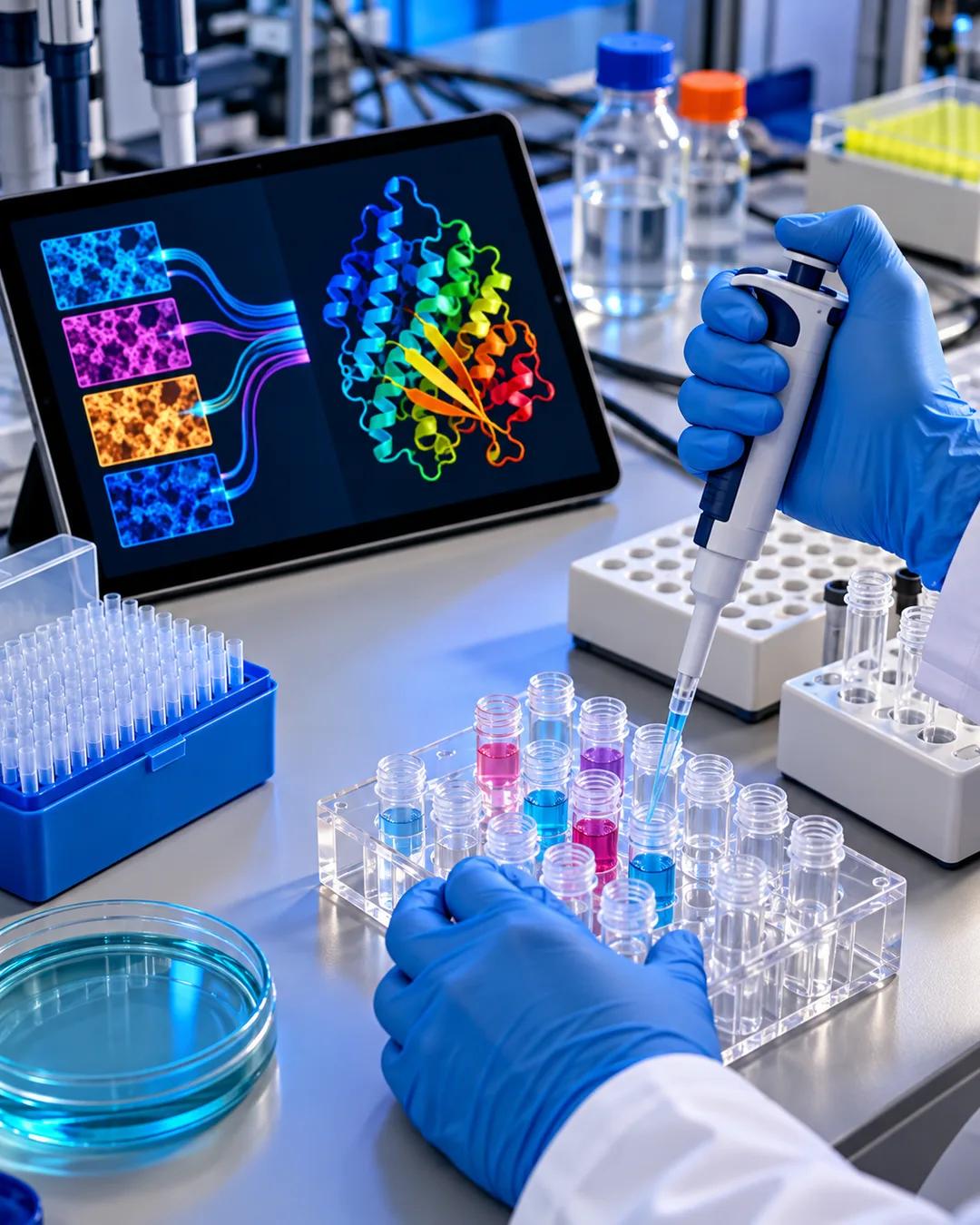
It plugs into the tools, databases, and software packages researchers already use, with more than 60 built in, and it gives them access to compute. A researcher chasing why a cancer drug stops working in some patients would otherwise move between PubMed, many separate data sets, analysis code, and protein folding models.
Claude Science also produces auditable artifacts. Asked to reproduce a result, it returns the entire chat history and all the data it accessed, which is hard to trace when a researcher does the same work by hand.
It does not run on a new model. It uses the same Claude models available to everyone, such as Opus 4.8, with no special access or gating. Dario Amodei has said that in the way Claude Code upended programming, Anthropic wants Claude Science to do the same for researchers in the life sciences.
Why does an audit trail matter in science?
Reproducibility is a core test of scientific work, and many studies are hard to repeat because the exact steps were never recorded. A 2016 survey in Nature found that more than 70 percent of researchers had tried and failed to reproduce another scientist's experiments. A full log of queries, data, and code lets a reviewer follow each step. Software engineers have long used version control for the same reason.
Why do scientists juggle so many separate tools?
Biology data is spread across many specialized databases, such as PubMed for papers and the Protein Data Bank for structures. Each has its own format and search method, and analysis code usually lives somewhere else again. Fields grew these tools one at a time over decades, built by different groups for different questions. Moving results between them often means writing small conversion scripts by hand.
How do protein folding models help drug research?
A protein's shape decides which molecules can stick to it, so knowing the shape helps researchers look for drugs that fit. Measuring a structure in the lab by methods like X-ray crystallography can take months or years for a single protein. Predicted structures from models like AlphaFold give a starting point in minutes. The 2024 Nobel Prize in Chemistry recognized this kind of protein structure prediction.
More from Lightspeed Venture Partners