Korva is a scroll of the internet’s best ideas.
Anyone can write a bill

Who writes a bill
Members of Congress usually write bills with their staff. They can also get help from the nonpartisan Office of Legislative Counsel, experts in legal language and how to write laws, who turn an idea into legislative language that adds to or amends the United States Code.
The hopper
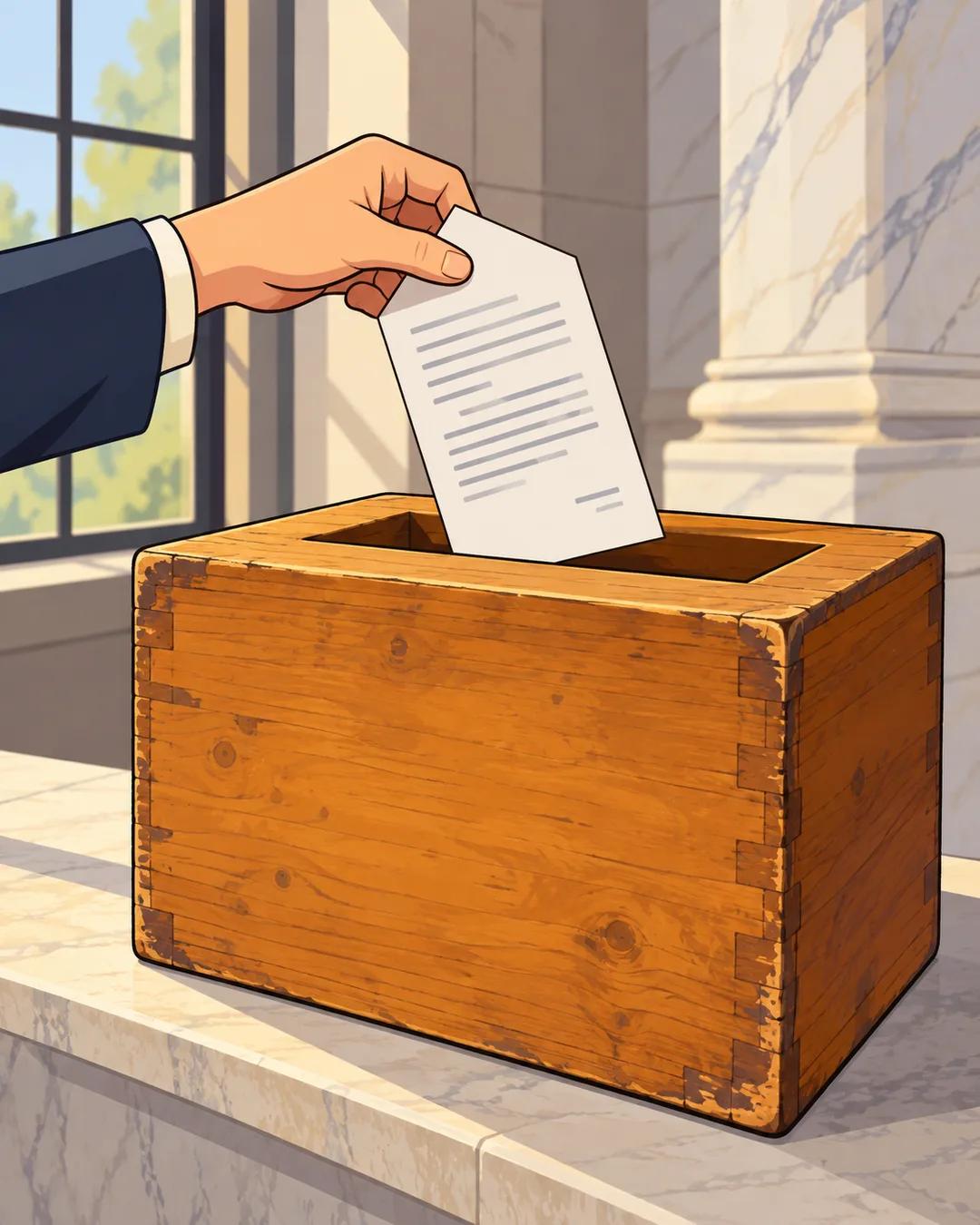
In the House, the finished bill goes to the clerk, whose team sits near where the president gives the State of the Union address. The member drops the physical piece of paper into a wooden box called the hopper. The House replaced its hopper from the 1950s in 2003.
Numbers and committees
The clerk gives the bill a number in sequential order, so the first one in a new Congress is H.R.1 in the House or S.1 in the Senate. The speaker of the House or the Senate parliamentarian then assigns it to a committee by topic, so a foreign policy bill goes to Foreign Relations and a farm bill goes to Agriculture. Sometimes it goes to more than one committee.
How do drafters turn ideas into bill text?
Each chamber has its own Office of Legislative Counsel, staffed by attorneys who serve members of both parties and keep requests confidential. Drafters check how a proposal fits with existing law and translate it into precise statutory language. Most bills change sections of the United States Code rather than create something new.
Why is the bill box called a hopper?
A hopper is a funnel-shaped bin that feeds material, such as grain, into a mill. The House applied the name to the box where members drop their bills. A bill counts as introduced in the House the moment it lands in the hopper, but only on a day the House is in session.
Why can one bill go to several committees?
Subjects overlap, so a change to health insurance taxes can touch the jurisdiction of more than one committee. In the House, the Speaker refers bills with advice from the parliamentarian, who applies the jurisdictions written into House rules. A bill can be sent to several committees at once, in sequence, or in sections.
More from Civics 101