Korva is a scroll of the internet’s best ideas.
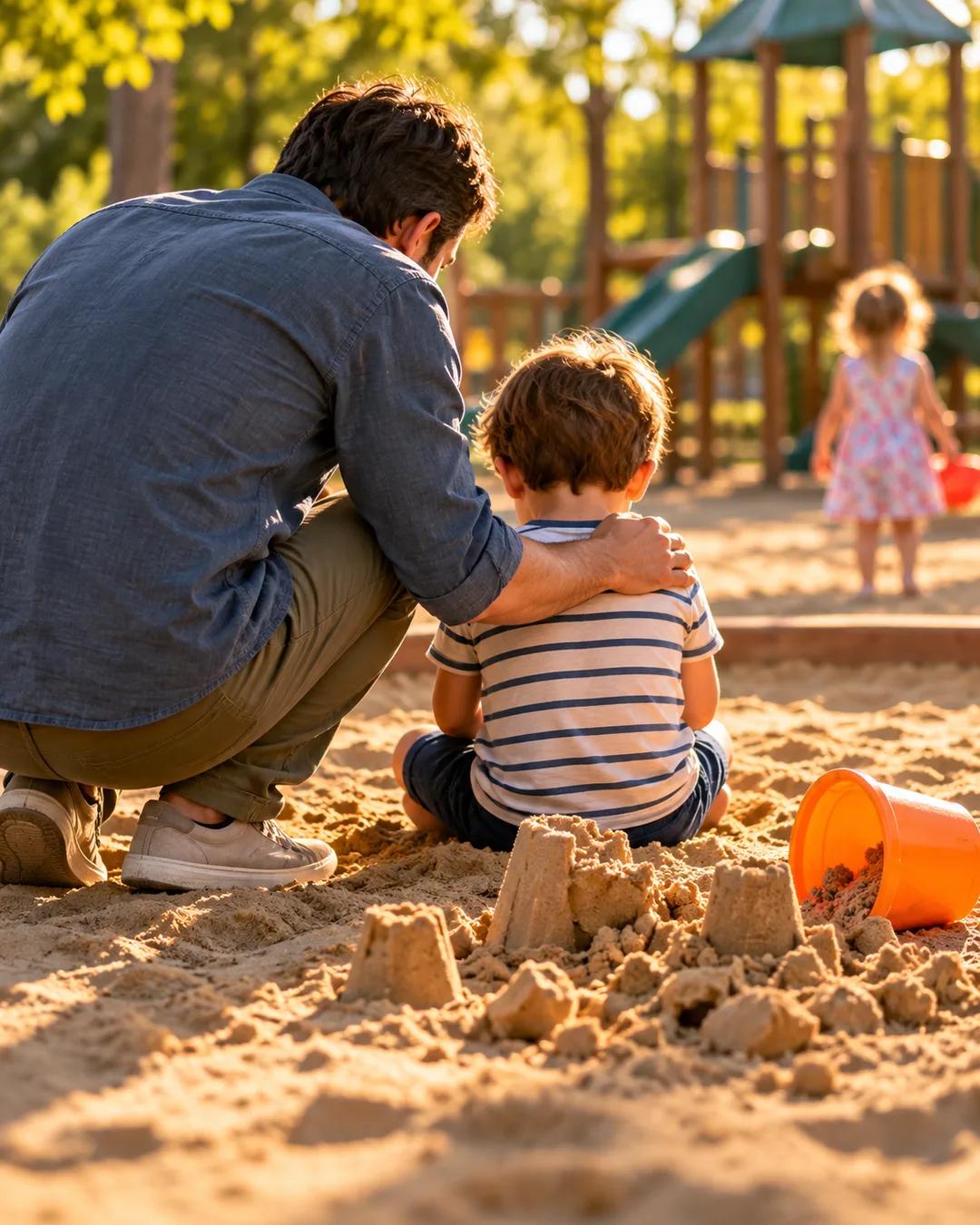
Ask what the hitting was for
Asked what he was trying to accomplish, the child usually answers that the other kid hit him first. That is an automatic human response, one many adults can't control.
So the parent puts the feeling into words: he was angry, and he wanted the other child to know. He agrees. Then comes the reminder that people are not for hitting, along with an offer to help him tell the other child why he's angry.
Tensions dissipate. The hope, hopefully, is that it starts the kids thinking about effective and ineffective ways to achieve their goals.
Why does naming a feeling calm people?
Matthew Lieberman and colleagues at UCLA, in a 2007 brain imaging study published in Psychological Science, found that putting feelings into words reduced activity in the amygdala, a region involved in emotional alarm. The same labeling increased activity in the right ventrolateral prefrontal cortex. The researchers linked that prefrontal region to regulating emotional responses. They called the technique affect labeling.
Why does hitting peak in toddlerhood?
Richard Tremblay, a developmental psychologist at the University of Montreal, followed children across many years and reported that physical aggression is most frequent around ages two to three. Most children then use it less as language and self-control develop. Tremblay argued that children do not learn to be physically aggressive so much as most of them learn not to be.
How do children learn aggression by watching?
In Albert Bandura's 1961 Bobo doll study at Stanford, children who watched an adult strike an inflatable doll went on to hit it too, often copying the adult's exact actions. Children who watched a calm adult rarely did. The study became a foundation of social learning theory.
More from Shane