Korva is a scroll of the internet’s best ideas.
Asking for help, then redoing it

Gatekeeping and helplessness
Its mirror image is learned helplessness. A man offers to help but needs to be told how, or does part of the job and asks what else needs doing, until the woman says she will do it herself.
Where it came from
Gatekeeping has a history too. Over the last couple hundred years, women lost their identity as productive co-workers and yoke mates in the family economy, and came to be valued for reproductive work, emotion work, and expertise in domestic matters. Women of the past never had that expertise, because nobody cared about a neat house when the house was a center of production.
Two moments at home
Stephanie Coontz, who has studied this for many years, caught herself in the habit twice. Her husband was holding their new grandchild when the baby started to cry, and she swooped in and took the baby out of his arms. He was upset, and they talked it through: she had been trained to think she could handle babies better than a man can.
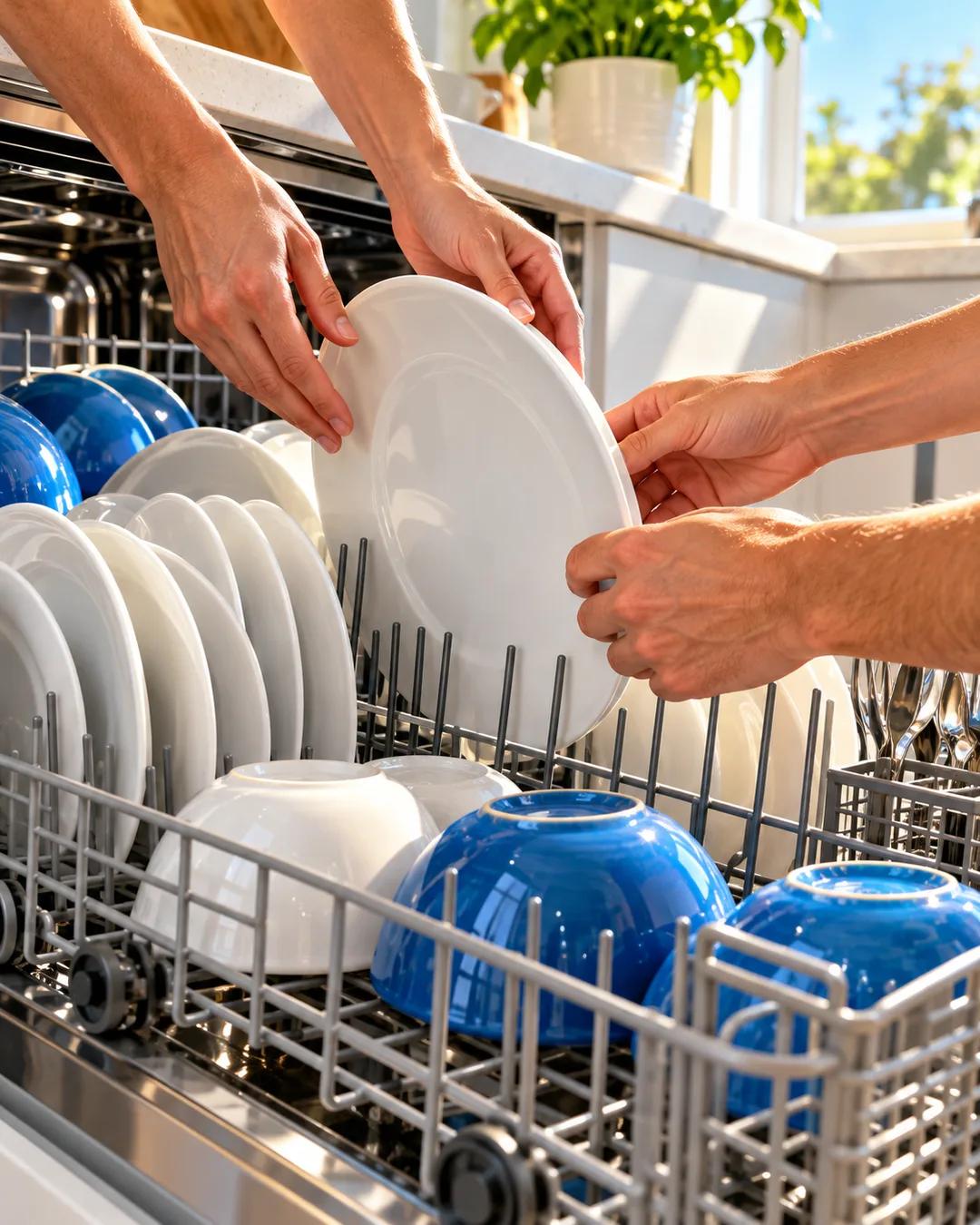
Another day, he walked in while she was rearranging the dishwasher. He reminded her that she had said he should take full responsibility for a job when it's his, and asked why he would keep loading the dishwasher if she wasn't going to let him. She told him that was a fair point.
Who named maternal gatekeeping?
Sociologists Sarah Allen and Alan Hawkins gave the idea its name in a 1999 article in the Journal of Marriage and Family. They defined maternal gatekeeping as mothers' beliefs and behaviors that inhibit greater father involvement in family work. Their study of working mothers found that a substantial share held standards that limited how fathers took part. The term has since been widely used in family research.
Where does learned helplessness come from?
Psychologists Martin Seligman and Steven Maier ran the original experiments at the University of Pennsylvania in the 1960s. Dogs given shocks they could not escape later failed to escape shocks they easily could have. Seligman proposed that the dogs had learned their actions did not matter. He later served as president of the American Psychological Association in 1998.
Why did housework standards rise?
Historian Ruth Schwartz Cowan argued in her 1983 book More Work for Mother that household technology did not cut the hours women spent on housework. Washing machines and vacuum cleaners came with rising expectations for cleanliness, and the home economics movement of the early 1900s taught those higher standards. Germ theory, accepted by doctors in the late 1800s, added weight to the push for spotless homes.
More from Civics 101