Korva is a scroll of the internet’s best ideas.
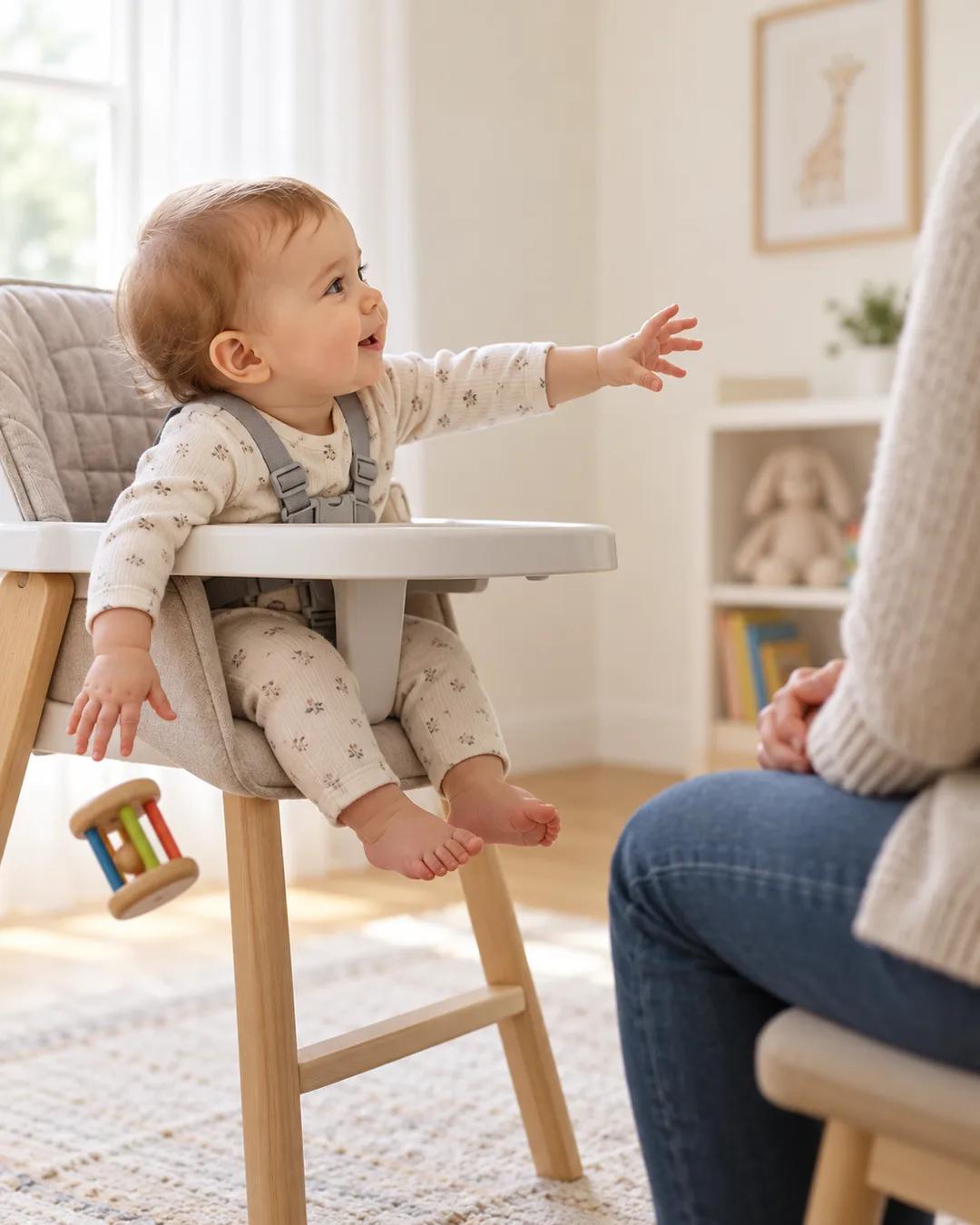
Babies read a mother's frozen face

The experiment
The setup is called the still face experiment, and it has been replicated 100 times over. A mother sits in front of her baby, cooing, making faces, and having a good time. Then she is told to sit still and expressionless.
How babies react
Some babies grow anxious and throw things to try to reconnect. Some shut down and sit in complete silence. The more secure ones look around the room. Then the mothers are told to return to normal with their babies.
What babies track
Babies who cannot yet speak are tracking how much attention they get, how much eye contact, and whether a caregiver reads their needs. A baby who cries and is left for 25 minutes learns that nothing is reliable. In the first 18 months, before language, the nervous system picks up every facial expression and every small moment, and builds its rules for staying safe from them.
Why do babies react so strongly to blank faces?
Developmental psychologist Edward Tronick created the still face procedure at Harvard in the 1970s. Babies just a few months old expect a caregiver's face to answer their own expressions in a back-and-forth rhythm. When the response vanishes, they typically smile, point, and vocalize, and then turn away or withdraw. The first report came in 1978 from Tronick, Heidelise Als, Lauren Adamson, Susan Wise, and T. Berry Brazelton.
Why does repair matter more than perfect attunement?
Tronick and Alexandra Gianino reported in 1986 that even in healthy mother-infant pairs, the two are in sync only about 30 percent of the time. The rest of the time they drift out of step and then work their way back. Tronick called this process interactive repair. He argued that these small mends are how an infant learns that a disruption can be fixed.
How were attachment styles first measured?
Mary Ainsworth developed the Strange Situation procedure in the 1970s. A toddler is briefly left with a stranger and then reunited with a parent, and researchers watch the reunion closely. Ainsworth sorted babies into secure, anxious-ambivalent, and avoidant groups based on how they used the parent as a base. Mary Main and Judith Solomon added a fourth group, disorganized, in 1986.
More from On Purpose with Jay Shetty