Korva is a scroll of the internet’s best ideas.
Be prepared to be wrong
Children Take Chances
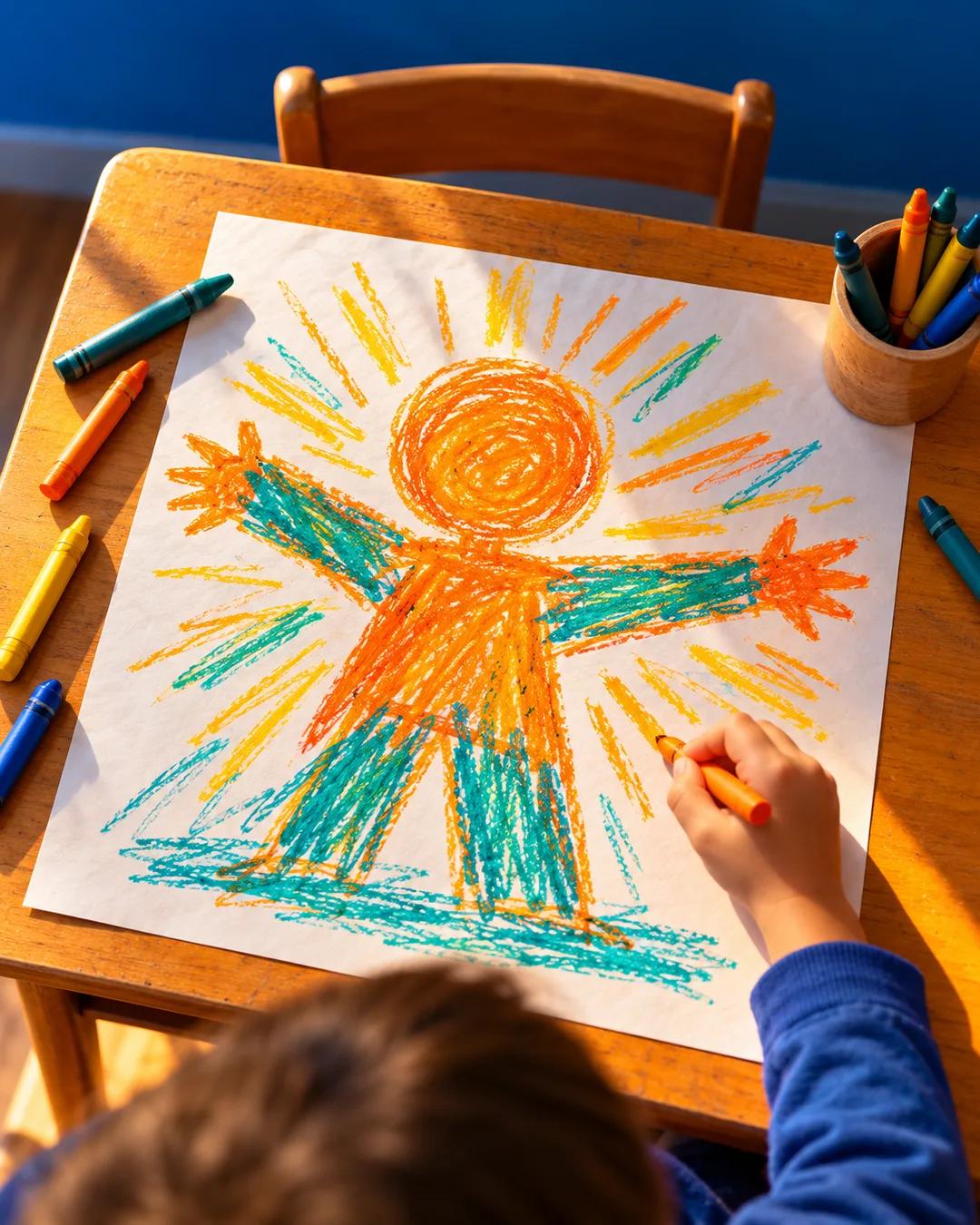
Little kids will take a chance. If they don't know, they have a go. Picture a six-year-old at the back of a drawing lesson, a girl who hardly ever paid attention, absorbed in her picture. The teacher asks what she's drawing, and she answers that it's God. The teacher points out that nobody knows what God looks like, and the girl replies that they will in a minute.
Being wrong isn't the same thing as being creative. Still, children aren't frightened of being wrong, and that is what lets them try things nobody has tried before.
Educated Out of It
By the time they are adults, most have become frightened of being wrong. Companies stigmatize mistakes, and national education systems treat mistakes as the worst thing a student can make. The result is people educated out of their creative capacities.
Picasso put it this way: all children are born artists, and the problem is to remain an artist as we grow up. We don't grow into creativity, we grow out of it, or rather we get educated out of it.
Why do mistakes help people learn?
The psychologist Janet Metcalfe has studied what she calls the hypercorrection effect. In her experiments, people who were highly confident in a wrong answer and then saw the correct one were more likely to remember the right answer later than for errors they had been unsure about. The surprise of being wrong seems to make the correction stick. Her work appeared in the research literature on memory and learning in the 2000s.
How does fear of failure shape how people think?
Carol Dweck, a psychologist at Stanford, has spent decades studying how people respond to setbacks. She found that students who see ability as fixed tend to avoid challenges, while those who see it as something that grows are more willing to take on hard tasks. Her book Mindset, published in 2006, laid out this research for a general audience. Other researchers have debated how large the effects are in classrooms.
What did Picasso mean about remaining an artist?
Picasso is widely quoted as saying that all children are born artists and the problem is to remain one. The line fits with the way he painted in his later decades, with bold, simplified forms that critics often compared to children's drawings. He was also trained rigorously as a boy, since his father was an art teacher in Spain. His early academic paintings, made as a teenager, show a highly polished realist technique.
More from TED