Korva is a scroll of the internet’s best ideas.
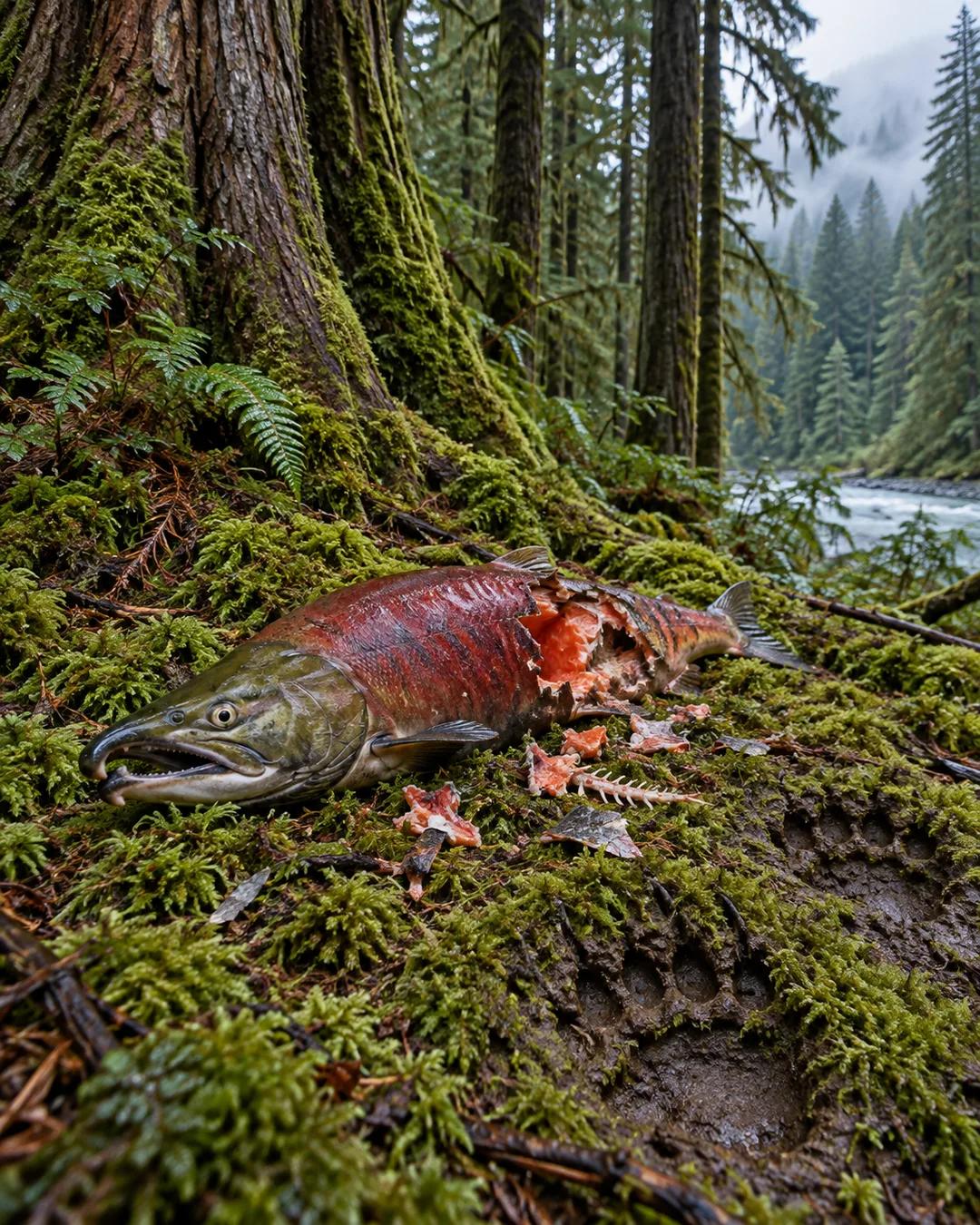
Bears carry salmon into forests

Salmon in the soil
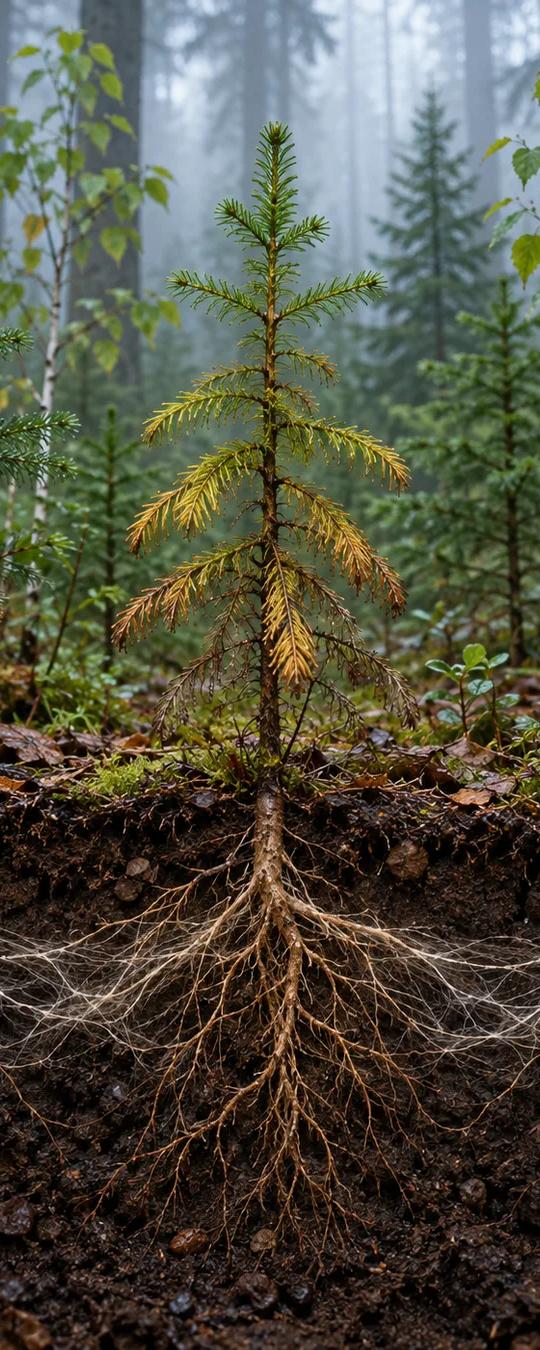
The leftovers decay and seep into the ground. Researchers think the big mycorrhizal networks of the mother trees soak up the nitrogen, and traces of salmon nitrogen have been found in tree rings, stored there for centuries.
Tracing the nitrogen
The next step is to go back to these forests and trace whether that nitrogen moves from the mother trees to their neighbors, from tree to tree to tree, deep into the forest. The research is being done with Aboriginal people, who depend on the salmon and have a long relationship of stewardship with them.
Researchers think this movement is tied to the health of the forest, which is tied to the health of the rivers, which is linked to the health of the salmon populations. The salmon feed back to the oceans, and the benefit comes back to the people.
Reciprocity
Aboriginal ancestors called this circle of life reciprocity, the trading of mutual respect.
How does salmon nitrogen reach tree rings?
Salmon carry a heavier form of nitrogen, nitrogen-15, than forest soil does, because ocean food webs pile it up at each step. A tree that absorbs nitrogen from a decayed salmon takes that heavier signature into its wood and needles. Researchers measure the ratio of nitrogen-15 to nitrogen-14 to tell marine nitrogen from the nitrogen already in the forest. In a 2001 study in Ecology, James Helfield and Robert Naiman found that Sitka spruce beside Alaskan salmon streams drew roughly a quarter of their foliar nitrogen from salmon.
Why is nitrogen scarce in conifer forests?
Plants cannot use the nitrogen gas that makes up most of the air. It has to be fixed into usable forms by certain soil bacteria or, in small amounts, by lightning. In cool, wet conifer forests, decomposers work slowly, so much of the nitrogen stays locked in needles, wood, and thick layers of litter. A dead salmon delivers a packet of nitrogen already in a form that roots and fungi can take up.
Why do bears leave so much of each salmon?
During a big run, bears have more fish than they can eat, so they choose the fattiest parts such as the brain, belly, and eggs and drop the rest. Thomas Reimchen of the University of Victoria documented this selective feeding on British Columbia's central coast. Bears often carry the fish into the forest to eat, where the carcasses are left to scavengers and soil. Flies, beetles, ravens, and eagles all feed on the remains.
More from TEDx Talks