Korva is a scroll of the internet’s best ideas.
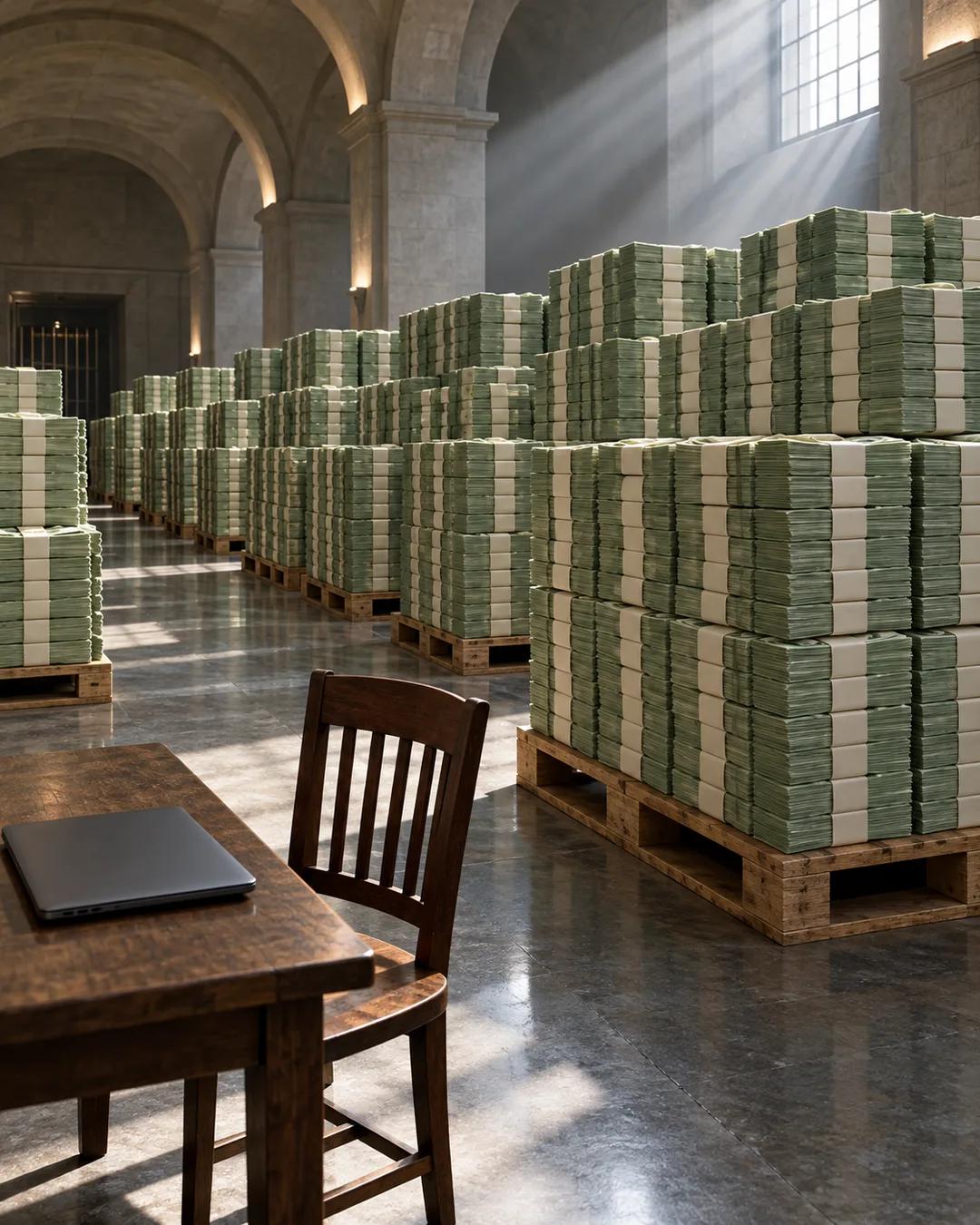
Berkshire sits on $400 billion cash

The cash pile
Berkshire hasn't deployed that cash anywhere. The firm's stance is that it doesn't do anything unless there's something to do.
Too much activity
One of the biggest leaks in investing may be too much activity, simply pushing buttons. That might even explain why great investors talk so much about their reading. Books, bridge, and pickleball busy a person so they are not prone to sitting there pushing buttons, and what they read may matter less than the fact that it pulls them away from constant activity.
Doing nothing
The same idea holds for a company that is going well: the best thing to do can be nothing, because meddling often screws it up. Someone who gets growth from posting three times a day on social media can simply keep doing that. A separate playground to mess something up in keeps the main thing safe.
Why would a company hold Treasury bills?
Treasury bills are short-term loans to the US government that mature in a year or less. Their price barely moves, and they can be sold quickly for cash. Their yield follows the interest rates set by the Federal Reserve, so they pay more when rates are high. That combination makes them a standard place to park cash that may be needed soon.
Why does Berkshire keep so much cash on hand?
Berkshire Hathaway owns large insurance companies, and insurers collect premiums before they pay claims. The money sitting in between is called float. Warren Buffett has described float as a source of cheap funds to invest. The company holds enough cash to pay claims without selling investments in a downturn.
What does each stock trade cost?
Every trade carries costs beyond any commission. The bid-ask spread is the gap between the price a buyer will pay and the price a seller will accept, and a trader crosses it each time. Selling at a gain also creates a taxable event in many tax systems, while holding does not. The costs add up with every purchase and sale.
What did Pascal say about sitting still?
Blaise Pascal wrote in his Pensees, published after his death in 1670, that much of human trouble comes from being unable to sit quietly in a room alone. He argued that people seek distraction and activity to avoid facing their own thoughts. Modern experiments have echoed him. In a 2014 study led by psychologist Timothy Wilson, many participants chose to give themselves mild electric shocks rather than sit alone with their thoughts for fifteen minutes.