Korva is a scroll of the internet’s best ideas.
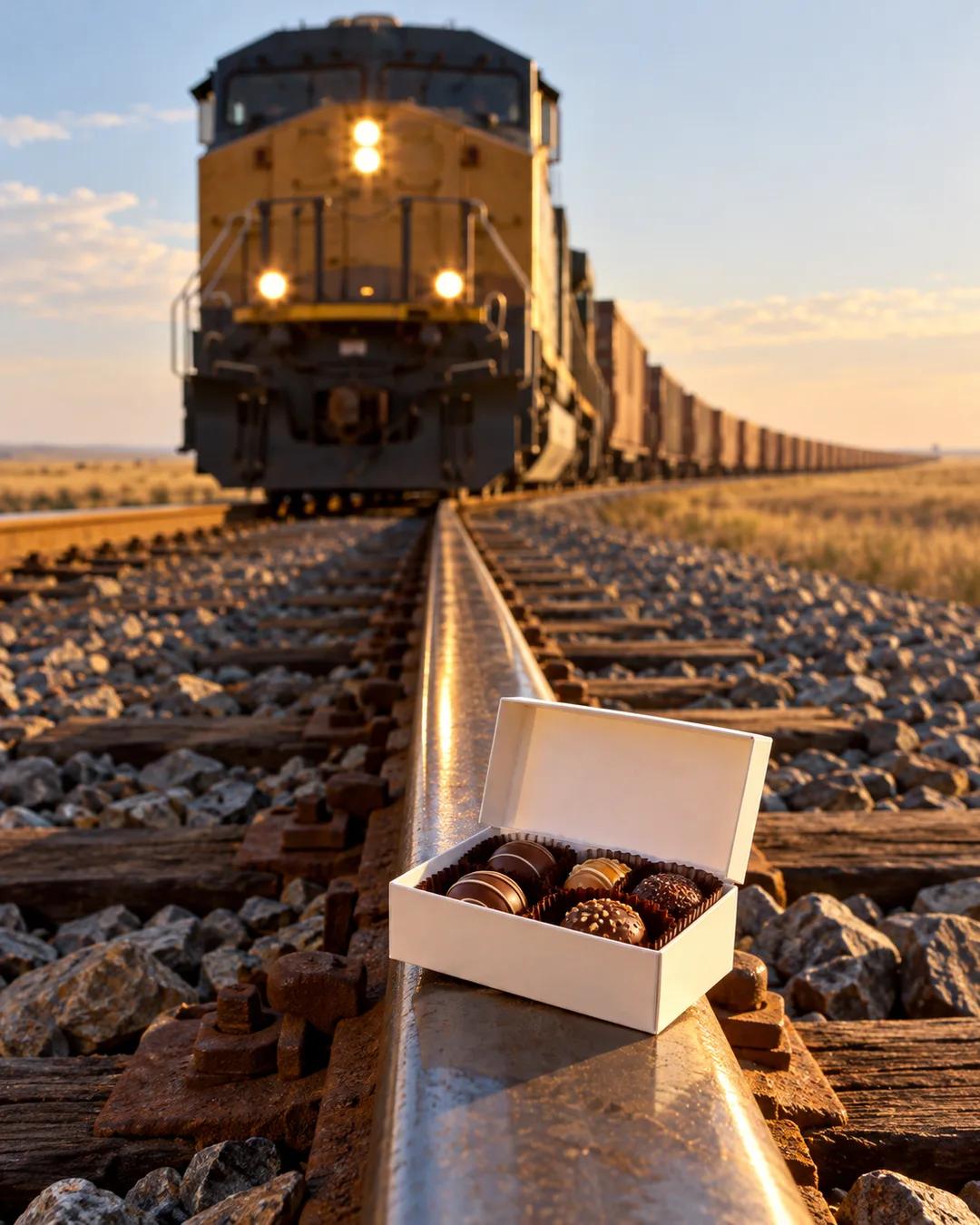

Berkshire's railroad bet
See's Candies is famous for its tremendously high margins, but it has nowhere to reinvest, so it just accumulates cash. Berkshire Hathaway took those profits and bought BNSF, a railway with far worse margins in an industry where the dollar amounts are enormous. In one recent year, BNSF threw off more free cash than See's Candies had produced in its entire lifetime.
Google follows the path
Google looks like it is following the same path. Search is one of the most perfect business models of all time, scaling in every direction at zero marginal cost. AI incinerates cash, but if its market is all white-collar work and eventually, with robotics, nearly everything, the absolute profit is far larger even at lower margins. Google has used its free cash flow, tapped the debt markets for hundreds of billions of dollars, and issued equity.
What dilution means
Issuing equity dilutes existing shareholders, who end up with a smaller percentage of the pie. The pie is astronomically larger. Berkshire's investment in Google was symbolic, because Berkshire is also a model for where Google is going.
Why does See's Candies have nowhere to reinvest?
Boxed chocolates are bought in a limited number of places and peak around a few holidays, so adding shops adds little profit. The business throws off cash it cannot usefully spend on itself. Berkshire Hathaway bought See's in 1972 for $25 million, according to Warren Buffett's letters to shareholders.
Why does BNSF need so much money?
A railroad has to maintain track, bridges, and locomotives continuously, which swallows enormous sums every year. That makes margins low but dollar amounts huge, since the railway carries a large share of the country's freight. Berkshire completed its purchase of BNSF in 2010, in a deal valued at about $44 billion including debt.
How can dilution still make shareholders richer?
Issuing new shares raises the total share count, so each existing share represents a smaller slice of the company. A holder with 1 percent who sees the count rise by a quarter ends up with 0.8 percent. If the money raised grows the company by more than the slice shrinks, each remaining share is worth more than before.
More from Invest Like the Best with Patrick O'Shaughnessy