Korva is a scroll of the internet’s best ideas.
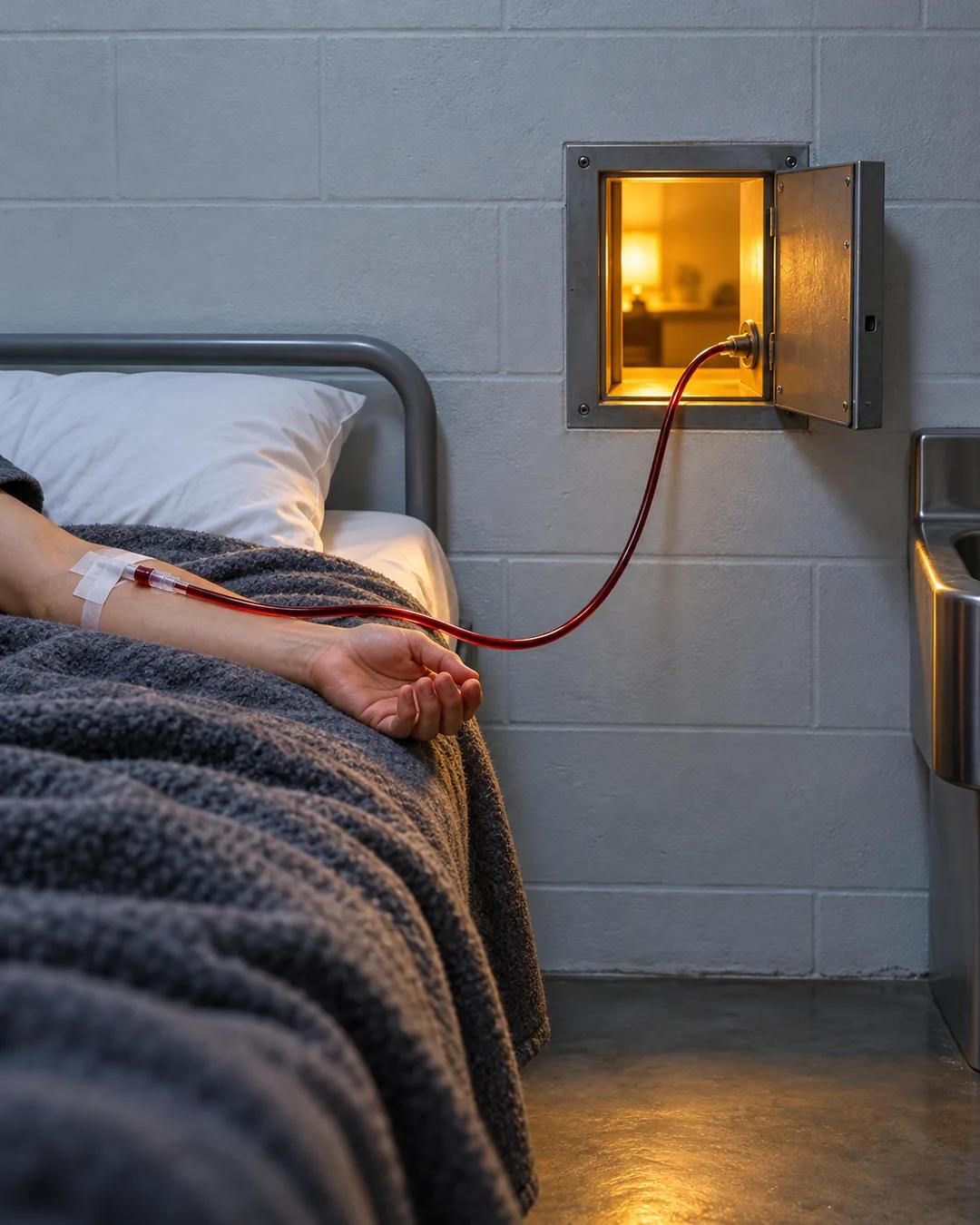
Blood through a hole in the wall

The chamber
The room was a metabolic research chamber, one of only 50 of its kind in the world, and the man on the bed was Martin Picard. A stainless steel sink and a porcelain toilet sat less than a shoulder's width away. The chamber's small size kept him from burning any energy beyond the bare minimum needed to keep him alive.
The schedule
Every hour for 24 hours, including while he slept, a nurse channeled blood from his arm to the team next door. Whenever he was awake, he also gave a saliva sample and filled out a survey about his mood. Napping was prohibited, and the only food was strictly scheduled meals tailored to his caloric needs. Bedtime was 11 p.m. sharp, after he put on a device that monitored his vitals and brain activity during sleep.
The lab
He directs the Mitochondrial Psychobiology Lab at Columbia University Irving Medical Center in New York, and in July 2021 he was the first volunteer in its experiment. Most of the day he sat in bed reading or working on his laptop. The lab is studying how much energy it takes to sustain baseline existence, and excitement was what he felt most.
How does a chamber measure energy burned?
Cells use oxygen and release carbon dioxide whenever they burn fuel, so the air leaving a sealed room carries a record of the energy used inside it. Instruments compare the oxygen and carbon dioxide in the air flowing in with the air flowing out. A formula published by the physiologist J.B. de V. Weir in 1949 converts those gas measurements into calories. The method is called indirect calorimetry because it never measures heat directly.
Why would napping spoil the measurements?
Energy use changes with the state of the body, and sleep is a different state from quiet wakefulness. Body temperature and metabolic rate both dip during sleep. A daytime nap would pull the readings below the waking baseline the study is trying to pin down. Overnight sleep is part of the 24-hour protocol, so the day's only sleep happens at one scheduled time.
Why take blood samples every hour?
Many hormones rise and fall on a daily rhythm, and a single sample misses the shape of it. Cortisol, for instance, climbs sharply in the first half hour after waking and sinks to its lowest level around midnight. Melatonin rises in the evening and drops again toward morning. Hourly samples let researchers trace those curves across a full day and night.
More from Rachel Nuwer