Korva is a scroll of the internet’s best ideas.
Blue Book was a facade

The Turner paper
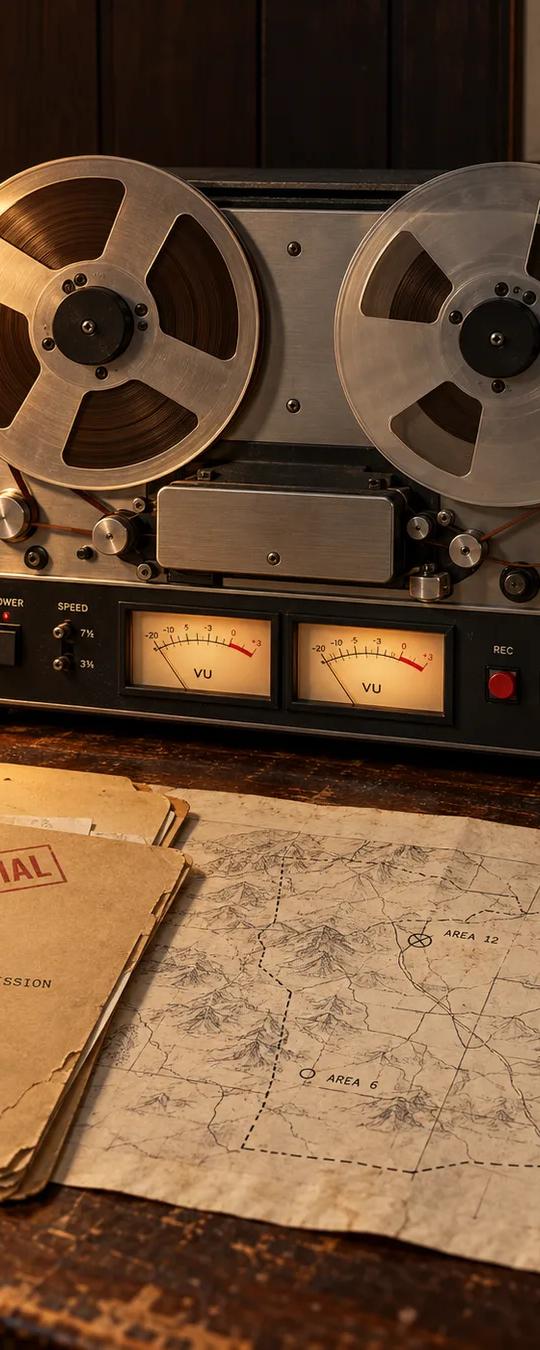
The paper is by Harry Turner, nuclear branch chief of the Australian Joint Intelligence Organization, the Australian equivalent of the Defense Intelligence Agency. It was classified secret in 1971 and now sits in the Australian National Archives, where anyone can read it. Turner held a top secret clearance and traveled to the United States to talk with the CIA, so he stitched the puzzle together from outside looking in.
The ridicule plan
His reading of the record is that the Air Force was truly concerned and wanted to know whether it could make use of whatever the technology was. After the Robertson panel in 1953 it adopted a plan of ridicule and disinformation to dissuade the public from looking, in part because America feared the Soviets would use sightings as a false flag.
Hynek's role
The same picture comes from inside. J. Allen Hynek's role at Blue Book was to dismiss any and all sightings as ball lightning, meteor showers, the planet Venus, or plain misunderstanding. After years there he believed a real phenomenon existed, and once he left the project he became a UFO researcher.
Why did the Robertson Panel urge debunking?
The CIA convened the panel in January 1953 under the physicist H. P. Robertson. Its report concluded that the sightings it reviewed posed no direct threat but that public reports could clog intelligence channels and leave the nation open to hoaxes or foreign psychological warfare. It recommended a program of public education to reduce interest in flying saucers. The panel met for only four days.
How did Hynek's view of sightings change?
J. Allen Hynek was an astronomer at Northwestern University who consulted for the Air Force on sightings from 1948. He began as a skeptic and drew ridicule in 1966 for suggesting that swamp gas might explain a Michigan sighting. By the late 1960s he was criticizing the Air Force for its handling of cases. In 1973 he founded the Center for UFO Studies and later devised the close encounters classification.
How did Project Blue Book end?
The University of Colorado's Condon Committee reported in 1968 that further study of unidentified flying objects was unlikely to advance science. The Air Force ended Blue Book in December 1969. Over its lifetime the project logged 12,618 reports, of which 701 stayed unidentified.
More from The Joe Rogan Experience