Korva is a scroll of the internet’s best ideas.
Borrowing prosperity from the past

A single customer
The entire boom is built on a single customer fighting a single war three time zones away, and wars eventually end. Ukrainian military intelligence reports that North Korea roughly halved its artillery shipments to Russia through 2025, as its famous stockpiles started to run low and its aging industrial base struggled to keep up with replacement demand.
Borrowing from the past
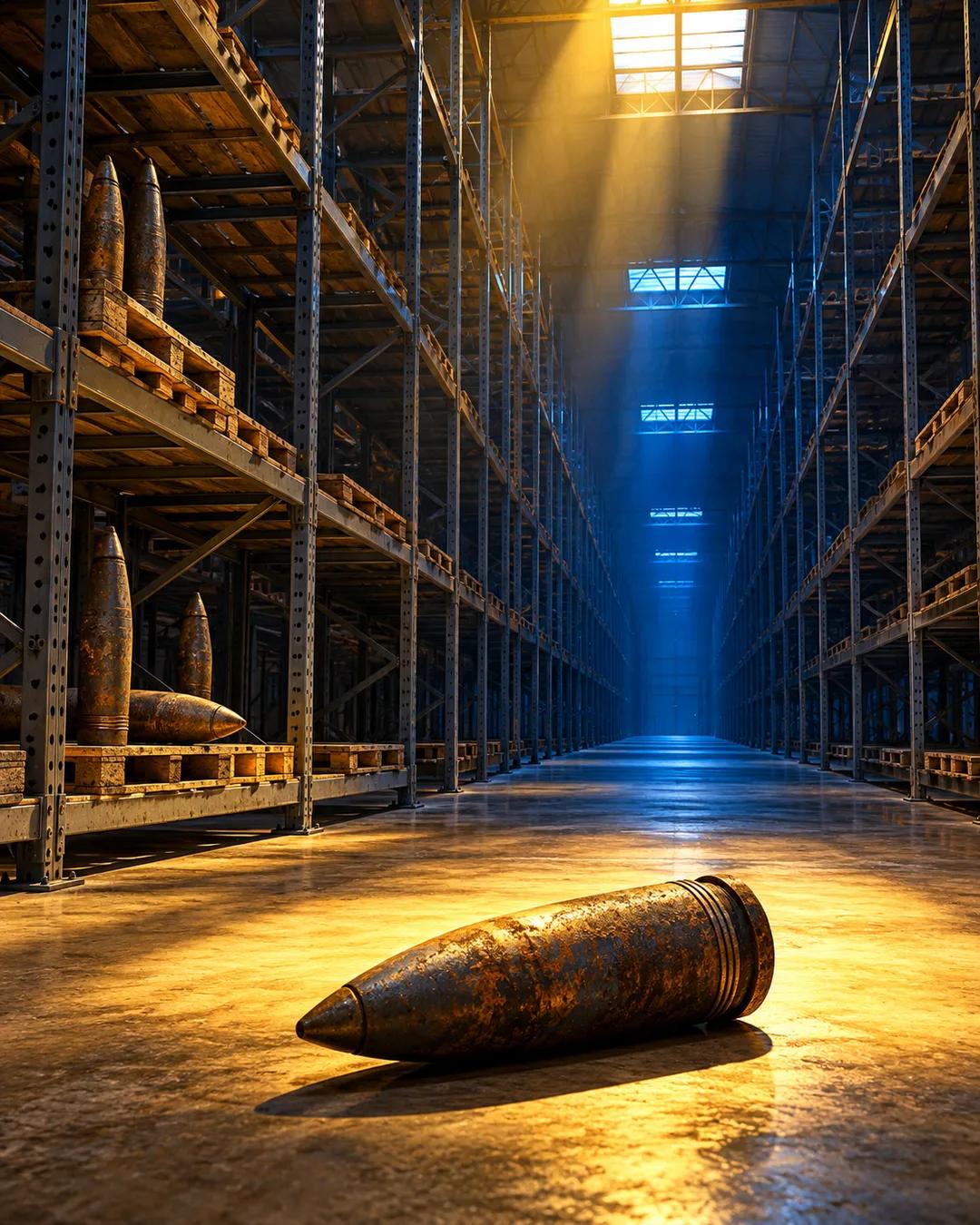
Economies often borrow prosperity from the future by running up debts that their children eventually have to pay back. North Korea has borrowed from the past instead, spending down decades of weapons built for a war that never came. For one brief geopolitical moment, they turned out to be exactly what somebody wanted to buy.
The human cost
The cost has been paid in people. South Korean and Ukrainian intelligence estimates put the number of North Korean soldiers who have become casualties in Russia's war at somewhere between 6,000 and 7,000. They are workers at the very start of their productive lives, pulled out of an economy where a huge share of the population is still needed to keep subsistence agriculture running. Average income is still about 1,700,000 won a year, barely 3% of what the average South Korean earns.
Why can't North Korea quickly rebuild its stockpile?
A shell is assembled from parts made in different plants: a forged steel body, a fuze, a propellant charge, and an explosive fill. Each plant needs equipment, raw materials, and trained workers, and an aging industrial base struggles to supply all of them at once. The chemistry is also demanding. Nitrocellulose, the base of most artillery propellant, is made by treating cellulose from cotton or wood pulp with nitric and sulfuric acids.
Has another country lived off a finite inheritance?
The Pacific island of Nauru, about 21 square kilometers in size, sits on phosphate deposits built up from seabird droppings over thousands of years. Mining those deposits made its income per person among the highest in the world in the 1970s. By the 1990s the best deposits were nearly exhausted, and the island's income fell sharply. Nauru's phosphate was used mainly as fertilizer.
How did the two Koreas end up so far apart?
After the peninsula was divided in 1945, the North inherited most of the heavy industry and hydroelectric power built during Japanese rule, while the South was mainly farmland. Many economists estimate that the two economies were roughly comparable into the 1960s. South Korea then pursued export-led growth. By the 1970s its output per person had clearly pulled ahead of the North's.