Korva is a scroll of the internet’s best ideas.
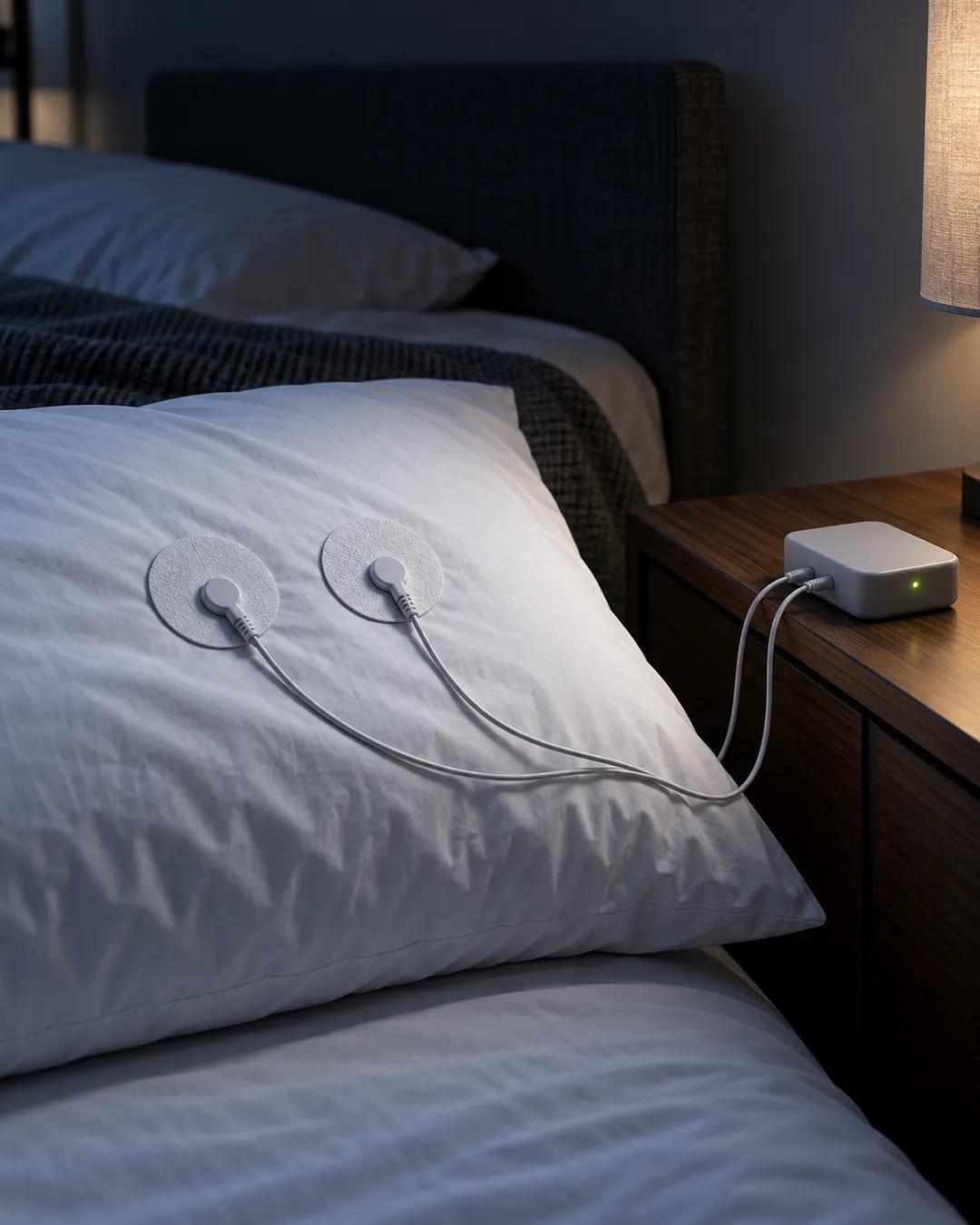
Brain stimulation nearly doubled sleep's memory gains

How the method works
The method places electro pads on the head and sends a small amount of voltage into the brain, so small that it tends not to be felt, though it has a measurable impact on physiology. Applied during sleep, it works like singing in time with the deep sleep brain waves.
Hope for older adults
The open question is whether the same affordable, potentially portable technology can be translated to older adults and people with dementia. The goal is to restore some healthy quality of deep sleep and, with it, to salvage aspects of learning and memory function.
Risks of home devices
The devices are not yet FDA approved for use in sleep, though they can be bought on the internet. Horror stories have come out of that: people have misaligned the voltage and ended up with skin burns, and some lost their eyesight for several days.
How can a tiny current boost deep sleep waves?
Researchers apply a weak electrical current through pads on the scalp that nudges the rhythm of neurons in the cortex. When the current oscillates at the slow frequency of deep sleep, it helps neurons fire in sync. In a 2006 study in Nature, Lisa Marshall and Jan Born at the University of Lübeck applied this during early-night sleep. Their volunteers remembered more word pairs the next morning than after a sham treatment.
Why does deep sleep fade with age?
Deep sleep brain waves arise largely in the front of the cortex, in the prefrontal region. In a 2013 study in Nature Neuroscience, Bryce Mander and Matthew Walker's group at the University of California, Berkeley, found that older adults with greater loss of gray matter in that region had weaker slow waves. The weaker waves in turn predicted poorer overnight memory retention. Aging adults on average spend far less of the night in deep sleep than young adults.
Why can misplaced electrodes burn skin?
Electrical current heats tissue in proportion to how concentrated it is. When an electrode sits poorly, the current flows through a smaller patch of skin, so the current density rises there. Saline-soaked sponges or gel are used in laboratories to spread the current evenly and keep resistance low. Burns from poorly prepared electrodes have been described in the research literature.
More from Talks at Google