Korva is a scroll of the internet’s best ideas.
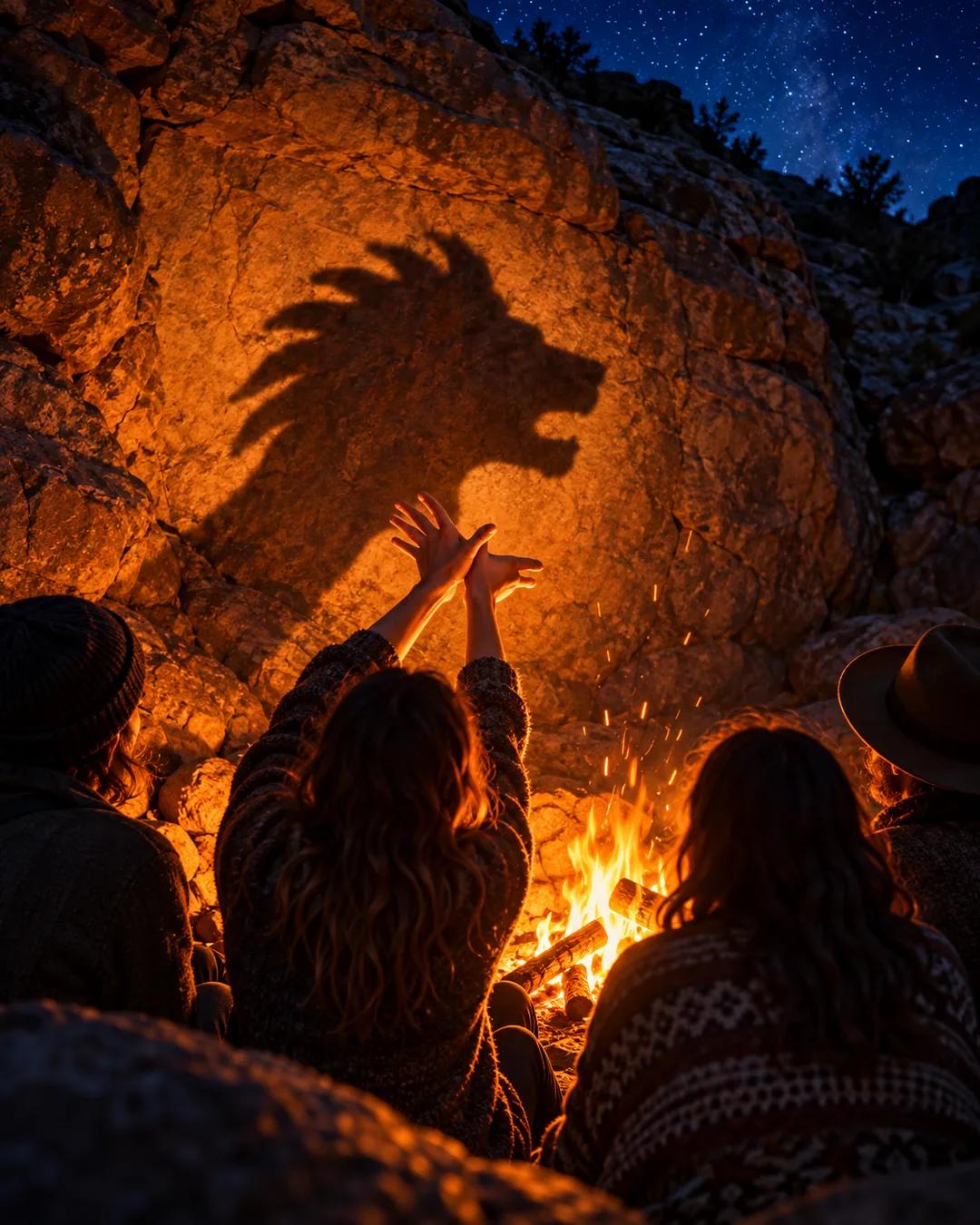
Brains learn danger through stories
A gazelle that wants to learn about a cheetah has to be near one, which carries a much higher risk. Humans can learn from a story someone else made, from a person who lived through a danger or who understands how it works and sets it in a new context where nobody has met it yet. That lets people forecast possible futures, judge which behaviors help and which hurt, and prepare for threats before they arrive. Picture a zebra that could write books or make documentaries: nearly all of them would be about lions.
People could read science textbooks about sharks or pandemics instead of watching Contagion. Humans come from a 500-million-year line of organisms whose brains developed to understand experience from a first-person perspective, and stories supply exactly that. They tap evolutionarily old parts of the mind that handle everyday experience, so people take them in and remember things from them more easily. Most things in small-scale societies are told as stories.
Why do stories stick better than facts?
In a 1969 experiment, Gordon Bower and Michael Clark asked people to memorize lists of ten words. One group made up a story linking the words in order, and the other studied the lists on their own. The story group recalled roughly seven times as many words. Narrative gives each item a place and a cause, so one detail cues the next.
How did oral stories save lives in 2004?
Simeulue is an island off Sumatra in Indonesia that sits close to the 2004 earthquake. Its people have an oral tradition called smong that tells them to run to high ground when the sea pulls back after shaking. Researchers including Brian McAdoo reported in 2006 that only seven people on the island died, out of roughly 78,000. The story had been passed down since an earlier tsunami in 1907.
Can stories carry memories for thousands of years?
Linguist Patrick Nunn and Nicholas Reid, a geographer, reported in 2016 that Aboriginal Australian stories describe coastlines that flooded when sea levels rose at the end of the last ice age. They matched stories from 21 coastal locations to the geology of the sea floor. The events they describe date back more than 7,000 years. Oral traditions in other places also preserve eruptions and floods.