Korva is a scroll of the internet’s best ideas.
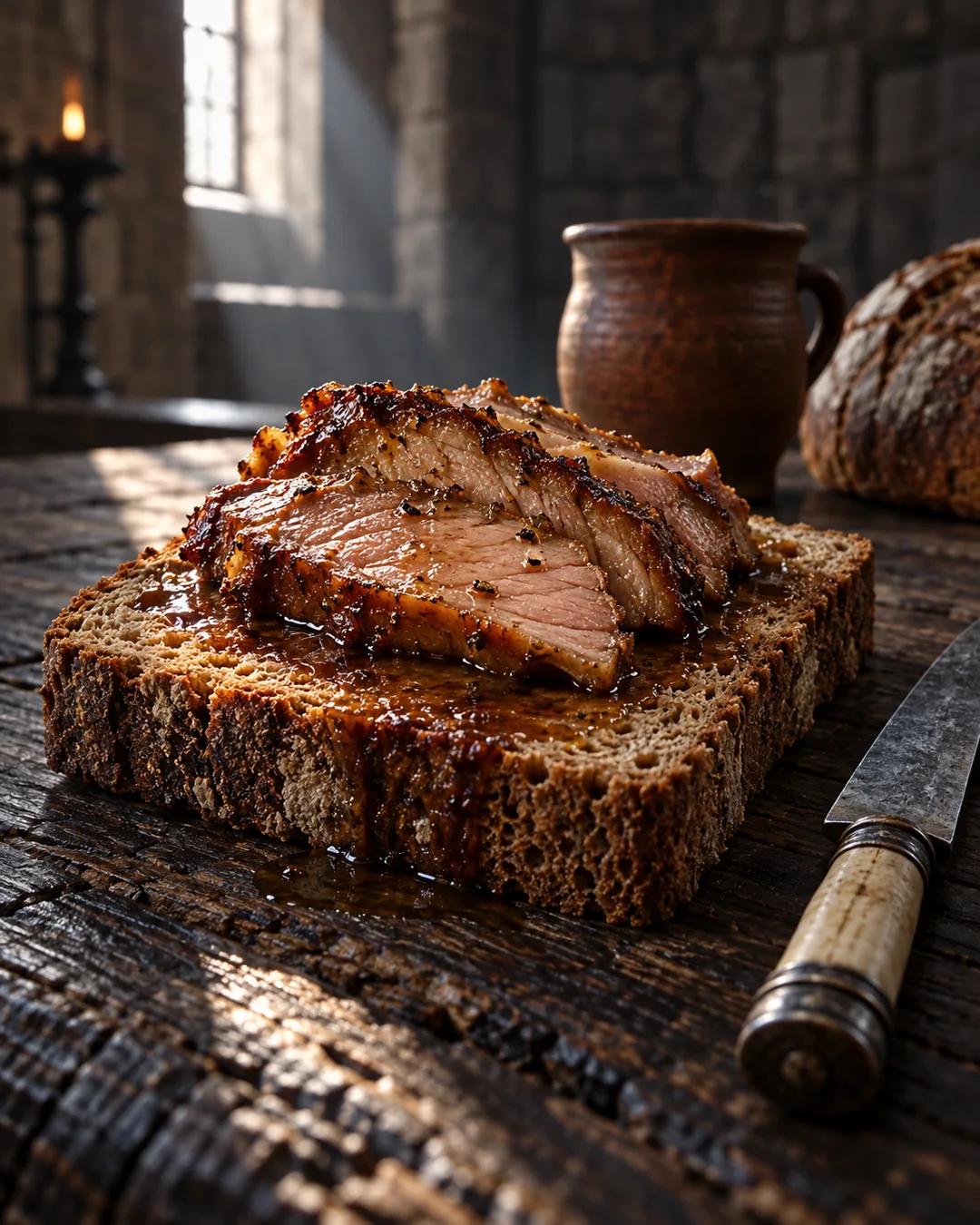
Bread was the plate and spoon

Medieval trenchers
Across medieval Europe, before ceramic plates became common, people often ate from thick slices of stale bread called trenchers. The bread held the meat and caught the juices. Afterward it was sometimes eaten and sometimes given to the poor, so the bread became part of the meal either way.
Middle Eastern scoops
In the Middle East, flatbreads became scoops. The bread lifts the food, wraps around it, and in some traditions eventually surrounds it completely, so every bite arrives with the spices, vegetables, meat, and sauce together.
Ethiopian injera
In Ethiopia, injera, the spongy, slightly tangy bread under the food, is the plate. It starts soft and absorbs every stew and spice placed on top of it, and by the end of the meal it becomes the final course because it gets eaten.
How is injera made?
Injera is made from teff, a tiny grain grown in Ethiopia and Eritrea. The flour is mixed with water and left to ferment for a few days, which gives the bread its sour tang and spongy bubbles. The thin batter is poured onto a large round griddle called a mitad and covered to steam, so it cooks on only one side.
Why did medieval cooks use stale bread?
Fresh bread is soft and collapses under hot, wet food. Bread baked a few days earlier is firmer, so it holds its shape while soaking up gravy and juices. Coarse loaves of wheat or rye were common for this, and slices cut from them served as trenchers. At large households, the soaked trenchers were often collected afterward as alms for the poor.
Where does the word trencher come from?
Trencher comes from the Old French trenchier, meaning to cut. It came to mean wooden boards and platters used the same way as bread slices. That is also the origin of trencherman, an old term for a hearty eater.
More from Eating History