Korva is a scroll of the internet’s best ideas.
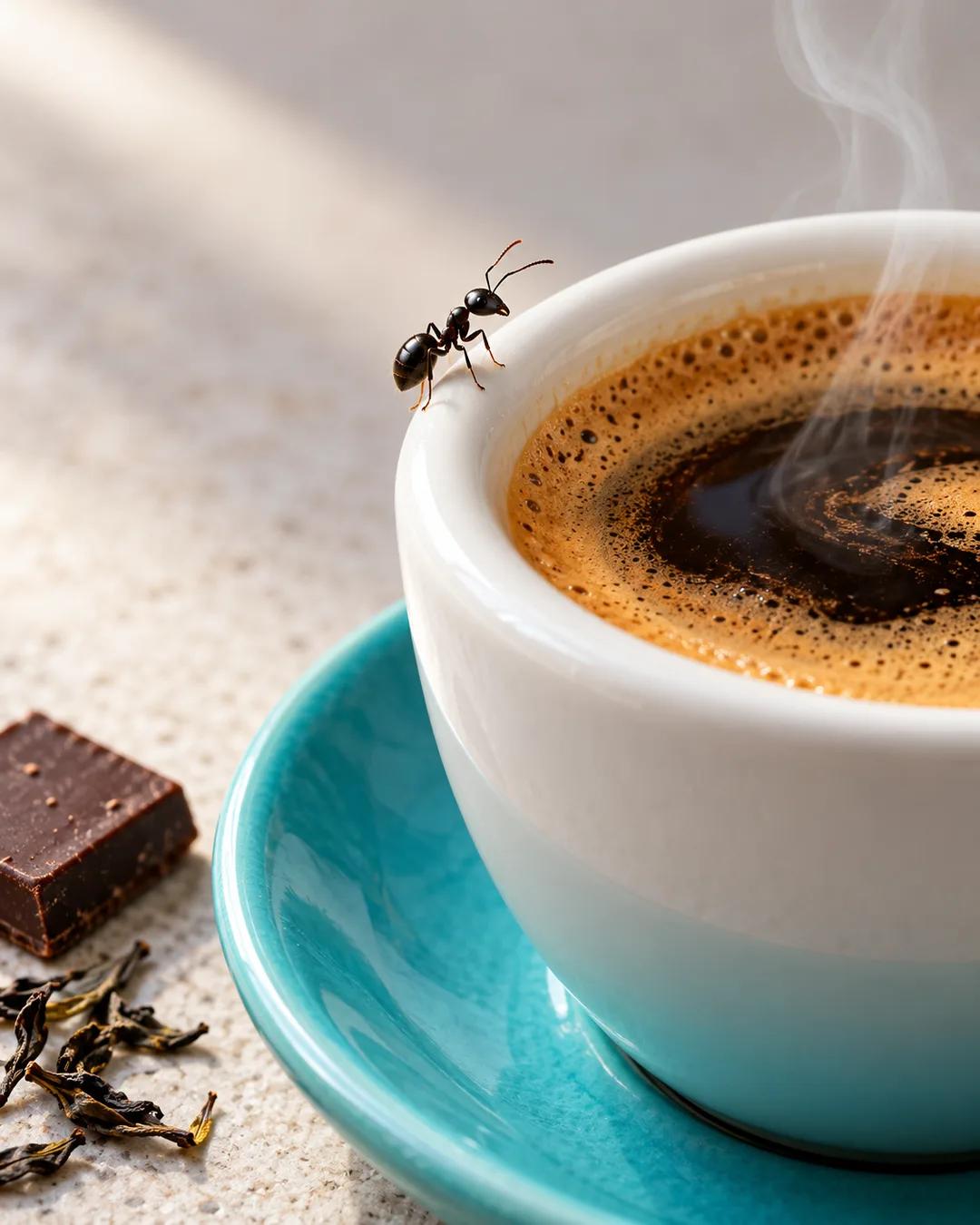
Bugs feel caffeine like we do

Same molecule, same targets
Caffeine does about three different things to a bug, and it does all three to us. The biggest biochemical effect it has in a human body is mimicking the neurotransmitter adenosine, which, like caffeine, is derived from adenine.
Why bugs suffer more
What changes is the dose. A bug eats enough leaf to get a heavy dose, and bugs are worse at processing the molecule, so the same effects hit them harder: they seize up, jitter, and their nervous systems shut down. For people, four or five grams of caffeine is enough to kill, which makes it a people poison too, only a weaker one than it is for insects.
Plants are affected by it the same way, through the same adenosine mimicry, along with some effects that are specific to plants.
Caffeine's relatives
Close chemical relatives work like caffeine. Theophylline, found in small amounts in tea, and theobromine, the main stimulant in chocolate, are also insecticides, though not as potent, and they have similar, milder effects on a person's body. The reason caffeine kills bugs, and so the reason it evolved, is also the reason people like it: it messes with human physiology just enough to give a little extra pep, and it is a little addictive without being so addictive that it ruins your life.
Why does blocking adenosine feel like energy?
Adenosine builds up in the brain during waking hours as cells burn their energy molecule, ATP. It binds to receptors on neurons and slows their activity, which produces the pull toward sleep. Caffeine fits those same receptors without activating them, so adenosine has fewer places to land. Neurons then keep firing at a faster pace, and the brain also releases more dopamine and other signaling chemicals in some regions.
Why are caffeine's chemical relatives milder?
Caffeine, theophylline, and theobromine all belong to a family called methylxanthines, and they differ only in how many methyl groups they carry and where. Caffeine has three, while theophylline and theobromine each have two, placed differently. Theobromine crosses into the brain less readily and binds adenosine receptors more weakly than caffeine does. It also stays in the body longer, with a half-life of roughly seven hours in adults.
How does the human body break caffeine down?
Most caffeine is processed in the liver by an enzyme called CYP1A2, which strips off methyl groups to make three smaller molecules, mainly paraxanthine. The enzyme is made at different levels in different people, partly because of variation in the gene that encodes it. Smoking speeds up CYP1A2, and the half-life of caffeine in adults averages about five hours, with a wide range around that figure. Newborns clear it far more slowly because their livers have not yet developed the enzyme.
Why are small animals hit harder by caffeine?
Toxic effects scale with dose per kilogram of body weight, and an insect weighs a tiny fraction of a gram. A bit of leaf that contains almost nothing relative to a person's body can deliver a large dose relative to an insect's. Metabolic rate also matters, since smaller animals tend to take up and process compounds on different timescales than large ones. Dogs and cats are also sensitive to the related compound theobromine because they clear it slowly.
More from vlogbrothers