Korva is a scroll of the internet’s best ideas.
Carbon dioxide delivers your oxygen

Oxygen needs CO2
Oxygen travels bound to hemoglobin in the blood. Without enough CO2 in the system, it stays bound and never reaches the tissues it was headed for. That makes CO2, usually treated as a waste product, a performer of several essential metabolic functions.
What over-breathing does
Over-breathing drives off too much CO2, which constricts the blood vessels and makes it even harder for oxygen to reach hungry cells. Blood saturation can read 97 or 98 the whole time, because plenty of oxygen is getting into the blood. The lightheadedness, the tingling in the fingers and toes, and the cold hands after rapid heavy breathing come from a decrease in CO2, not from extra oxygen.
Blood chemistry shifts
As CO2 falls, the blood becomes more alkaline. The body compensates for a long time, though that also causes other damage. Chronic over-breathing, and even chronic under-breathing, can both hold the body in a low-grade state of stress.
How does CO2 help hemoglobin release oxygen?
In 1904, the Danish physiologist Christian Bohr showed that hemoglobin lets go of oxygen more easily when carbon dioxide and acid are higher. Working muscles produce both, so they receive more oxygen at the moment they need it. In the lungs the reverse happens: CO2 leaves the blood and hemoglobin grips oxygen more tightly. The effect is named the Bohr effect, and Christian Bohr's son Niels went on to win the Nobel Prize in Physics.
Why can oxygen readings look fine during over-breathing?
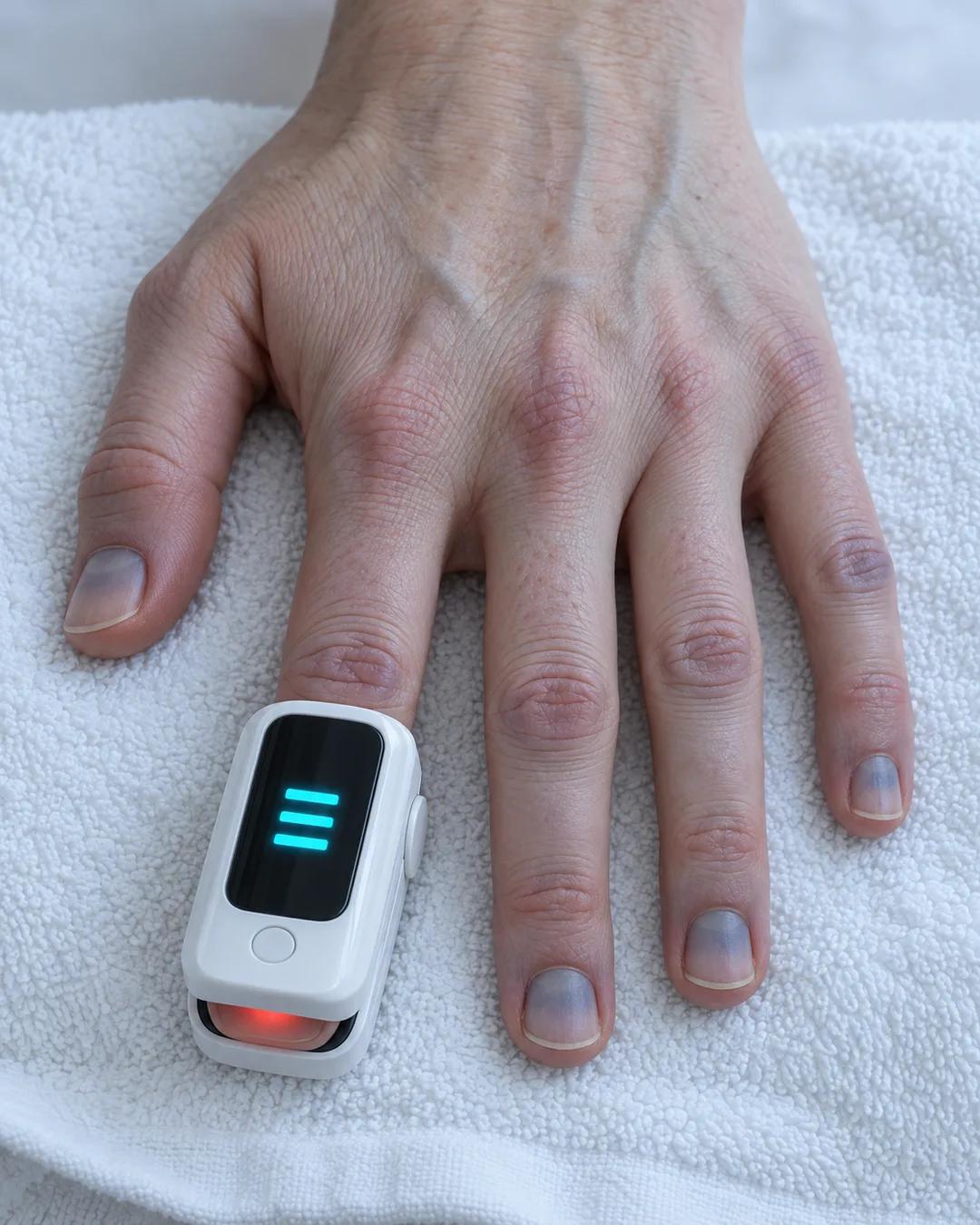
A pulse oximeter shines red and infrared light through a fingertip and reports the share of hemoglobin carrying oxygen. That share stays high during fast breathing because the blood is fully loaded. The device cannot show how readily the hemoglobin hands that oxygen off in the tissues. Breathing out CO2 faster also raises the blood's pH, which makes hemoglobin hold oxygen more tightly.
Why does low CO2 cause tingling and cold hands?
When CO2 falls, the blood turns more alkaline, which lowers the amount of free calcium in it and makes nerves more excitable. That is the source of tingling around the mouth and in the fingers. Low CO2 also narrows blood vessels in the skin and the brain, which cools the hands and can cause lightheadedness. Blood flow to the brain falls by a few percent for every 1 mmHg drop in arterial CO2.
More from The Rich Roll Podcast