Korva is a scroll of the internet’s best ideas.
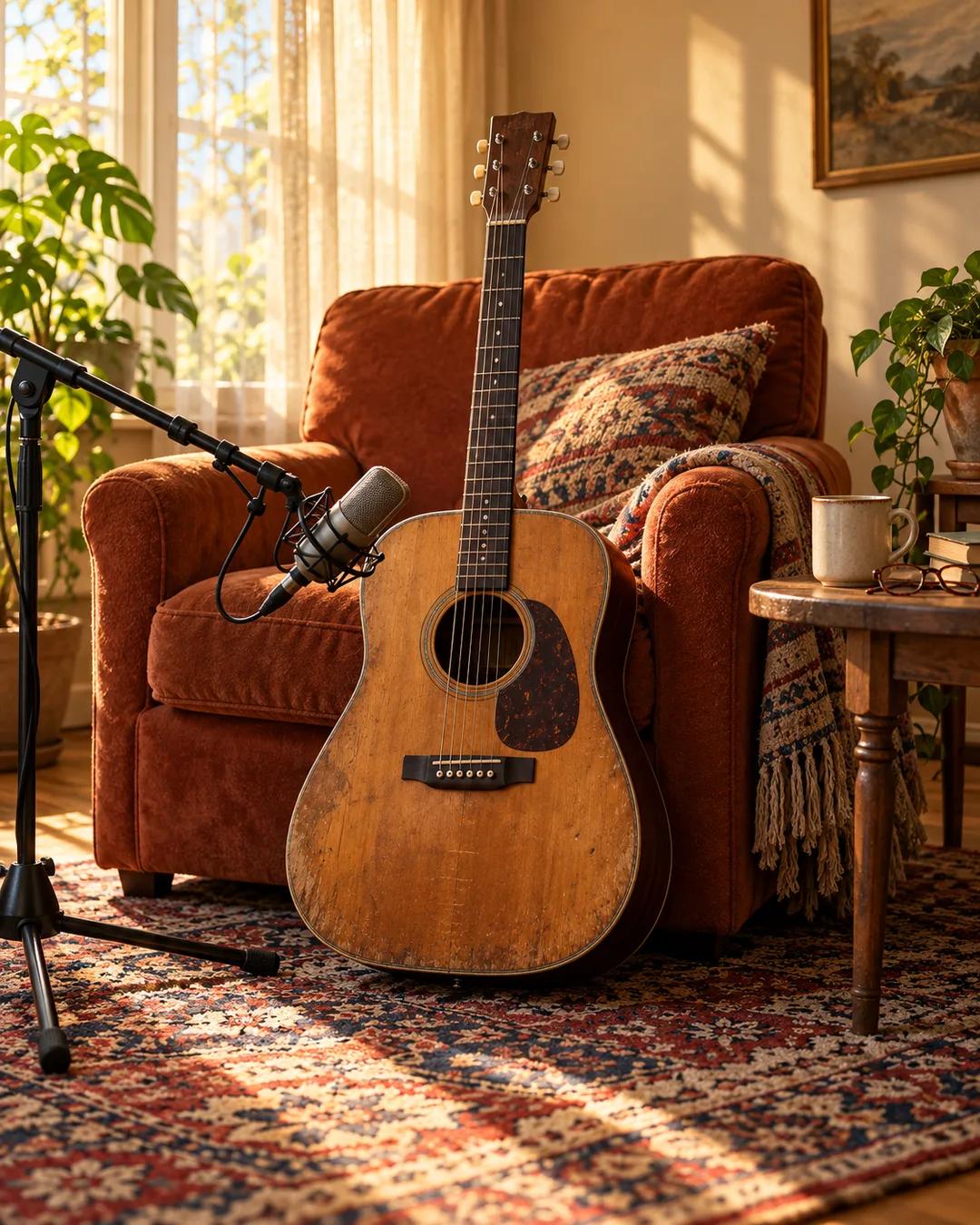
Cash's living-room recordings became the album

The living-room sessions
Producer Rick Rubin recorded Johnny Cash in his living room with only a voice and a guitar. They weren't making an album. It was how the two got to know each other. Rubin asked Cash to play all of his favorite songs, the ones he remembered from growing up and the ones that meant a lot to him, and sometimes asked him to try a song just to hear how it sounded in his voice.
Two band versions
The plan was to test 100 songs this way, pick the ten they liked best, and take those into the studio with a band. They recorded with a great band, and the result was interesting but not better. They tried again with a different band and got the same result.
The living-room recordings had something the studio versions didn't. Nobody had ever thought of anyone hearing them. Those are the ones that came out.
Why do bare recordings feel so intimate?
A single voice and guitar recorded close to a microphone picks up breath, finger noise, and small changes in volume that a full band covers up. Close microphones also boost the low end of a voice through a effect called proximity, which makes it sound nearer to the listener. With nothing else competing, the ear follows the singer's phrasing line by line. Folk recordings made by field collectors in the 1930s and 1940s had the same quality.
What happened after that first album?
Mercury Records had dropped Cash in the early 1990s, and Rubin signed him to his American Recordings label. The album, released in 1994 as American Recordings, won a Grammy for Best Contemporary Folk Album. It started a series of albums the two made through Cash's final years. The 2002 album American IV included his cover of Nine Inch Nails' song Hurt, whose music video became one of the most praised of the decade.
More from The Diary Of A CEO with Steven Bartlett