Korva is a scroll of the internet’s best ideas.
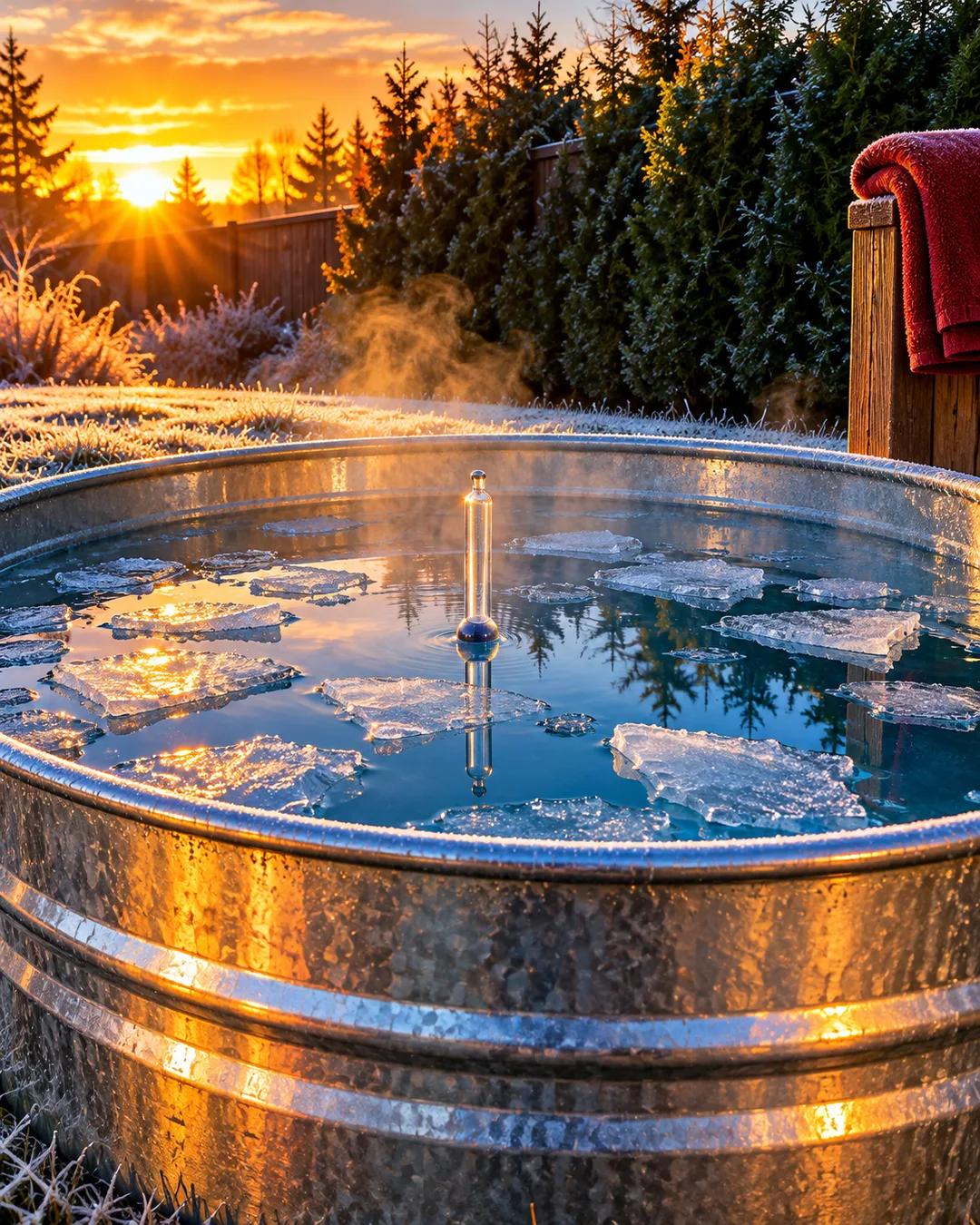
Cold plunges barely move cortisol

The data in women and men are very clear. The catecholamines that cold releases are the chemicals of alertness and focus, and they come rolling into the day.
Exercise is what raises cortisol a lot. Weight training for forty-five minutes with sets taken near to failure triples or quadruples cortisol, and a thirty-minute run counts as the same kind of stressor.
Early in the day, that cortisol jump is the one wanted, because the morning peak sets up low cortisol at night. A late workout is fine too, since cortisol comes back down.
How much does cold raise norepinephrine?
In a 2000 study in the European Journal of Applied Physiology, Petr Šrámek and colleagues immersed volunteers in water at 14 degrees Celsius for an hour. Norepinephrine rose by about 530 percent and dopamine by about 250 percent. Water at 32 degrees, which is near skin temperature, produced no such change. Cortisol was not part of the response they reported.
How intense must exercise be to raise cortisol?
A 2008 review by Hill and colleagues in the Journal of Endocrinology found that cortisol rises noticeably only when exercise reaches roughly 60 percent of maximal oxygen uptake. Below that threshold, cortisol barely changes and may even dip. Above it, cortisol climbs in proportion to how hard the work is. Longer sessions at high intensity raise it further.
What is the cold shock response?
Mike Tipton's research group at the University of Portsmouth has studied what happens in the first minute of cold water immersion. Breathing becomes involuntary, with a gasp followed by rapid breathing, and heart rate and blood pressure surge. Tipton's work showed that a handful of brief repeated immersions can cut the response roughly in half. The reflex is one of the main reasons cold water is dangerous for unprepared swimmers.
More from The Diary Of A CEO with Steven Bartlett