Korva is a scroll of the internet’s best ideas.
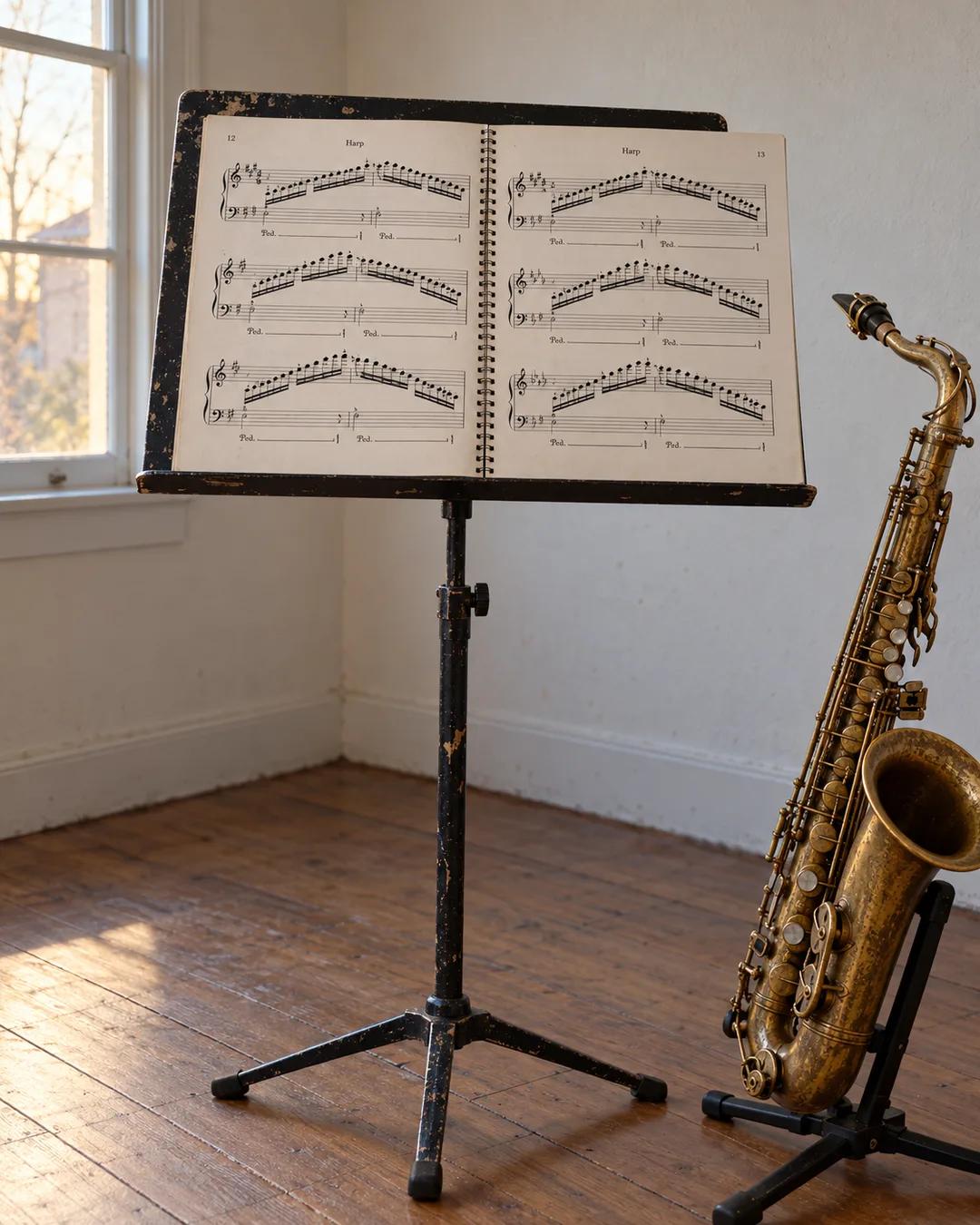
Coltrane practiced from harp exercise books
The practice habit
Coltrane was one of jazz's all-time great practicers, which gave him a hard, majestic tone across the tenor saxophone's whole range and clean articulation at supersonic speed. In that period he punctuated his improvisations with rapid up-and-down runs based on various scales.
Sheets of sound
Critic Ira Gitler called those outbursts sheets of sound, one of the enduring jazz metaphors. On Come Rain or Come Shine, Coltrane mixes long tones with very short ones.
Working with Monk
Coltrane's next boss after Miles Davis, Thelonious Monk, played even fewer notes than Miles and indulged Coltrane's penchant for long solos, which Miles had discouraged.
Why would a saxophonist practice from harp books?
Harp music is built on scale runs and arpeggios, so its exercise books drill the same fast patterns a saxophonist wants under the fingers. Jazz players have long borrowed practice material from other instruments. Coltrane also studied Nicolas Slonimsky's Thesaurus of Scales and Melodic Patterns, a 1947 book that lists thousands of unusual scale and interval patterns.
Where did the phrase sheets of sound come from?
Critic Ira Gitler used it in the late 1950s, including in his liner notes for the 1958 album Soultrane, to describe Coltrane's dense, rapid cascades of notes. The image is of many notes stacked so closely that they read as a single wash of sound. Coltrane produced the effect by playing runs built from scales and chord patterns at very high speed.
How did Monk's playing differ from Davis's?
Monk's style was angular and spacious, with unexpected pauses and a percussive touch. Those silences left room for a saxophonist to stretch out. Coltrane played in Monk's quartet at the Five Spot Cafe in New York in the second half of 1957, a period he later described as a turning point in his musical development.