Korva is a scroll of the internet’s best ideas.
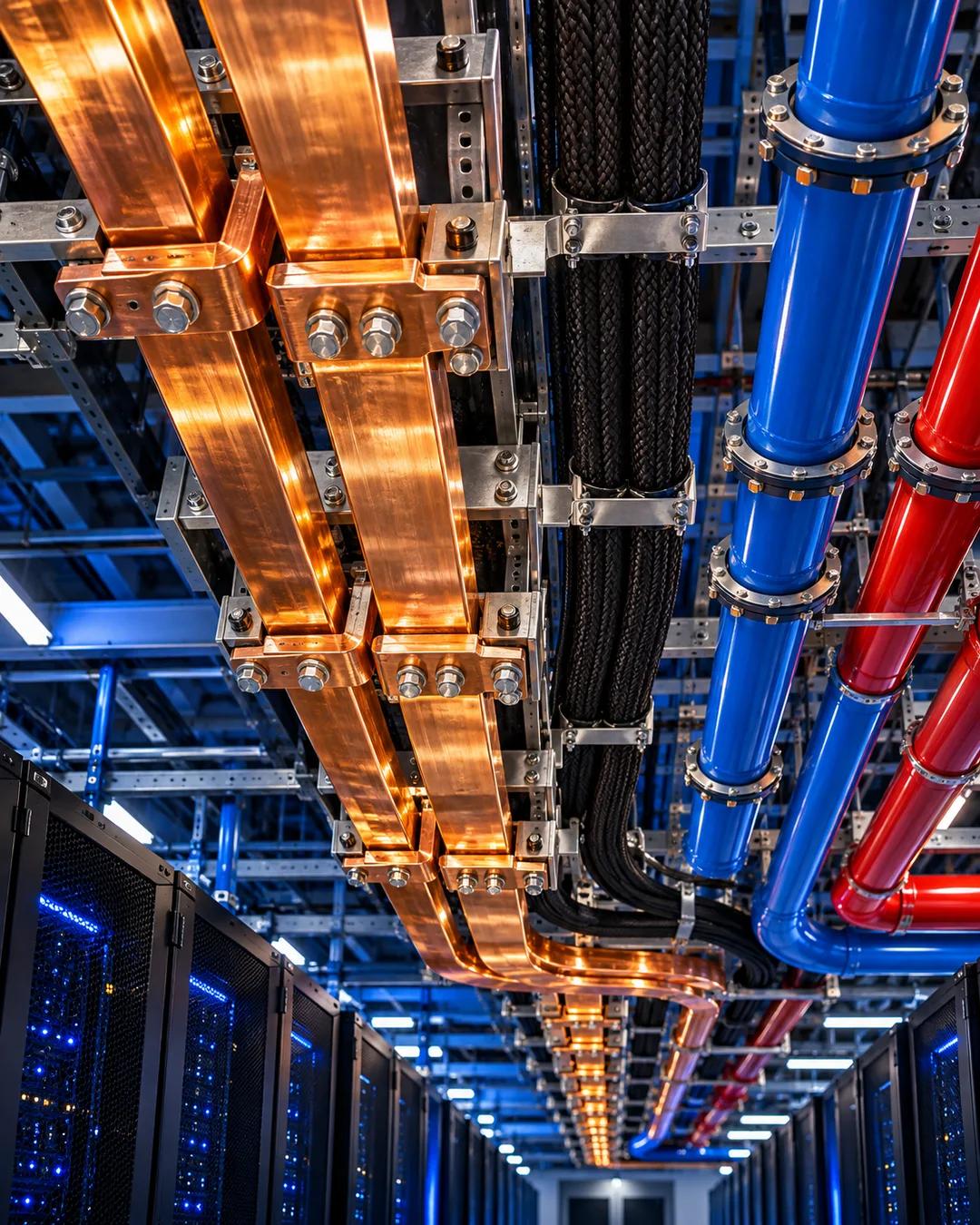
Compute looks like energy independence

The Supply Chain
Cooling, power, training, and inference all depend on a global supply chain, and parts of it are a very thin sieve in places that may be unstable or out of reach for the US and its allies. Fixing that takes a bunch of investment along with national security and energy policy.
PacSilica
Jacob Helberg is working on PacSilica, an effort to ask, for every part of the supply chain, whether more capacity can be built and what the independent paths are. It doesn't all have to be made in the United States. Comparative advantage is real, and having more than one source is a position everybody wants to be in.
Where Conviction Looks
Conviction has invested in the labor gap for data centers and robotics, nuclear energy, and alternative chip architectures. It keeps looking at data center builders and at solar and battery installers, an operational business somewhere between operations, some technology, and real estate, with financing probably the dominant piece. The firm hasn't invested there despite looking closely, because it is a technology investor that wants to understand the durable product asset being built.
Why is the chip supply chain so concentrated?
Making leading-edge chips requires extreme ultraviolet lithography machines, and the Dutch company ASML is the only company that builds them. Each machine costs hundreds of millions of dollars and ships in many freight containers. The chips themselves come largely from a handful of fabs, mostly in Taiwan and South Korea. Japanese firms supply a large share of the photoresists used in chipmaking.
Why does cooling matter so much for GPUs?
Nearly all the electricity a chip draws turns into heat, and a dense rack of AI accelerators produces far more heat than air fans can carry away. Water holds much more heat per volume than air, so many new data centers pipe liquid directly to the chips. That adds pumps, heat exchangers, and plumbing to the supply chain. Cooling systems in large facilities can also consume significant water through evaporation.
Why do countries trade instead of making everything?
Economist David Ricardo laid out comparative advantage in 1817, using trade between England and Portugal in wine and cloth. His point was that each country gains by producing what it makes at the lowest opportunity cost, even if another country makes everything more efficiently. Trade then leaves both with more goods. The idea remains the basis of standard trade theory.
More from Invest Like the Best with Patrick O'Shaughnessy