Korva is a scroll of the internet’s best ideas.
Cost curves cause phase transitions

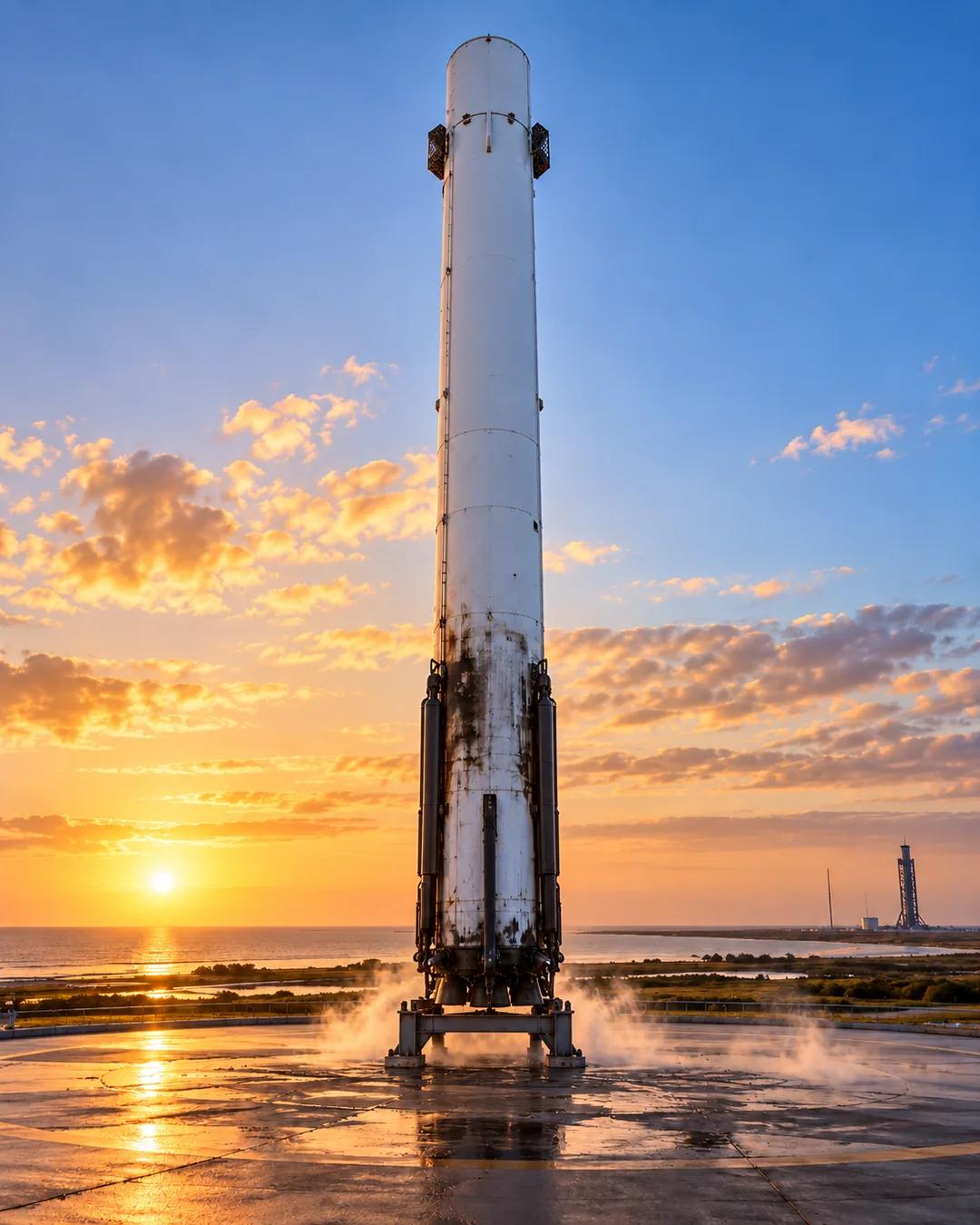
Falcon 9 and Starlink
Before SpaceX, putting a kilogram into low Earth orbit cost around fifty thousand dollars or more. The reusable Falcon 9 brought it to about twenty-four hundred dollars. That drop is what let SpaceX build Starlink over the last six years, a constellation of more than ten thousand satellites delivering high-bandwidth connectivity, a kind of Internet 2.0 of nodes and edges built as a mesh around Earth.
What Starship Changes
Starship, with a much larger size and both stages reusable, is built to take the cost from twenty-four hundred dollars a kilogram to a hundred dollars, and potentially as low as ten. A drop like that opens up everything off Earth. It would allow the next iteration of Starlink, including direct-to-cell service for phones, plus connections for robotaxis and the Internet of Things.
Orbital Data Centers
The same logic points to orbital data centers. SpaceX can already build terrestrial compute faster than anyone and has sold some of it to Anthropic and Google. The next step is moving compute into low Earth orbit aboard its AI-1 satellite, and an orbital data center is projected to cost seventy-five percent less than a terrestrial one.
How does reusing a rocket cut costs?
Most of a rocket's price is its hardware, and propellant is a small share of the total. Landing the first stage lets the same expensive engines and tanks fly again. SpaceX first landed a Falcon 9 booster in December 2015 and reflew one for the first time in March 2017.
Why wasn't the Space Shuttle cheap?
NASA designed the Space Shuttle in the 1970s to make spaceflight routine and affordable. Each orbiter needed months of inspection and refurbishment between flights, and the program flew 135 missions between 1981 and 2011. NASA's own accounting put the average cost per flight above a billion dollars when total program costs were counted.
Why do big cost drops create new industries?
Economist William Stanley Jevons observed in 1865 that more efficient coal engines increased total coal use, because cheaper power found new uses. Computing followed a similar path after Gordon Moore noted in 1965 that the number of components on a chip kept doubling. Intel's first microprocessor, the 4004 of 1971, held about 2,300 transistors, and chips today hold billions.
More from We Study Billionaires - The Investor’s Podcast Network